Home / Things that began in Nara
Things Born in Nara
Tea whisks for the tea ceremony, ink sticks for calligraphy, clear sake, and manju buns filled with sweet bean paste. Many of these essentials of Japanese life are said to have been born in Nara or spread from it. These are stories of "beginnings" from a land that was the capital 1,300 years ago, where temples and shrines were the centres of learning and skill.
Labels: Factdocumented Likelysupported by most sources Legendoral tradition Urban legendlocal lore and rumour
Refined sake: brewing by the monks of Bodaisan
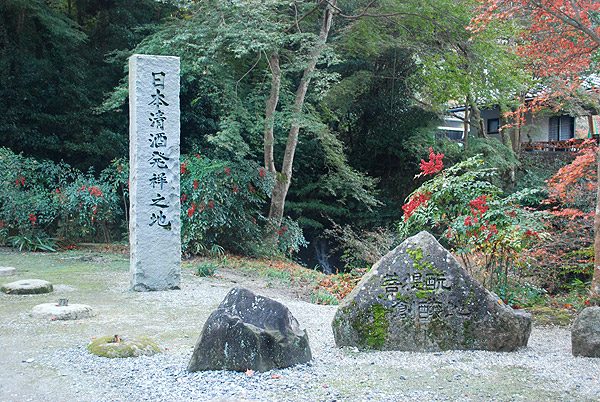
FactShoryaku-ji, in the hills of Nara City, was founded in 992. In the Muromachi period, its monks brewed sake with advanced techniques, both as offerings to the Buddha and as a source of income for the temple. Techniques that became the basis of modern sake brewing are said to have been established here, such as "bodaimoto", a way of making the yeast starter by soaking raw and steamed rice in water to grow lactic acid bacteria, and "morohaku" brewing, which uses polished white rice for both the koji rice and the main rice.
LikelyThe clear sake made at Nara's temples in this way was called "Nanto Morohaku" and was prized as the finest sake in the land. A stone monument in the grounds of Shoryaku-ji marks it as "the birthplace of Japanese refined sake". Every January, sake breweries from around the prefecture gather at Shoryaku-ji to prepare bodaimoto, then finish their sake at their own breweries.
Tea whisks: the bamboo craft of Takayama, Ikoma
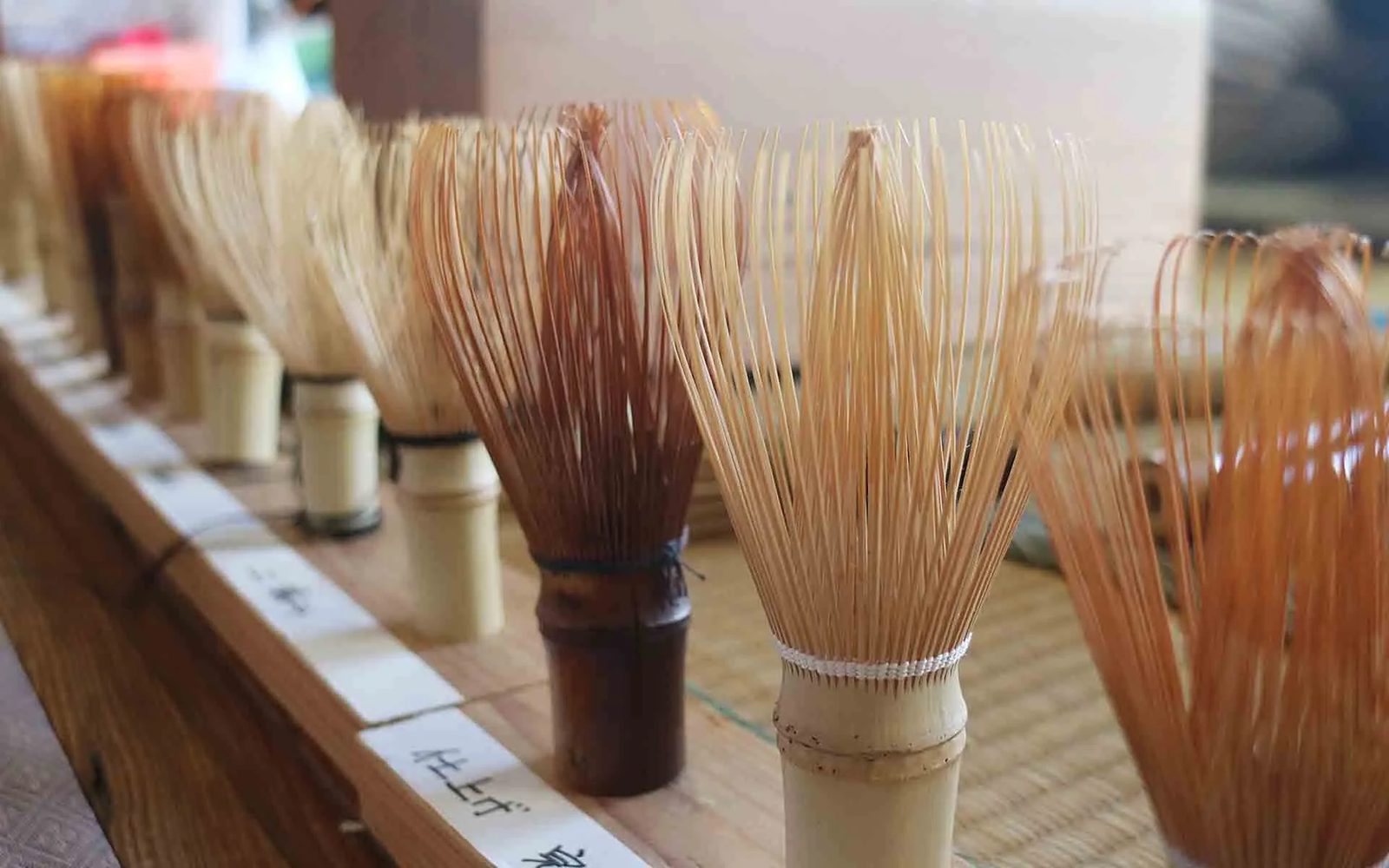
LegendThe chasen, the whisk used to whip matcha, is said to have begun in the Muromachi period when Takayama Sosetsu, of the family that ruled Takayama (today's Takayama-cho in Ikoma City), made one at the request of Murata Juko, regarded as the founder of wabi-cha (the rustic style of tea).
FactIn Takayama, the craft was handed down as a secret passed to only one child in each generation, and even today almost all of Japan's tea whisks are made here. Splitting a single piece of bamboo finely into 80, 100 or 120 tines and curling them inward is handwork done by skilled craftsmen. "Takayama Chasen" is designated a national Traditional Craft.
Ink sticks: lampblack ink born in a temple
LikelyNara ink is said to have begun in the Muromachi period, when "yuenboku", ink made by collecting soot from the smoke of oil lamps, started to be produced at Nitaibo, a sub-temple of Kofuku-ji. Temples, which used huge amounts of ink for copying sutras, nurtured the craft of ink-making.
FactIn the Edo period, Nara's ink makers sent ink all over Japan, and Nara still accounts for most of Japan's production of solid ink sticks. Because humidity and temperature control are vital, ink is made during the cold months from October to April. Soot from burning rapeseed oil or pine is kneaded with animal glue, pressed into wooden moulds, and slowly dried in ash.
Manju: Lin Jingyin from China
LegendAround 1349, during the Nanboku-cho period, Lin Jingyin (Rin Join), who came to Japan from Yuan-dynasty China, is said to have settled in Nara and begun making manju buns filled with sweet bean paste. His innovation, it is said, was to fill them with red bean paste instead of meat for monks who did not eat meat.
FactIn the grounds of Kango Shrine in Nara City is "Rin Shrine", which honours Lin Jingyin and is said to be the only shrine to manju in Japan. Every April 19 it holds the "Manju Festival", where confectioners from all over Japan offer manju. Lin Jingyin's descendants later ran a manju shop under the name "Shiose", which still operates in Tokyo today.
The goldfish of Yamatokoriyama
LikelyYamatokoriyama City, together with Yatomi City in Aichi Prefecture, is one of Japan's great goldfish-producing areas. It is said to have begun in 1724, when retainers of the lord Yanagisawa Yoshisato, who moved to the Koriyama domain from Kai Province (Yamanashi Prefecture), brought goldfish with them. In the late Edo period, goldfish farming spread as a side job for poorly paid samurai of the domain. Goldfish ponds still dot the city, and every August it hosts the "National Goldfish Scooping Championship".
Look here: sugidama and Miwa somen
The "sugidama" cedar balls at the eaves of sake breweries are said to come from a custom of Omiwa Shrine, and hand-stretched somen noodles to have spread from Miwa (see Mt. Miwa). In Nara, trace a "beginning" back far enough and you will usually arrive at a temple or shrine.
Main sources: Shoryaku-ji official website / Nara Prefecture, "Local Products and Traditional Crafts of Nara" / Ikoma City, "Takayama Chasen" / Nara Ink Manufacturers Association / Kango Shrine (Rin Shrine) / Yamatokoriyama City, "Goldfish"