Home / Takamatsuzuka and Kitora tombs
Takamatsuzuka Kofun and Kitora Kofun
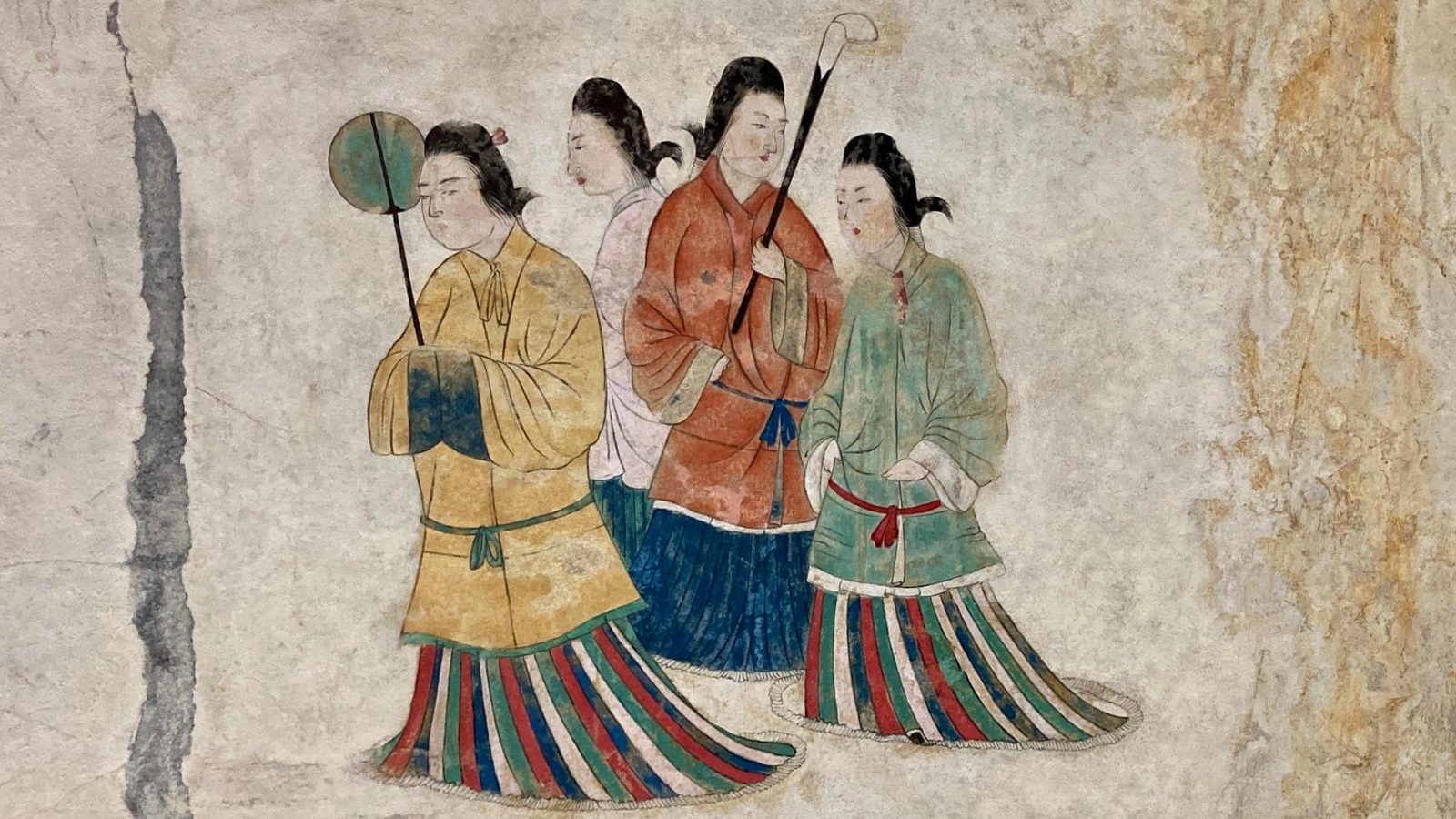
In March 1972, brightly coloured paintings of women appeared inside the stone chamber of a small round mound in Asuka Village. These were the murals of Takamatsuzuka Kofun. The discovery made front-page news and set off an ancient-history boom across Japan. Eleven years later, at nearby Kitora Kofun, a camera revealed a painting of a black tortoise and snake.
World HeritageAsuka-Fujiwara: Archaeological Sites of Japan's Ancient Capitals (2026)
Labels: Factdocumented Likelysupported by most sources Legendoral tradition Urban legendlocal lore and rumour
The discovery of March 21, 1972
FactTakamatsuzuka Kofun is a small two-tiered round mound about 23 m across and about 5 m high. Cut stones were found when a local resident dug a pit to store ginger, and this led the Archaeological Institute of Kashihara, Nara Prefecture, to excavate. On March 21, 1972, richly coloured murals were confirmed on the walls of the stone chamber.
FactThe walls showed groups of men and women, and three of the Four Gods of the directions, the Blue Dragon, White Tiger and Black Tortoise (the Vermilion Bird is thought to have been lost to a robbers' hole). The ceiling showed constellations. Above all, the "West Wall Group of Women", dressed in colourful robes and holding fans and fly whisks, came to be called the "Asuka Beauties" and became the icon of ancient Japanese painting. The murals were designated a National Treasure in 1974.
The fight against mold, and dismantling the chamber
FactAfter their discovery, the murals were to be preserved in place with the chamber sealed. In the 2000s, however, it became clear that mold and microbes were multiplying inside and that the murals were darkening and deteriorating. The slow response, and the fact that damage done to the murals during work had not been made public, drew heavy criticism.
FactIn 2007 the Agency for Cultural Affairs made the unusual decision to dismantle the chamber, remove the murals and restore them in a facility. The stones were taken out one by one, and restoration continued for more than ten years. On site, the "Takamatsuzuka Mural Hall" displays reproductions and models of the murals.
Kitora Kofun: the Four Gods found by camera
FactAt Kitora Kofun, about 1.2 km south of Takamatsuzuka, a fiberscope camera inserted through a robbers' hole on November 7, 1983, revealed the Black Tortoise on the north wall. Later surveys showed all Four Gods: the Blue Dragon in the east, the White Tiger in the west and the Vermilion Bird in the south, along with figures of the twelve zodiac animals with animal heads and human bodies. It is the only mural in Japan with all Four Gods together.
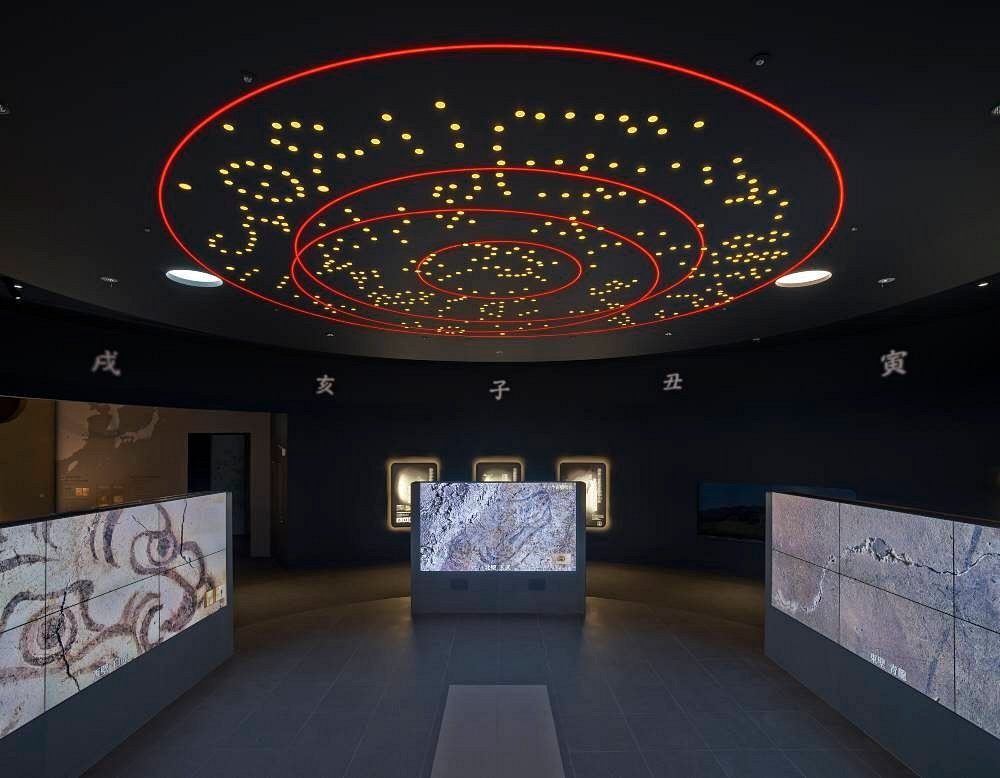
FactThe ceiling bore an astronomical chart, with stars in gold leaf joined by vermilion lines. It is a true star map drawn with concentric circles, and is said to be among the oldest surviving in East Asia. As for where the sky it shows was observed, one theory based on latitude calculations holds that it copies a chart observed not in Japan but in China or on the Korean Peninsula.
LegendThere are several explanations of the name "Kitora". One story says that when people peered into the chamber they saw a tortoise (ki, the Black Tortoise) and a tiger (tora, the White Tiger). However, the name was in use before the murals were found (the White Tiger was only confirmed in 1998), and another theory says it is a corruption of the place name "Kitaura".
Look here: the real murals at Shijin no Yakata
The Kitora murals were removed and restored between 2004 and 2010, and are kept at the "Kitora Tumulus Mural Experience Museum, Shijin no Yakata" (opened 2016) beside the mound. Several times a year, the actual murals are shown for limited periods (many sessions require advance application, so check the official information). In the basement gallery you can always see a full-size model of the chamber and a video of the star map.
Who was buried here?
LikelyBoth tombs are thought to date from the late 7th to early 8th century, the era of Fujiwara-kyo (see Fujiwara-kyo). Sons of Emperor Tenmu and powerful officials of the day have been proposed as the occupants, but none has been identified. Teeth and parts of the bones of a man have been found in Takamatsuzuka Kofun.
Main sources: Agency for Cultural Affairs, materials on Takamatsuzuka Kofun and Kitora Kofun / Asuka Historical National Government Park (Kitora Tumulus Mural Experience Museum "Shijin no Yakata") / Nara National Research Institute for Cultural Properties / Asuka Village Board of Education