Home / Hase-dera
Hase-dera
Hase-dera stands in the mountains of Hase in Sakurai City. Pass through the Nio Gate and a roofed stone stairway runs straight up to the main hall on the hillside. In the Heian period, noblewomen from the capital spent days travelling by ox carriage and on foot to meet this temple's Kannon.
Labels: Factdocumented Likelysupported by most sources Legendoral tradition Urban legendlocal lore and rumour
The source of Japan's "Hase-dera" temples
FactHase-dera in Nara is the head temple of the Buzan school of Shingon Buddhism. There are said to be about 240 temples across Japan that are called "Hase-dera" and have an Eleven-Headed Kannon as their main image (they belong to various schools; the Hase-dera in Kamakura is one of them), and the Hase-dera in Nara is regarded as their source.
LikelyAccording to temple tradition, the monk Domyo founded the temple in 686 to pray for the recovery of Emperor Tenmu from illness, and in 727 the monk Tokudo, by order of Emperor Shomu, enshrined the Eleven-Headed Kannon.
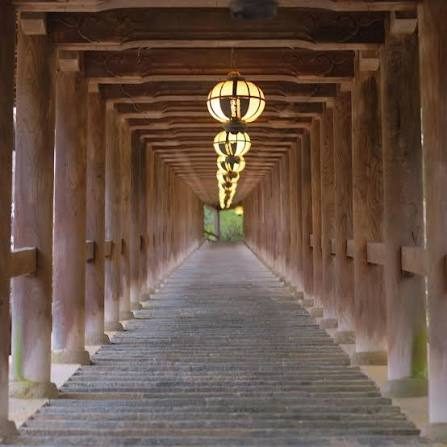
The 399-step covered corridor
FactThe "Nobori-ro" (climbing corridor) leading from the Nio Gate to the main hall is a roofed walkway over 399 stone steps. It is divided into upper, middle and lower sections, with 108 bays in all. It is said to have begun in 1039, when a priest of Kasuga Taisha donated it in thanks for his child's recovery from illness (the present corridor was rebuilt in the Edo period or later). The rows of Hase-style lanterns hanging from the ceiling are the defining image of Hase-dera.
A giant Kannon and a hall like Kiyomizu's stage
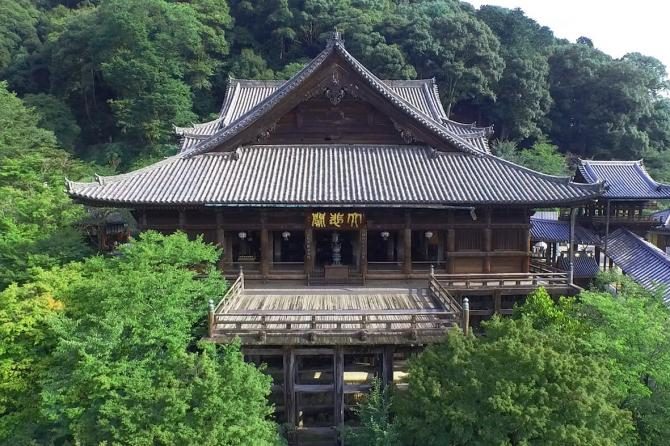
FactThe main image, the standing Eleven-Headed Kannon (an Important Cultural Property), is a wooden statue over 10 m tall and one of the largest wooden Buddhist statues in Japan. It has burned in fires many times, and the present statue, made in 1538, is the eighth. It has a distinctive "Hase-dera style" form, holding a monk's staff in the right hand and a water jar in the left, and is said to combine the powers of Jizo Bosatsu as well.
FactThe main hall housing the image (a National Treasure) was completed in 1650 with funds from Tokugawa Iemitsu. It is built in the "kakezukuri" style, jutting out from the slope on a framework of pillars, the same construction as the main hall of Kiyomizu-dera in Kyoto. From the stage you can look down over the mountains of Hase and the five-storey pagoda.
Heian women's "Hatsuse pilgrimages"
FactIn the Heian period, the Kannon of Hase-dera was famed for answering prayers, and "Hatsuse pilgrimages" from Kyoto became fashionable. The Pillow Book, the Kagero Diary and the Sarashina Diary all describe their authors' visits. The author of the Sarashina Diary, known as the Daughter of Sugawara no Takasue, recorded receiving a message in a dream on the way.
FactIn the "Tamakazura" chapter of The Tale of Genji, the long-lost Tamakazura has a chance reunion with Ukon, her mother's former lady-in-waiting, at an inn in Tsubaichi on the way to Hase-dera. The "Two Cedars" linked to this story still stand in the grounds.
Look here: the "Temple of Flowers" through the seasons
Hase-dera is called the "Temple of Flowers" and is coloured by blossoms all year: about 7,000 peonies from late April to early May, cherry blossoms in spring, hydrangeas in June and autumn leaves in autumn. LegendThe peonies are said to have begun when the consort of a Tang emperor was saved after praying to the Kannon of Hase and offered peonies in thanks.
Main sources: Hase-dera (head temple of the Shingon Buzan school) official website / Agency for Cultural Affairs, Database of National Cultural Properties / The Tale of Genji, "Tamakazura" chapter / Sarashina Diary