Home / Mount Wakakusa
Mt. Wakakusa
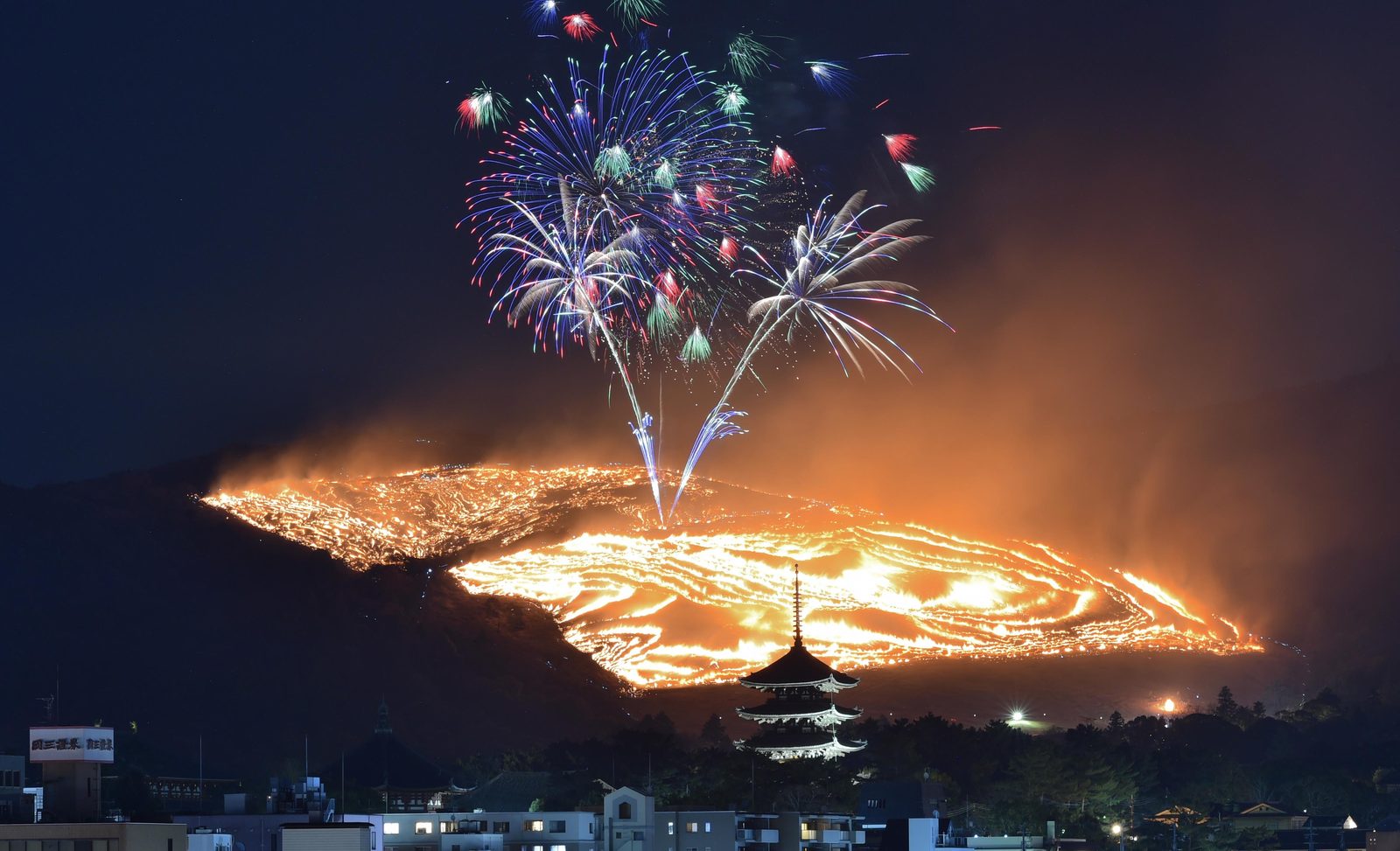
East of Nara Park rises a gentle, treeless hill covered in grass. This is Mt. Wakakusa. Every January the whole hill is set on fire, and it burns against the night sky. Burning an entire mountain in the middle of an old capital: how this began is, in fact, not clearly known.
Labels: Factdocumented Likelysupported by most sources Legendoral tradition Urban legendlocal lore and rumour
A hill of three stacked hats
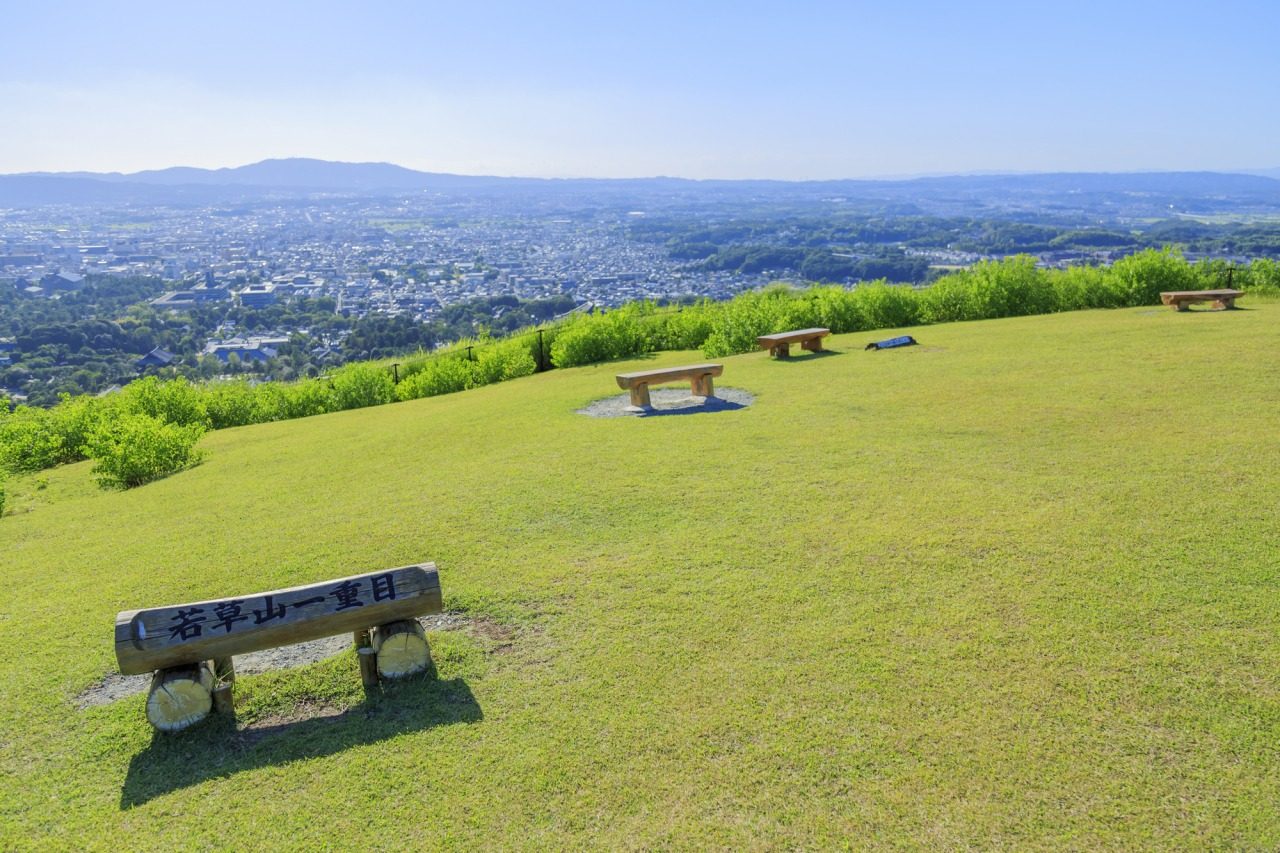
FactMt. Wakakusa is 342 m high. Seen from below, it looks like three gentle hats stacked one on another, and the tiers are called the first, second and third layers from the bottom. For this reason it has also been called "Mt. Mikasa" (three hats), though it is a different hill from Mt. Mikasa behind Kasuga Taisha.
FactIts slopes are covered with grass where deer graze. During the open season from spring to autumn you can climb it for an admission fee, and from the top you can see the city of Nara, the great roof of Todai-ji's Great Buddha Hall, and on clear days even Mt. Ikoma and the skyscrapers of Osaka.
Why burn a mountain? Three theories
LikelyThere are several theories about the origin of the Yamayaki (mountain burning). One is a boundary dispute: Todai-ji and Kofuku-ji quarrelled over who owned the hill, and through the mediation of the Nara magistrate's office the hill was burned with both parties present. Records of the magistrate's office from around the 10th year of Horeki (1760) in the Edo period are said to mention the burning.
LegendAnother holds that a monster called "Ushi-oni" (ox demon) appeared from Uguisuzuka Kofun on the summit, and the dead grass was burned to keep it at bay. In the Edo period it was believed that if the hill was not burned the Ushi-oni would appear and bring disaster, and it is said that people sometimes set fires on their own.
LikelyOther views say it was a field burning to keep the grass healthy, or a fire set to get rid of pests. In any case, from the Meiji period onward it became established as a winter event in Nara. Today the three shrine and temples of Kasuga Taisha, Kofuku-ji and Todai-ji hold Shinto rites and Buddhist services, and after a fireworks display the whole hill is set alight at once.
Uguisuzuka Kofun on the summit
FactOn the summit of Mt. Wakakusa lies "Uguisuzuka Kofun", a keyhole-shaped mound about 103 m long. It is thought to date from the latter part of the early Kofun period (around the late 4th century) and to be the tomb of a powerful local figure, built on a hill overlooking the Nara Basin. It was designated a national Historic Site in 1936.
FactIn the section of The Pillow Book listing tombs, Sei Shonagon names "the tomb of the bush warbler" (uguisu no misasagi). In the Edo period a stone monument was set up declaring this mound to be that tomb, and the name "Uguisuzuka" stuck (whether the warbler's tomb really refers to this mound is unclear).
Look here: the night view from the Nara Okuyama Driveway
You can also drive up to near the summit of Mt. Wakakusa on the toll Nara Okuyama Driveway. The night view of Nara City from the summit car park has been chosen as one of the "New Three Great Night Views of Japan". Deer sometimes rest on the grass at night, so drive carefully.
Main sources: Nara Prefecture, Nara Park Office, "Mt. Wakakusa" / Wakakusa Yamayaki Executive Committee / The Pillow Book / Agency for Cultural Affairs, Database of National Cultural Properties (Uguisuzuka Kofun)