Home / Gango-ji and Naramachi
Gango-ji and Naramachi
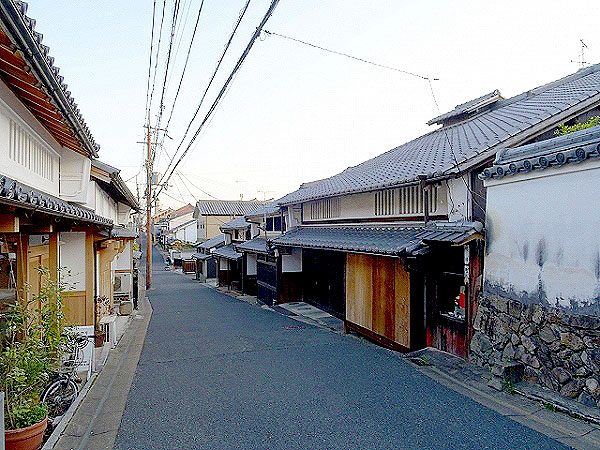
Wander the lanes of Naramachi, lined with lattice-fronted townhouses, and a small temple suddenly appears: Gango-ji. It is a small temple today, but it once had vast grounds about 220 m east to west and 440 m north to south, and the town that grew up on that land is Naramachi. Tiles from 1,400 years ago still sit on the temple's roofs.
World HeritageHistoric Monuments of Ancient Nara (1998)
Labels: Factdocumented Likelysupported by most sources Legendoral tradition Urban legendlocal lore and rumour
A temple that moved from Asuka
FactGango-ji's predecessor was Hoko-ji (Asuka-dera), Japan's first full-scale temple, built by Soga no Umako in Asuka (see Asuka). When the capital moved to Heijo-kyo, the temple also moved in 718 to the Gekyo (Outer Capital) of Heijo-kyo and was renamed "Gango-ji". A temple also remained in Asuka, carrying on as today's Asuka-dera.
FactIn the Nara period, Gango-ji was a great temple on a par with Todai-ji and Kofuku-ji, and was counted among the Seven Great Temples of Nanto. It was especially known as a centre of Buddhist scholarship.
The Asuka period, up on the roof
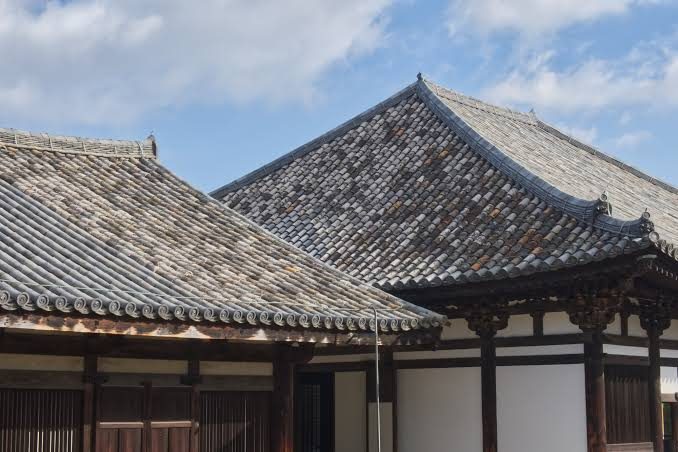
FactLook up at the roofs of the Main Hall and Zen Room of today's Gango-ji (Gokurakubo), and here and there you will see tiles of a different colour, reddish or blackish, mixed in. These are said to have been brought from Asuka-dera, and are among the oldest roof tiles in Japan. They preserve an old style of roofing called "Gyoki-buki", in which one end of each round tile is tapered so they overlap.
FactThe Main Hall (Gokurakudo) and Zen Room are Kamakura-period buildings, and both are National Treasures. In 1998 the temple grounds became a component of the World Heritage site "Historic Monuments of Ancient Nara".
A great temple declines, and a town is born
FactWhen the capital moved to Kyoto in the Heian period, Gango-ji gradually declined. In 1451, a fire started during a peasant uprising (tsuchi ikki) destroyed its main buildings except for the five-storey pagoda, and houses began to be built in the wide temple grounds. That pagoda, too, burned down in 1859.
FactThe town that grew up on the former temple grounds in this way is "Naramachi". In the Edo period it thrived on trades such as bleached cloth (sarashi), ink sticks, sake and mosquito nets, and was lined with townhouses that were narrow at the front and deep at the back. Today's district names, such as "Chuin-cho" and "Shibashinya-cho", still carry traces of the temple era.
FactThe grounds of Gango-ji have been divided, and today there are three parts: Gango-ji (Gokurakubo), Gango-ji (the five-storey pagoda site, in Shibashinya-cho, Nara City) and the Shotoin site. In the grounds of Gokurakubo is the "Futoden", where about 2,500 stone Buddhas and small stone pagodas offered by ordinary people for memorial services are lined up.
Look for this: the red "migawari-zaru" under the eaves
Under the eaves of houses in Naramachi hang stuffed monkeys made of red cloth. These are "migawari-zaru" (substitute monkeys) from Koshin folk belief: the monkey is said to take on any misfortune trying to enter the house in the family's place. It is also said that if you write a wish on its back and hang it up, the wish will come true. The Koshin-do hall in the centre of Naramachi is the base of this belief.
"Gagoze": the demon of Gango-ji
LegendThe Nihon Ryoiki, a Heian-period collection of Buddhist tales, tells of a demon that appeared night after night in Gango-ji's bell tower, until a boy of enormous strength (later the monk Dojo Hoshi) tore off the demon's hair and drove it away. This demon was called "Gagoze" or "Gagoji" after the temple, and the name spread across Japan as that of a monster used to scare children. Gango-ji still offers amulets of "Gagoze" in demon form today (see Legends).
Main sources: Gango-ji official website / Nara City materials on Naramachi / Agency for Cultural Affairs, Database of National Cultural Properties / Nara National Research Institute for Cultural Properties, survey reports on the former Gango-ji precinct