Home / Ishibutai Kofun
Ishibutai Kofun and the Tombs of Asuka
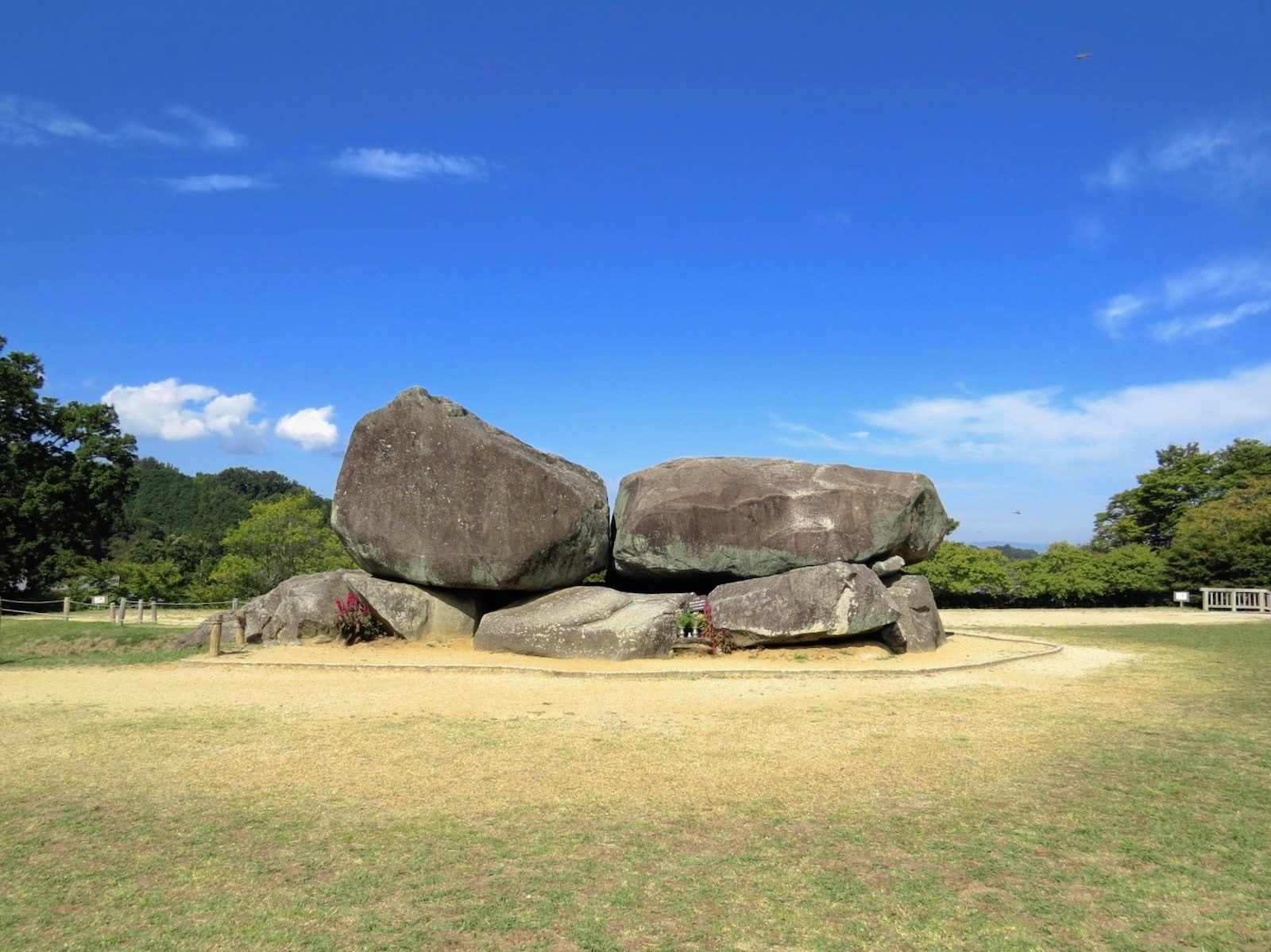
At the foot of a hill in Asuka Village, giant stones lie piled up in the open. This is Ishibutai Kofun. It was once the stone chamber of a kofun (an ancient burial mound) covered with earth, but at some point the soil was stripped away and only the skeleton remained. That bare shape has become the most famous sight in Asuka.
World HeritageAsuka-Fujiwara: Archaeological Sites of Japan's Ancient Capitals (2026)
Labels: Factdocumented Likelysupported by most sources Legendoral tradition Urban legendlocal lore and rumour
A stone chamber weighing 2,300 tons
FactThe stone chamber of Ishibutai Kofun is built from about 30 blocks of granite. Their total weight is estimated at about 2,300 tons, and the largest of the ceiling stones is said to weigh about 77 tons. The stones are thought to have been hauled from the foot of Mt. Tonomine, about 3 km away. Inside, the chamber is about 7.7 m long, 3.5 m wide and 4.7 m high, and visitors can step inside.
FactExcavations in 1933 and 1935 by Hamada Kosaku and others from Kyoto Imperial University revealed that it had been a huge square mound: a square platform about 50 m on each side, ringed by a dry moat and an outer bank. It is thought to have been built around the early 7th century.
Was Soga no Umako buried here?
LikelyThe Nihon Shoki (Chronicles of Japan) records that in the 34th year of Empress Suiko (626), the chief minister Soga no Umako died and was buried at the "Momohara tomb". Ever since the Meiji-era historian Kita Sadakichi identified the Momohara tomb with Ishibutai Kofun, the leading theory has been that this is Umako's grave. Remains thought to be from a Soga family residence have also been found nearby. Even so, no decisive evidence such as an epitaph has turned up.
Why is there no earth?
LikelyAlmost all of Ishibutai's earthen mound has been lost. The chamber was also robbed, and hardly any grave goods remained. One theory holds that the soil was deliberately stripped off after the main Soga line was destroyed in the Isshi Incident of 645, as a way of disgracing the clan's tomb, a symbol of its power (see Asuka). Another view is that the earth was gradually carried off over the centuries for farmland and other uses. The truth is unknown.
Urban legendThe name "Ishibutai" (stone stage) is sometimes explained by a fox that took the form of a woman and danced on the stones on moonlit nights, or by travelling performers who used the stones as a stage. However, the archaeologist Aboshi Yoshinori, who grew up in the area, said he had never heard such stories and that they were probably recent inventions.
Octagonal imperial tombs
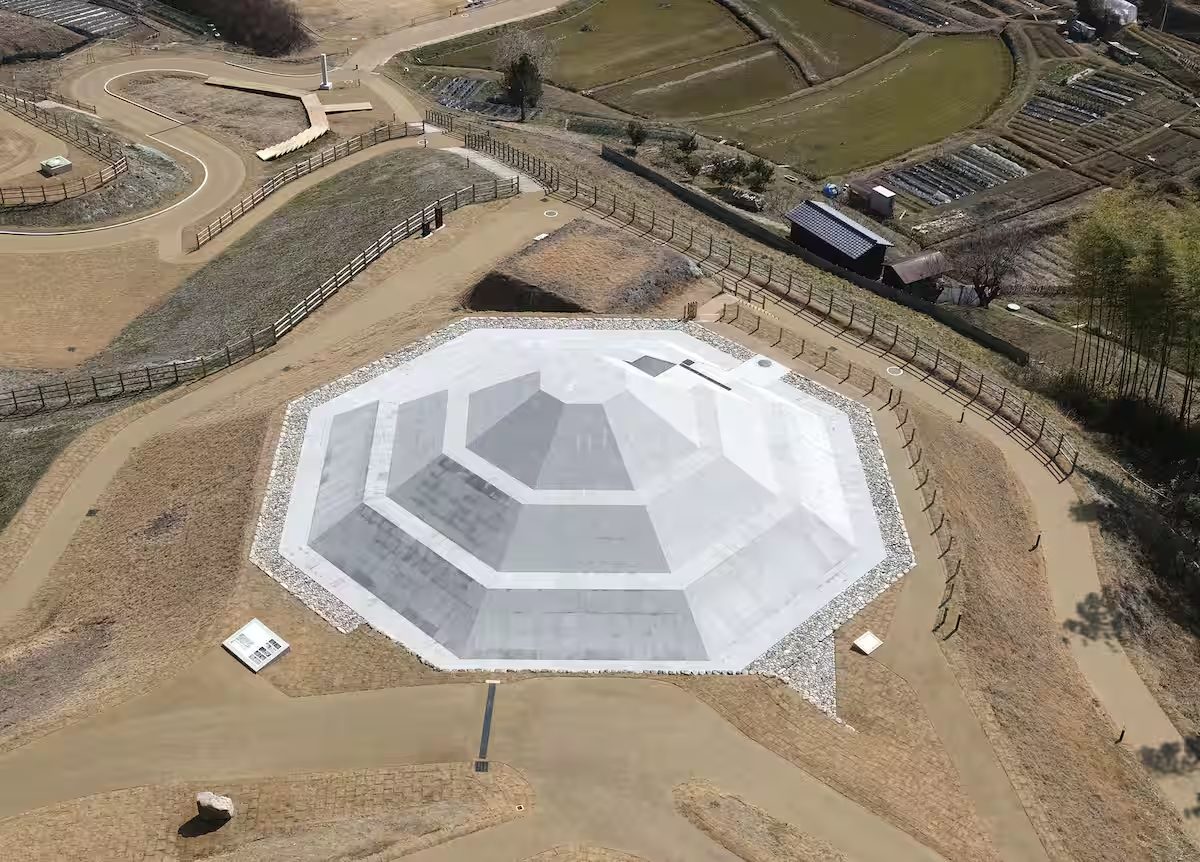
FactAnother notable type of tomb in Asuka is the "octagonal mound". From the mid-7th century, the tombs of emperors came to be built in an eight-sided shape, thought to express the authority of a ruler who governed in all eight directions.
FactThe Mausoleum of Emperor Tenmu and Empress Jito (Noguchi no Ono-haka), where Emperor Tenmu was buried together with his consort, who became the next ruler as Empress Jito, is an octagonal mound and one of the World Heritage component sites. Jito was the first sovereign to be cremated, and her remains were placed in her husband's stone chamber.
FactKengoshizuka Kofun in Koshi, Asuka Village, was confirmed as an octagonal mound in excavations in 2009-2010, making it more likely that it is the tomb of Empress Saimei. Its chamber, hollowed out of huge blocks of tuff, is divided into two rooms, which is said to match the Nihon Shoki's account that she was buried together with her daughter, Princess Hashihito. In 2022 the mound was restored to its original appearance.
Look here: gazing up from inside the chamber
You can walk down steps into the stone chamber of Ishibutai Kofun. Look up at the ceiling from inside and you will see how tightly the giant ceiling stones fit together. The surroundings form a lawn as the Ishibutai area of Asuka Historical National Government Park, where you can see the stones with cherry blossoms in spring and red spider lilies in autumn.
Main sources: Asuka Village Board of Education / Archaeological Institute of Kashihara, Nara Prefecture / Nihon Shoki, entry for the 34th year of Empress Suiko / Agency for Cultural Affairs, World Heritage nomination dossier for "Asuka-Fujiwara: Archaeological Sites of Japan's Ancient Capitals"