Home / Omiwa Shrine and Mount Miwa
Omiwa Shrine and Mt. Miwa
Omiwa Shrine in Sakurai City has no main hall to enshrine its god. Worshippers look through the Mitsu-torii gate at the back of the worship hall and pray to Mt. Miwa itself, rising beyond. The mountain is the god: this shrine still keeps an old form of prayer from before shrine buildings existed.
Labels: Factdocumented Likelysupported by most sources Legendoral tradition Urban legendlocal lore and rumour
Why there is no main hall
FactOmiwa Shrine treats Mt. Miwa (467 m) itself as its sacred body and worships the god who dwells in the mountain, Omononushi no Okami. Because it preserves an older form of faith, in which mountains, rocks and forests were revered as homes of the gods, from before it became common to build main halls for them, it is called "one of the oldest shrines in Japan".
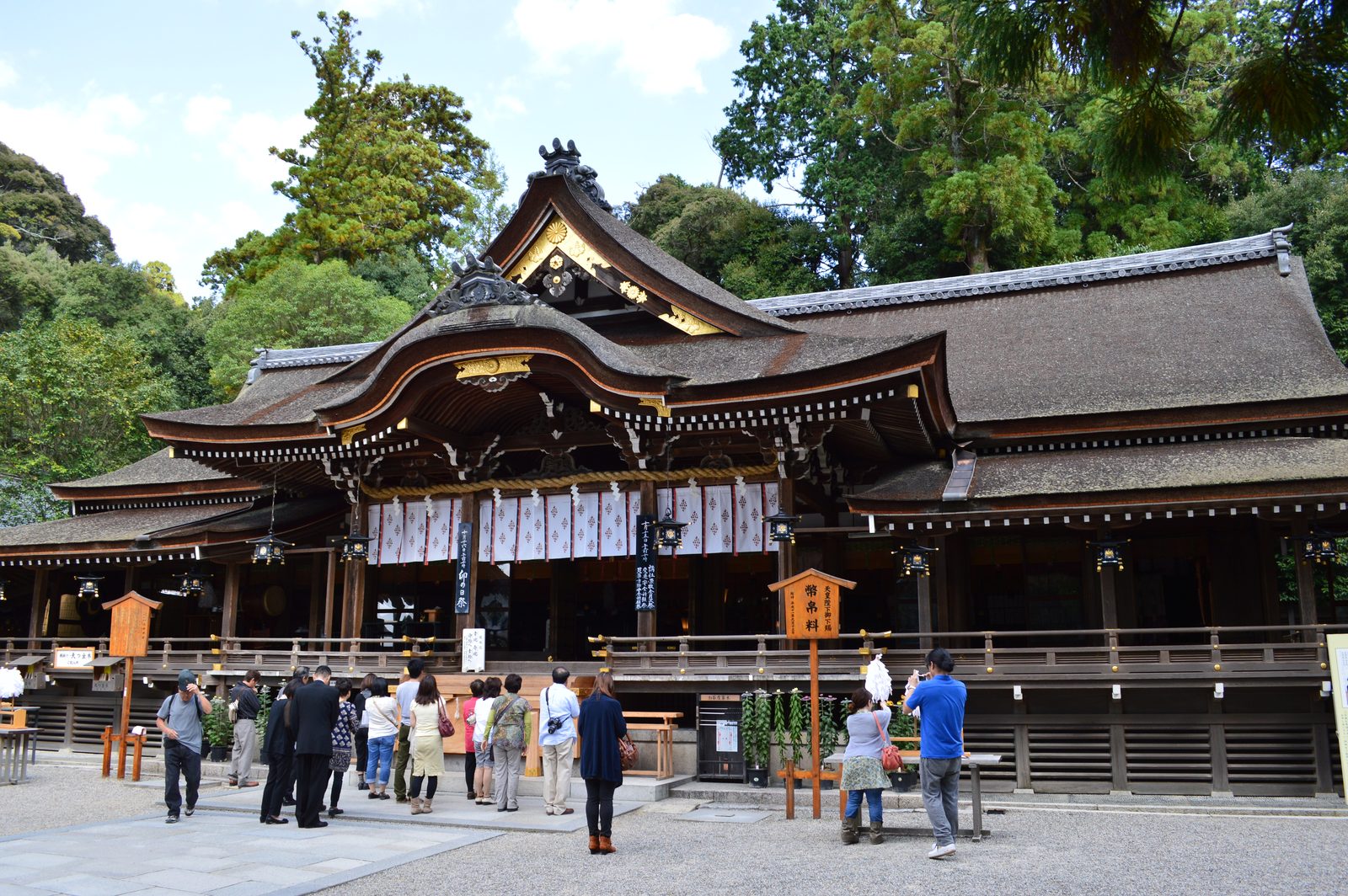
FactThe worship hall (an Important Cultural Property) was rebuilt in 1664 by Tokugawa Ietsuna. Behind it stands the unique "Mitsu-torii" (an Important Cultural Property), three torii gates combined into one, which marks the boundary of the sacred ground.
Strict rules for entering the mountain
FactFor a long time Mt. Miwa was forbidden ground that no one could enter, but today you can climb it within set hours after registering at Sai Shrine, an auxiliary shrine (a practice called tohai, worship by climbing). Still, the mountain is the god's sacred body. Taking photos, eating and drinking (except for water) and taking home plants or stones are all forbidden on the mountain. Climbers wear a white sash and spend 2-3 hours on the round trip to the Okitsu Iwakura, the sacred rocks at the summit.
FactMany magatama (comma-shaped beads), pottery and other objects used in Kofun-period rituals have been found on and around the mountain, showing that rites were held here from early times.
A snake god and offerings of eggs
LegendThe Nihon Shoki tells how Omononushi visited a princess every night in the form of a handsome man, and his true form was a small snake (see Hashihaka Kofun). The god is said to appear as a snake, and the great cedar in front of the worship hall, called the "Mi no Kamisugi" (sacred cedar of the snake), is said to be home to snakes. Worshippers offer eggs, said to be a snake's favourite food, and sake.
The brewery "sugidama" started here
LegendIn the time of Emperor Sujin in the Nihon Shoki, Takahashi Ikuhi no Mikoto is said to have brewed sake for Omononushi in a single night, and Omiwa Shrine has also been revered as a god of sake brewing.
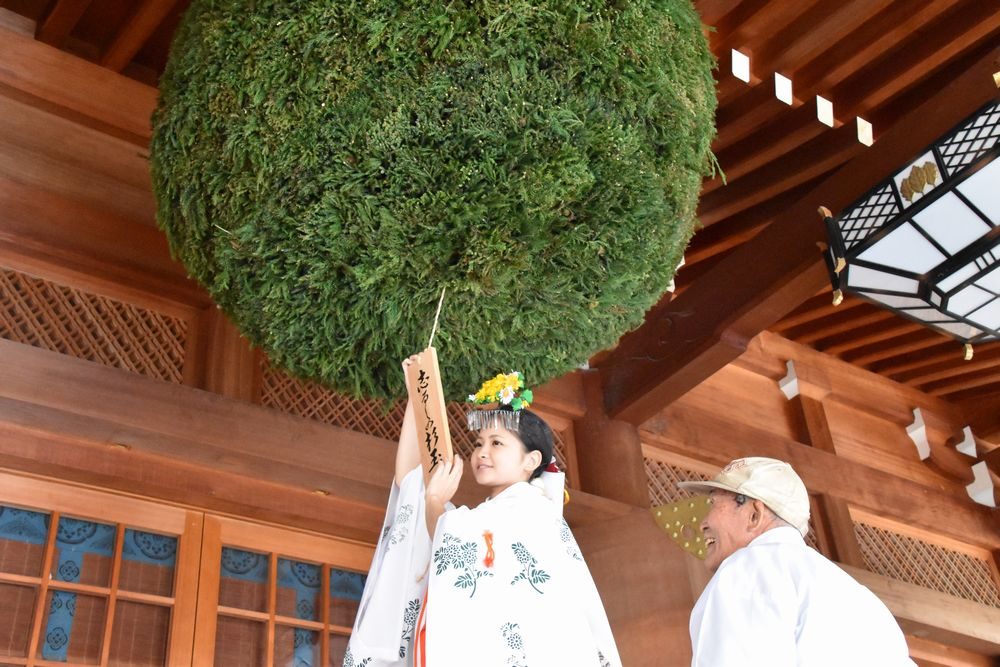
LikelyThe balls of cedar leaves hung at the eaves of sake breweries across Japan, "sugidama" (also called sakabayashi), are said to have spread from the custom of displaying cedar from Mt. Miwa as a tree where the god dwells. Every year on the day before the "Sake Festival" (prayer for safe brewing) on November 14, the giant sugidama at the worship hall is replaced, and at the festival brewers from all over Japan receive "shirushi no sugidama" (token sugidama). They are hung at the eaves while still green, as a sign that the new sake is ready (see Born in Nara).
The home of Miwa somen
LegendMiwa is said to be the birthplace of hand-stretched somen noodles. Tradition says it began when a man said to be a descendant of Omononushi grew wheat to save people suffering from famine and had its flour made into thread-like noodles. Every year on February 5, Omiwa Shrine holds the "Bokujosai" ritual, which divines the first price of that year's somen (see Food).
Look here: the great torii and the Yamanobe-no-Michi
The great torii at the entrance to the approach is about 32 m tall. Built in 1986 to mark the 60th year of Emperor Showa's reign, it is one of the largest torii in Japan. Omiwa Shrine lies about midway along the "Yamanobe-no-Michi" trail: walk north and you reach Isonokami Jingu, walk south and you reach the site of the Tsubaichi market (see Yamanobe-no-Michi).
Main sources: Omiwa Shrine official website / Kojiki; Nihon Shoki, chronicle of Emperor Sujin / Sakurai City Tourism Association / Nara Prefecture Miwa Somen Industrial Cooperative