Home / Isonokami Shrine and the Yamanobe Road
Isonokami Jingu and the Yamanobe-no-Michi
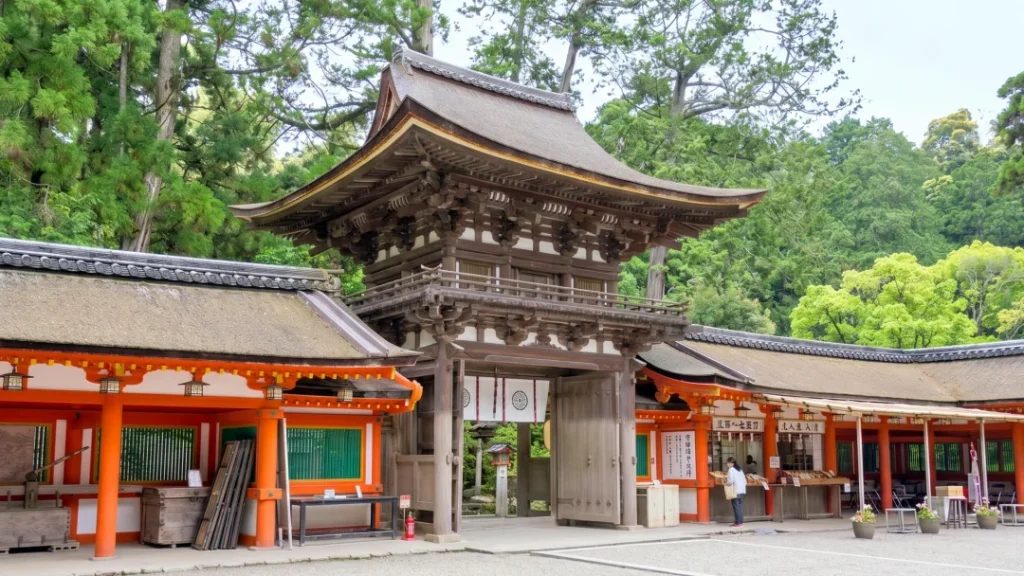
Among the cedars of Tenri City, Isonokami Jingu sits in quiet stillness. It was the shrine of the Mononobe, a powerful ancient clan, and is said to have housed the storehouse for the Yamato court's weapons. A single sword handed down at this shrine has long fascinated researchers as a key to the international relations of 4th-century East Asia.
Labels: Factdocumented Likelysupported by most sources Legendoral tradition Urban legendlocal lore and rumour
The Mononobe clan and the god's sword
FactIsonokami Jingu is one of the oldest shrines in Japan, named in both the Kojiki and the Nihon Shoki. Its deity, Futsu no Mitama no Okami, is said to dwell in the Futsu no Mitama sword, a divine sword sent down from heaven when Emperor Jimmu fell into danger during his eastern expedition.
FactThe shrine was served by the Mononobe clan, a powerful family in charge of military affairs. The Nihon Shoki has passages showing that weapons were stored at Isonokami Jingu, and it is thought to have served as the court's armoury. The Mononobe clashed with the Soga clan over the acceptance of Buddhism, and declined after Mononobe no Moriya was defeated in 587.
The Seven-Branched Sword
FactThe Seven-Branched Sword (Shichishito, a National Treasure) handed down at Isonokami Jingu is an iron sword about 75 cm long, with three branch-like blades sticking out alternately on each side of the blade. Inscriptions are inlaid in gold on the front and back; in the Meiji period the chief priest Kan Masatomo cleaned off the rust and discovered the characters.
LikelyThe inscription bears the era name "Taiwa 4", which many researchers believe corresponds to "Taihe 4" (369) of the Eastern Jin dynasty in China. It is read as saying that a king of Baekje had the sword made for the king of Wa (Japan), and is said to match the entry in the Nihon Shoki for the 52nd year of Empress Jingu, which records Baekje presenting a "seven-branched sword". However, because some characters cannot be read, debate continues, including between Japanese and Korean researchers, over interpretations such as whether Baekje "presented" the sword or the king of Baekje "bestowed" it.
FactThe Seven-Branched Sword is not normally on public display.
Swords from the forbidden ground
FactBehind the worship hall of Isonokami Jingu lies "forbidden ground", surrounded by a stone fence with sword-point-shaped tops inscribed "Furu no Yashiro". In the past this ground itself was the object of worship, and there was no main hall. In 1874 (Meiji 7), the chief priest Kan Masatomo obtained permission to excavate the forbidden ground, and swords, magatama beads and other objects were found. A main hall was built in 1913 (Taisho 2) to enshrine the sword that was found as the Futsu no Mitama sword.
Look here: chickens roaming the grounds
Many chickens roam freely in the grounds of Isonokami Jingu. Chickens are regarded as messengers of the gods, and their numbers are said to have grown from birds offered by worshippers. There are rare breeds such as the Totenko, a Natural Monument, and you may spot them resting up in the trees.
Yamanobe-no-Michi: Japan's oldest road
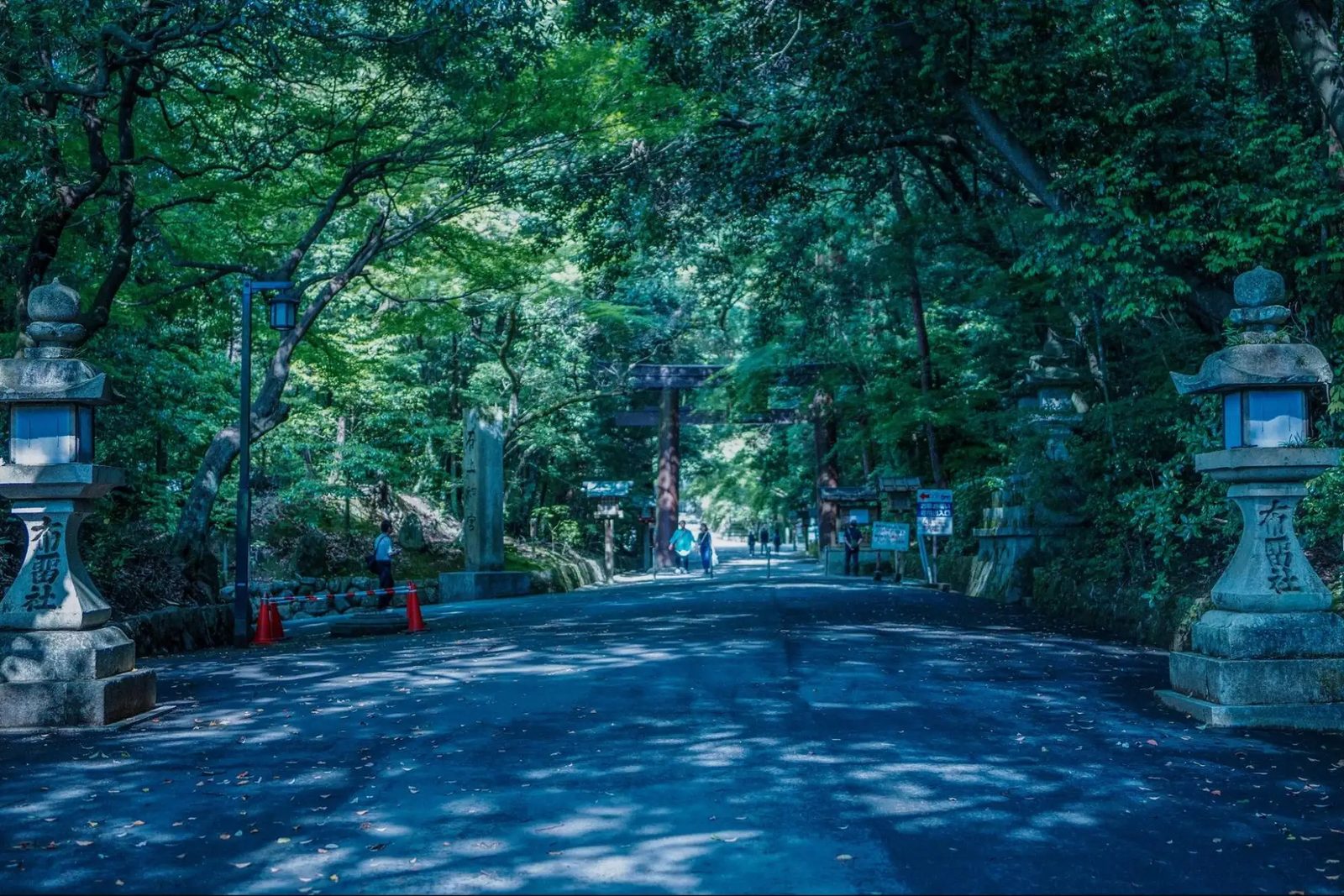
FactThe "Yamanobe-no-Michi" winds along the foot of the mountains on the eastern edge of the Nara Basin, from Isonokami Jingu south past Omiwa Shrine to Tsubaichi in Sakurai City. The Kojiki and Nihon Shoki say the tombs of Emperors Sujin and Keiko lie "beside the Yamanobe road", and it is considered the oldest road in Japan whose name survives in records.
FactThe roughly 16 km from Isonokami Jingu to near Omiwa Shrine is now maintained as a hiking trail. Along the way are huge keyhole-shaped mounds identified as the tombs of Emperors Sujin and Keiko, persimmon and mandarin orchards, and small temples and shrines, and you can walk while looking out over the Nara Basin.
Main sources: Isonokami Jingu official website / Tenri City Tourism Association, "Yamanobe-no-Michi" / Agency for Cultural Affairs, Database of National Cultural Properties, "Seven-Branched Sword" / Nihon Shoki, entry for the 52nd year of Empress Jingu