A land of capitals, Buddhas
and sacred mountains.
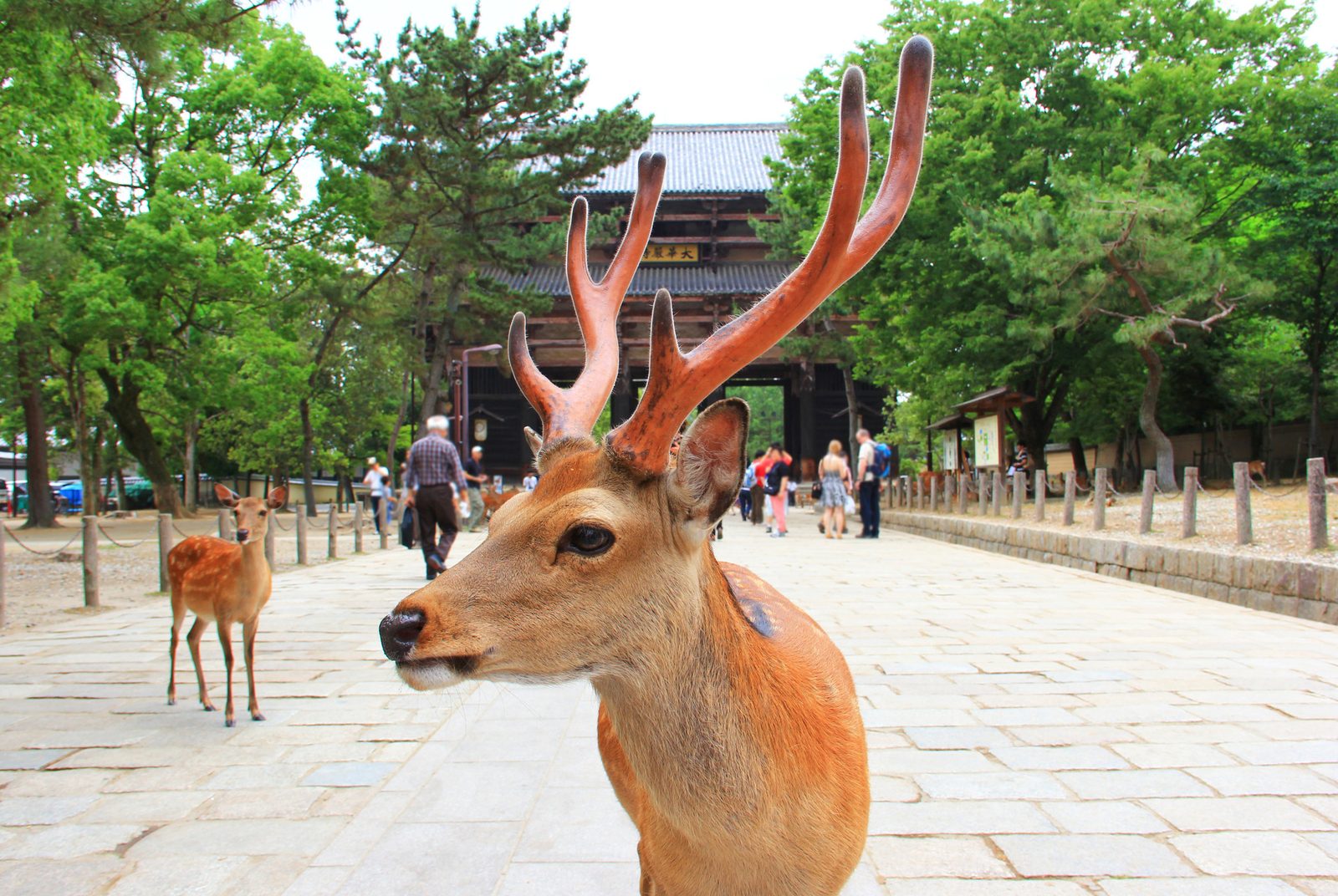
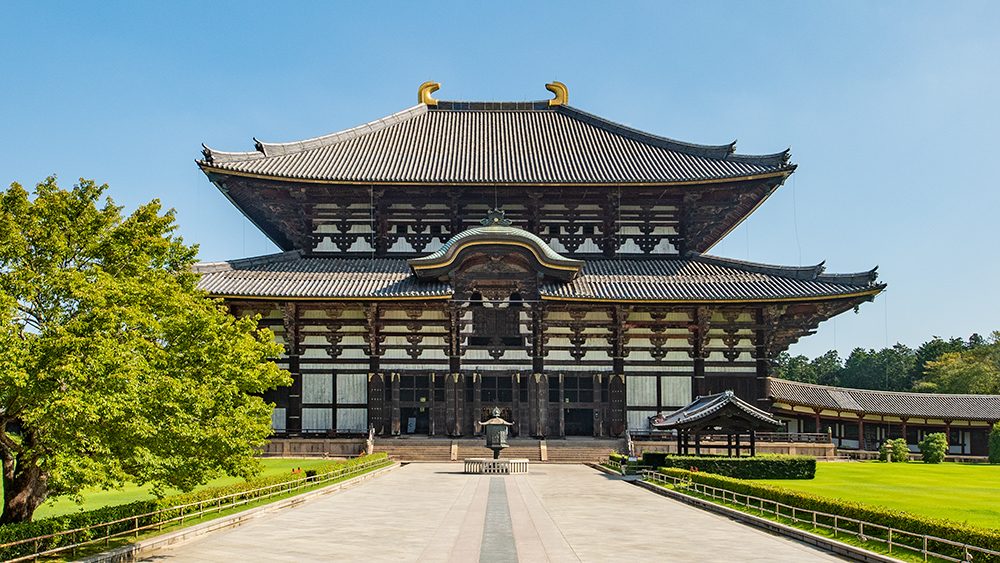
A little over 1,300 years ago, Japan's first true capital city rose in this basin, and the strength of the whole country was gathered to build the Great Buddha. Nara Prefecture holds four World Heritage sites: the world's oldest wooden buildings, a treasure house at the end of the Silk Road, the mountains of the yamabushi mountain ascetics, and, added in 2026, Asuka-Fujiwara, "the place where the nation began". Deer walk the streets as messengers of the gods, and shrines still worship a mountain itself as a deity. Explore Nara with us, with a clear line drawn between documented history and legend.
Four keys to understanding Nara
Almost everything that happened in this land connects to one of these four.
Capitals
Fujiwara-kyo in 694, Heijo-kyo in 710. Grid-plan capitals modelled on Tang China gave shape to the country of Japan here in this basin.
Buddhism
Buddhism arrived in the 6th century, and the power of the state produced temples and the Great Buddha. From Horyu-ji to Todai-ji, temples were also centres of learning and technology.
Gods and mountains
Mount Miwa, Mount Kasuga, Yoshino and Omine. Older than any building, the faith that worships a mountain itself as a god is still alive today.
Kofun
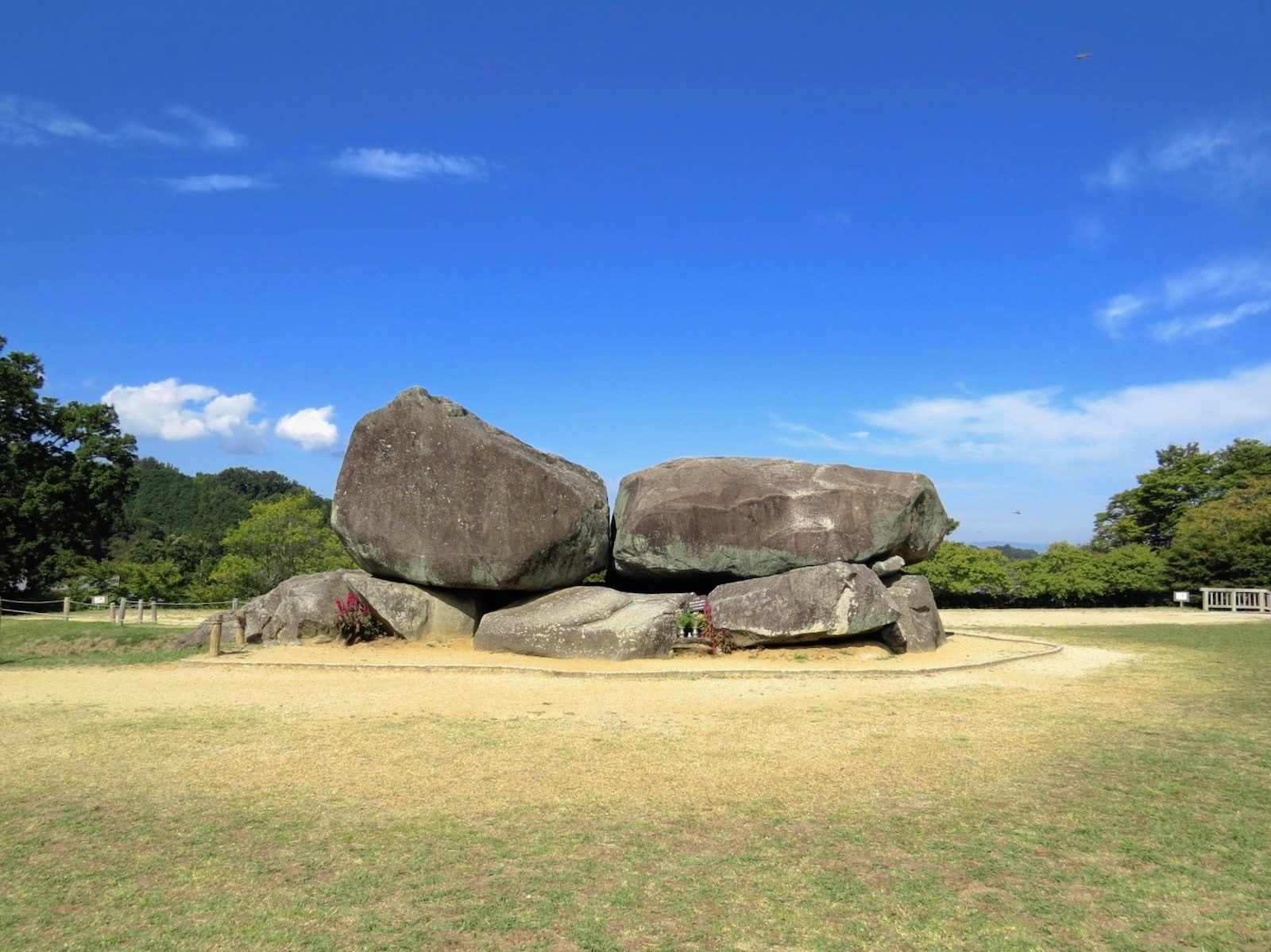
From Hashihaka Kofun to Ishibutai and the tombs with wall paintings. For centuries before the capitals, the kings of this land showed their power through huge kofun (ancient burial mounds).
Why this basin?
The Nara Basin is a plain about 16 km east to west and 30 km north to south, ringed by mountains on every side. It was protected from enemies, and every river in the basin gathers into the Yamato River, which cuts through the western hills and flows into Osaka Bay. Go downriver and you reach the port of Naniwa, and from there the Seto Inland Sea and the Asian mainland. This was land that was easy to defend, yet connected to the wider world.
In the 3rd century a huge settlement grew up at the foot of Mount Miwa. Later, palaces were placed in Asuka, and the capital moved north to Fujiwara-kyo and then Heijo-kyo. Even after the capital left in 784, the great temples and shrines remained, and Nara lived on as "Nanto", the southern capital, a town of faith and learning.
Small events that made today's Nara
One event ripples out somewhere no one expected. Nara has many of these "butterfly effects".
Thirty rooms into Nara
Four World Heritage sites, and the history of Yamato that lies around them. Start with whichever room catches your eye.
Horyu-ji
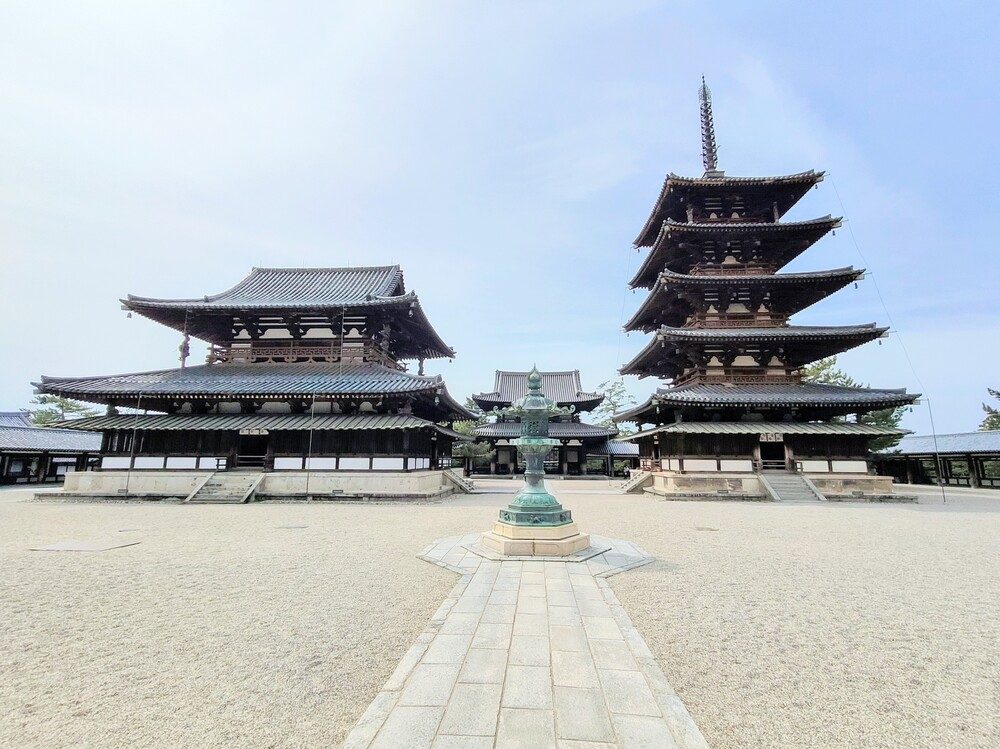
The oldest wooden buildings in the world, standing for 1,300 years.
Read →Prince Shotoku and Ikaruga
The prince's home village, Hokki-ji and the smile of Chugu-ji.
Read →Todai-ji and the Great Buddha
A Buddha that mobilised a nation, and a fire rite unbroken for 1,270 years.
Read →The Shoso-in Treasury
Some 9,000 treasures at the eastern end of the Silk Road.
Read →Kofuku-ji and the Ashura statue
The Fujiwara clan temple and a three-faced, six-armed guardian.
Read →Kasuga Taisha and the primeval forest
3,000 lanterns and a forest left uncut for over a thousand years.
Read →Gango-ji and Naramachi
Asuka-period roof tiles still in place, and a town built on a temple.
Read →Yakushi-ji
A three-storey pagoda that looks like six, rebuilt by sutra copying.
Read →Toshodai-ji and Ganjin
The Chinese master who crossed the sea after five failures.
Read →Heijo-kyo and the palace site
Trains cross a capital that slept under rice fields.
Read →Mount Yoshino and the Southern Court
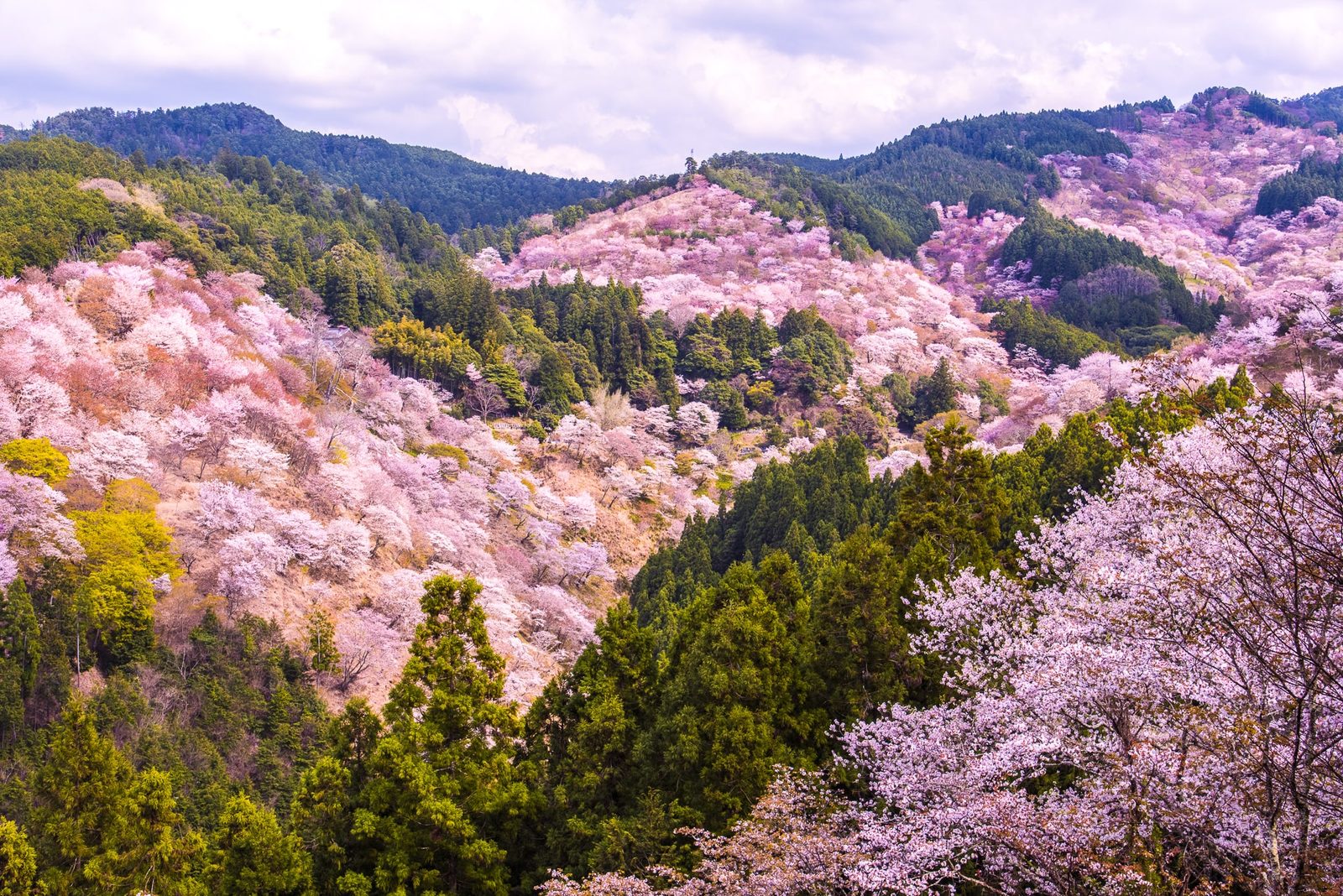
30,000 cherry trees and a mountain that hosted a rival court.
Read →Mount Omine and Shugendo
Where yamabushi train, and women are still barred.
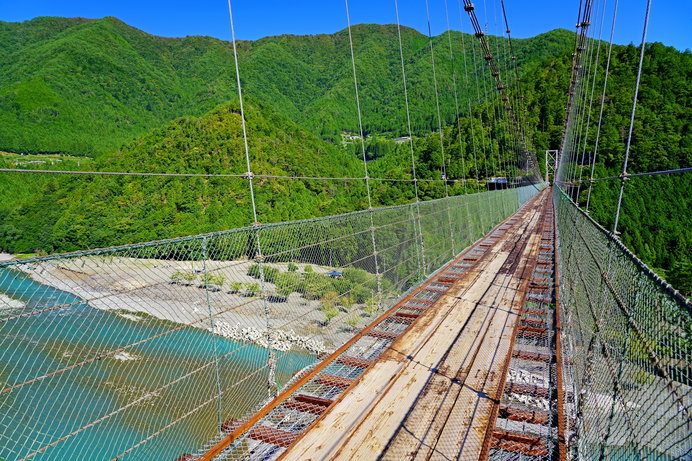
Read →Totsukawa and the Kohechi trail
Japan's largest village and the 2,500 who left for Hokkaido.
Read →The palaces and temples of Asuka
Japan's first full-scale temple and stones nobody can explain.
Read →Ishibutai Kofun
A giant tomb stripped bare to its stone chamber.
Read →Takamatsuzuka and Kitora tombs
Painted court ladies and one of East Asia's oldest star maps.
Read →Fujiwara-kyo
Japan's first planned capital, abandoned after just 16 years.
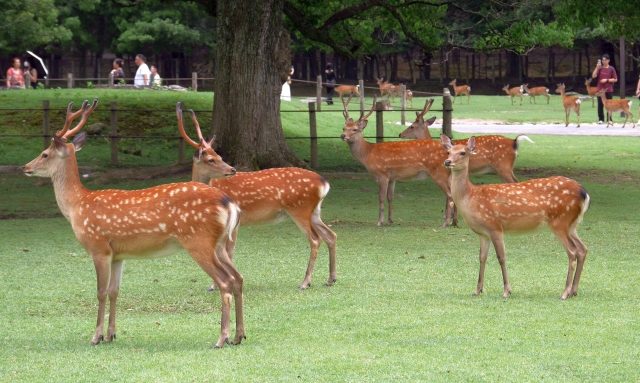
Read →Nara Park and its deer
Sacred messengers, and a thousand years of living with deer.
Read →Mount Wakakusa
A winter rite that sets the whole hill ablaze, and a tomb on top.
Read →Makimuku and Hashihaka Kofun
Was Yamatai here? A 3rd-century hub and the first great tomb.
Read →Omiwa Shrine and Mount Miwa
A shrine with no main hall: the mountain itself is the god.
Read →Isonokami Shrine and the Yamanobe Road
The mysterious seven-branched sword and Japan's oldest recorded road.
Read →Hase-dera
399 covered steps and a Kannon over ten metres tall.
Read →Muro-ji
A mountain temple open to women and the smallest outdoor five-storey pagoda.
Read →Taima-dera and Mount Nijo
The legend of a mandala woven from lotus thread in one night.
Read →The Yagyu clan village
The clan that taught shoguns the sword, and a boulder split in two.
Read →Things that began in Nara
Refined sake, tea whisks, ink sticks and manju: all from Nara.
Read →Persimmon-leaf sushi, narazuke and Miwa somen
Flavours of preservation from a land without a sea.
Read →Legends and urban legends of Nara
The Buddha's nostril, the deer and the stone pit, the Gango-ji demon.
Read →Things to do in Nara
How to see all four World Heritage sites with history in mind.
Read →Three to read first
"Common knowledge" for Nara locals
Things that surprise visitors a little, but that locals take for granted.
- "Mikasayama" and "Wakakusayama"Older locals sometimes call Mount Wakakusa "Mikasayama". But Mount Mikasa behind Kasuga Taisha is a different mountain (see Mount Wakakusa).
- Deer don't move for a car hornWaiting for deer to cross the road is an everyday sight. Nara drivers sit patiently until the deer have finished crossing (see The Deer).
- Spring comes after OmizutoriPeople say "it stays cold until Omizutori is over", and the end of the Shuni-e at Nigatsu-do in mid-March marks the start of spring (see Todai-ji).
- "Nara people shop outside Nara"Osaka and Kyoto are a short train ride away, so many people are said to do their weekend shopping outside the prefecture. Locals also joke that "Nara is a prefecture people just pass through".
- "Okaisan" for breakfastSome households still call tea porridge (chagayu) "okaisan" (see Food).
A timeline of Nara
The great settlement at Makimuku
A large settlement appears at the foot of Mount Miwa, and Hashihaka Kofun, the first giant keyhole-shaped tomb, is built.
Asuka-dera's pagoda completed
Japan's first full-scale temple, built by Soga no Umako. The Asuka Great Buddha is said to have been made in 609.
Horyu-ji founded (temple tradition)
A temple linked to Prince Shotoku. After a fire in 670, it is thought to have been rebuilt in the late 7th century.
The Isshi Incident
Soga no Iruka is struck down at the Asuka Itabuki Palace, leading to the Taika Reforms.
Capital moves to Fujiwara-kyo
Japan's first full-scale capital city. Its role ends after just 16 years.
Capital moves to Heijo-kyo
The start of the Nara period. Kofuku-ji and Yakushi-ji move to the new capital.
Eye-opening of the Great Buddha
The eye-opening ceremony is held at Todai-ji. Tradition says the Shuni-e at Nigatsu-do began the same year.
Ganjin reaches Heijo-kyo
He opens Toshodai-ji in 759.
The Shoso-in treasures
Empress Dowager Komyo donates Emperor Shomu's belongings to Todai-ji.
Kasuga Taisha founded (shrine tradition)
A god riding a deer is said to have been welcomed here.
The burning of Nanto
Taira no Shigehira's army burns Todai-ji and Kofuku-ji. They are rebuilt by Chogen and others.
The Southern Court at Yoshino
Emperor Go-Daigo sets up his court at Yoshino, beginning the era of the Northern and Southern Courts.
Today's Great Buddha Hall completed
An Edo-period rebuilding funded by Kokei's fundraising campaign.
The great Totsukawa flood
About 2,500 people move to Hokkaido and found Shintotsukawa Village.
Four World Heritage sites
Horyu-ji Area (1993), Historic Monuments of Ancient Nara (1998), Kii Mountain Range (2004) and Asuka-Fujiwara (2026) are inscribed.