Home / The Shoso-in Treasury
Shoso-in
Northwest of Todai-ji's Great Buddha Hall, in a walled grove, stands a single large wooden storehouse raised on stilts. Many of the treasures placed inside more than 1,250 years ago were never buried or stolen, but passed down and protected as heirlooms. It is a "living treasure house" with few equals anywhere in the world.
World HeritageHistoric Monuments of Ancient Nara (1998)
Labels: Factdocumented Likelysupported by most sources Legendoral tradition Urban legendlocal lore and rumour
A husband's belongings, given to the Buddha
FactWhen the retired Emperor Shomu died in Tenpyo Shoho 8 (756), Empress Dowager Komyo, on the 49th day after his death, offered the things her husband had loved to Todai-ji's Great Buddha. The inventory of these gifts is the Kokka Chinpo-cho (Record of the Nation's Rare Treasures), which contains words meaning "when I see these things, I remember the days gone by and cannot bear my grief". Further donations followed several times, and the items were placed in the Shoso, one of Todai-ji's storehouses.
FactThe treasures were later protected by a system under which the storehouse could not be opened without the emperor's permission (chokufu, the imperial seal), and since the Meiji era they have been managed by the state (today the Imperial Household Agency). The treasures now number about 9,000 items.
The end of the Silk Road
FactThe treasures include objects from all over Asia: a cut-glass bowl said to have been made in Persia (today's Iran), the "Hakururi-no-wan" (white glass bowl); a five-stringed lute of Indian origin inlaid with turban-shell mother-of-pearl, the "Raden Shitan Gogen Biwa"; musical instruments and mirrors from Tang China; and vessels from Silla. On the other hand, many items were made in Japan in imitation of Tang styles, and research into which ones came from abroad still continues.
LikelyBecause goods travelled all the way from Western Asia through China to Nara, the Shoso-in is called "the eastern end of the Silk Road". No five-stringed lute from that era survives even in India or China, its homelands, making this the only surviving example in the world.
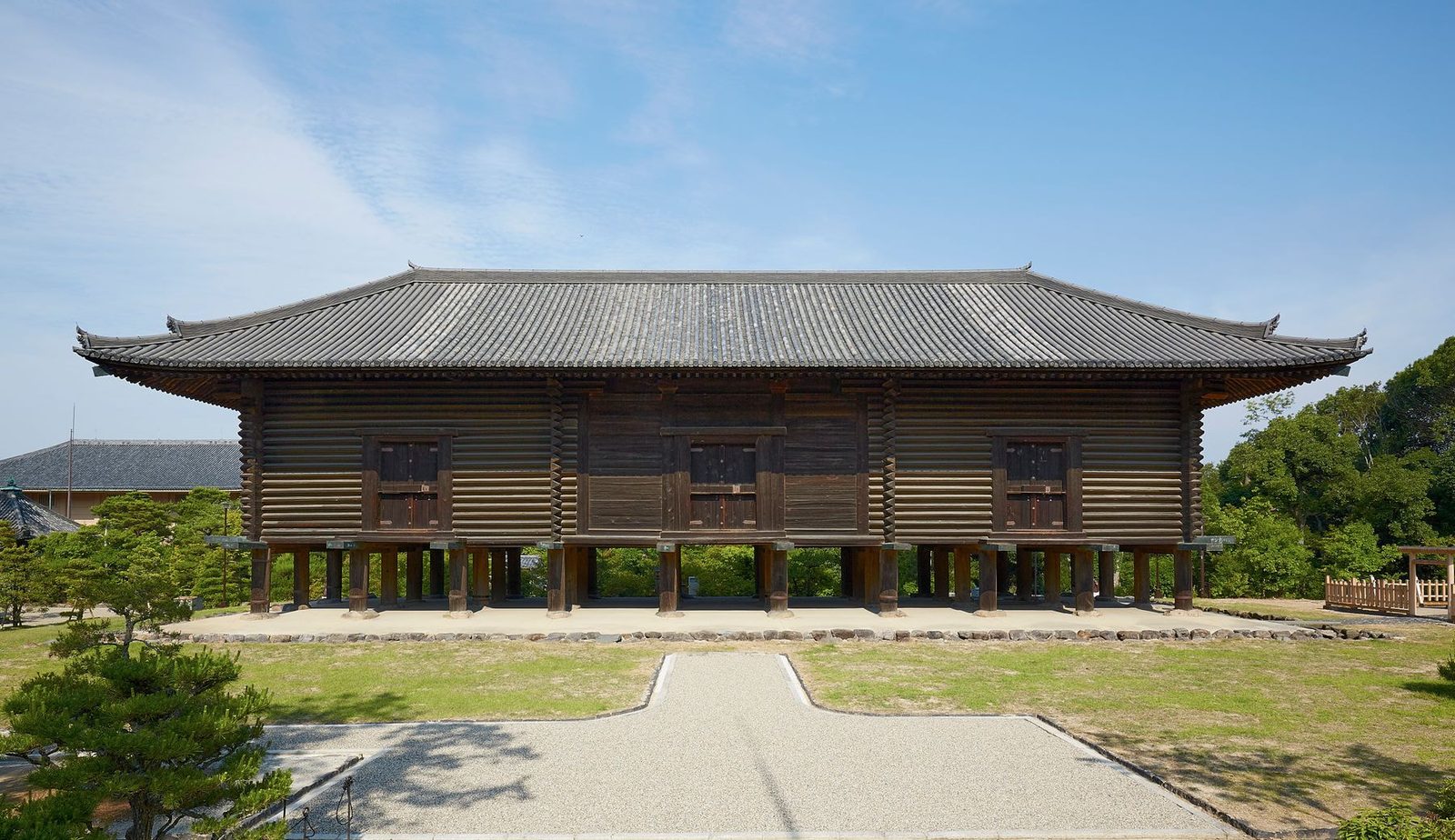
Is the azekura a "breathing storehouse"?
FactThe Shoso is built in the "azekura-zukuri" style, with walls made of timbers triangular in cross-section (azeki) stacked in a criss-cross frame, and it is divided into three sections: the North, Middle and South Repositories (the Middle Repository is enclosed with boards). Its floor is lifted on pillars about 2.7 m high.
Urban legend"On humid days the timbers swell and close the gaps, and on dry days they shrink and let the air through, and that is how the treasures were protected." This explanation once even appeared in school textbooks. In real surveys, though, the timbers swell and shrink only slightly, and the idea is now viewed sceptically. The bigger reason the treasures survived is thought to be that inside the storehouse they were further kept in wooden chests called karabitsu.
FactToday the treasures have been moved to reinforced-concrete repositories (the East and West Treasure Houses) built in 1953 and 1962, where they are kept under climate control. The Shoso itself was designated a National Treasure in 1997, and in 1998 became a component of the World Heritage site "Historic Monuments of Ancient Nara".
The incense wood cut by rulers of the realm
FactOne of the most famous treasures is a piece of incense wood about 1.5 m long called "Ojukuko", also known as "Ranjatai". Hidden within the three characters of its name are the characters for "To", "Dai" and "Ji".
FactIn 1574, Oda Nobunaga ordered Todai-ji to cut off a piece of this incense wood for him. The cut marks remain on the wood, with labels attached showing where they are. Ashikaga Yoshimasa and Emperor Meiji are also said to have taken pieces, and there are said to be about 38 cut marks in all.
Look for this: the autumn Shoso-in Exhibition
The treasures are not shown at the Shoso-in itself. Every autumn (late October to mid-November), around 60 items, a different selection each year, go on display at the "Annual Exhibition of Shoso-in Treasures" at the Nara National Museum. A treasure that has been shown is said to appear again only about once every ten years, and some fans keep coming back year after year. The exterior of the Shoso can be viewed from the outer grounds on weekdays (except around the New Year holidays and at certain other times).
Main sources: Imperial Household Agency, Office of the Shoso-in Treasure House, official website / Nara National Museum, "Annual Exhibition of Shoso-in Treasures" / Kokka Chinpo-cho / Agency for Cultural Affairs, Cultural Heritage Online