Home / Kasuga Taisha and the primeval forest
Kasuga Taisha and Kasugayama Primeval Forest
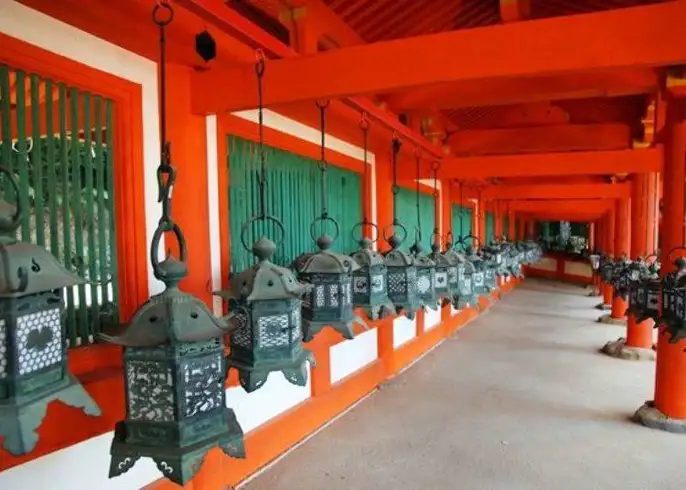
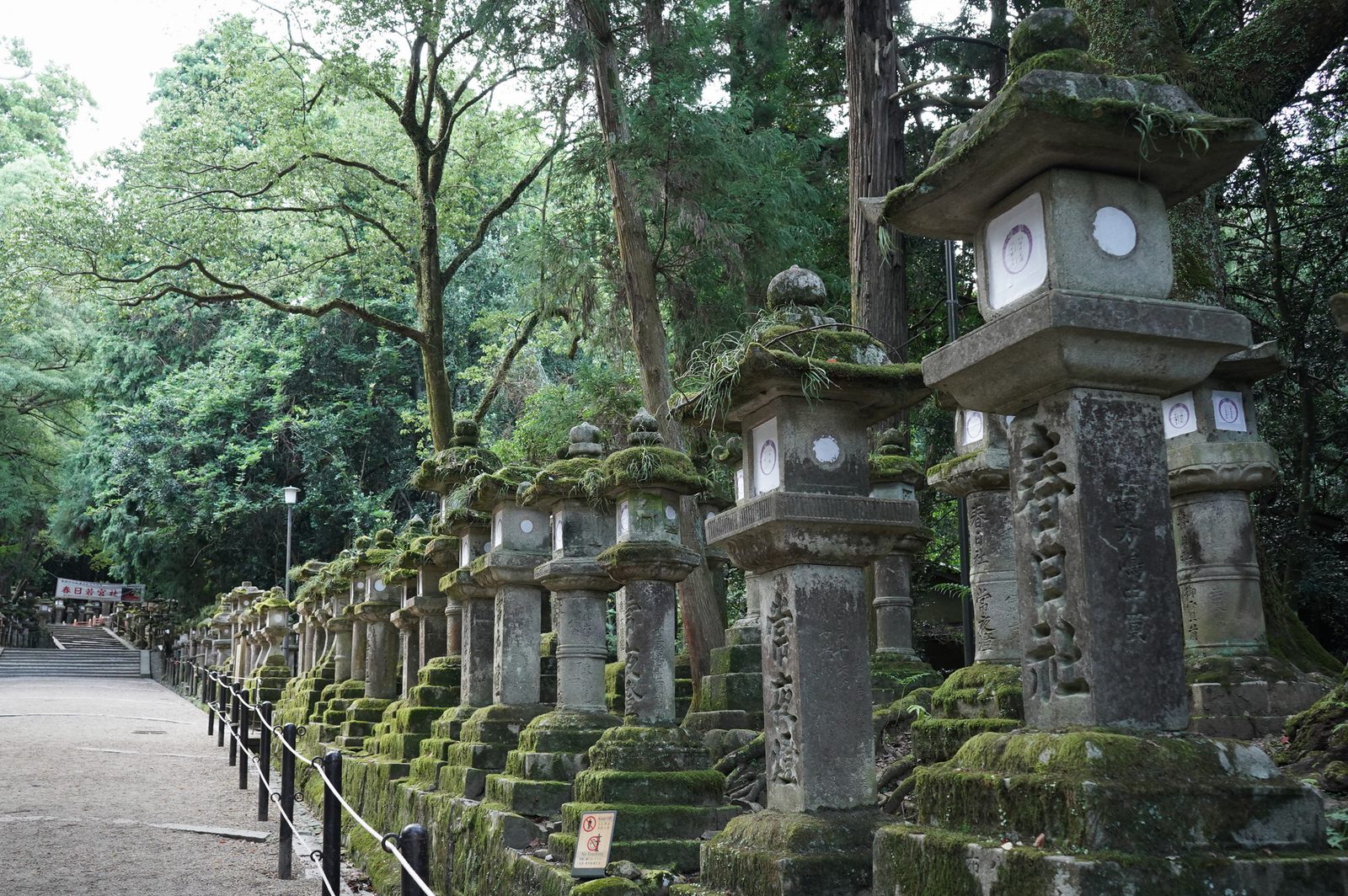
Deep in Nara Park, Kasuga Taisha's vermilion halls stand in a forest of cedar and wisteria. Some 3,000 stone and bronze lanterns line its approach. Behind the shrine, a primeval forest where hunting and logging have been banned for more than 1,000 years spreads out right next to the city.
World HeritageHistoric Monuments of Ancient Nara (1998)
Labels: Factdocumented Likelysupported by most sources Legendoral tradition Urban legendlocal lore and rumour
The god who came riding a white deer
FactKasuga Taisha is the shrine of the Fujiwara clan's ancestral gods, and its present halls are said to have been built in Jingo Keiun 2 (768). Four deities are enshrined in its main sanctuary. Takemikazuchi no Mikoto of the First Hall was welcomed from Kashima Jingu in Hitachi Province, Futsunushi no Mikoto of the Second Hall from Katori Jingu in Shimousa Province, and Ame no Koyane no Mikoto and Himegami of the Third and Fourth Halls from Hiraoka Shrine in Kawachi Province.
LegendTakemikazuchi no Mikoto is said to have come down from Kashima to Mount Mikasa riding a white deer. For this reason Nara's deer have long been cherished as "shinroku", sacred messengers of the gods (see The Deer).
3,000 lanterns, every one an offering
FactThe roughly 2,000 stone lanterns along the approach and the roughly 1,000 hanging lanterns in the corridors were offered by nobles, samurai, merchants and ordinary people, each with a prayer, from the Heian period to the present day. Some lanterns are even engraved with the names of Warring States warlords such as Naoe Kanetsugu and Todo Takatora.
FactTwice a year, on the night of Setsubun in February and on the nights of 14 and 15 August, every lantern is lit for the "Mantoro" (Ten Thousand Lanterns) festival. It is a remnant of the days when donors paid for oil and the lanterns were lit every night.
New halls every 20 years
FactKasuga Taisha has a system called "Shikinen Zotai", in which the halls are repaired or rebuilt about every 20 years, continuing since the Heian period. The most recent, the 60th, took place in 2015–2016. Besides repainting the main sanctuary in vermilion and re-roofing it, in the past the halls themselves were rebuilt.
FactWith Kofuku-ji, the Fujiwara clan temple, the shrine shared a "shinbutsu shugo" relationship in which gods and Buddhas were treated as one, and in the Middle Ages the two were even called together "Kasugasha Kofukuji" (see Kofuku-ji). The "Kasuga Wakamiya Onmatsuri" in December is a festival said to have continued without a single break since 1136.
Kasugayama Primeval Forest: an "untouched forest" right beside the capital
FactIn Jowa 8 (841), the court banned hunting and the felling of trees on Mount Kasuga, the sacred ground of Kasuga Taisha. Ever since, the forest has been protected as a mountain of the gods, and on this mountain about 500 m high a forest survives where evergreen broadleaf trees such as chinquapin and oak mix with huge firs and cedars. It is rare anywhere in the world to find a forest like this within walking distance of the centre of a city of over 300,000 people, like Nara.
FactIt was designated a national Natural Monument in 1924 and a Special Natural Monument in 1955, and in 1998 it became a component of the World Heritage site "Historic Monuments of Ancient Nara" together with Kasuga Taisha.
LikelyIn recent years, however, problems have been pointed out: the growing deer population eats young shoots, making it harder for the forest to raise its next generation, and non-native species such as nagi and Chinese tallow trees are spreading. Nara Prefecture is fencing off areas to protect young trees. How to protect this long-protected forest from here on is now the question.
Look for this: the Kasugayama trail and Wakamiya
A walking trail runs through the primeval forest, linking its north and south sides (the southern side runs parallel to the Okuyama Driveway, a road for cars). Walk it together with Wakamiya Shrine and Meoto Daikokusha, south of the main shrine, and you will see how shrine and forest form one continuous whole.
Main sources: Kasuga Taisha official website / Nara Prefecture conservation plan materials for Kasugayama Primeval Forest / Agency for Cultural Affairs, Cultural Heritage Online, "Historic Monuments of Ancient Nara" / Shoku Nihon Koki, entry for Jowa 8