Home / Tokyo by Rail
10 — RAILWAYS
Tokyo by Rail
Tokyo is a railway city like no other in the world: stations used by millions of people a day, trains arriving every few minutes, and subways crisscrossing deep underground. It all began with a small steam locomotive running along an embankment over the sea. We trace the shape of Tokyo as the railways made it.
Labels: Factdocumented Likelysupported by most sources Legendoral tradition Urban legendlocal lore and rumour
1872: from Shinbashi to Yokohama
FactOn 14 October 1872 (by the Western calendar), Japan's first railway opened between Shinbashi and Yokohama. It covered about 29 kilometres in some 53 minutes, with steam locomotives imported from Britain pulling the carriages. Today, 14 October is Railway Day.
FactShinbashi Station at that time stood around today's Shiodome. On the site of the station building, the Old Shinbashi Station has been reconstructed, and the "0-mile marker" showing the starting point of the line has also been restored. Part of the line also ran on an embankment over the sea (the Hidden Secrets room).
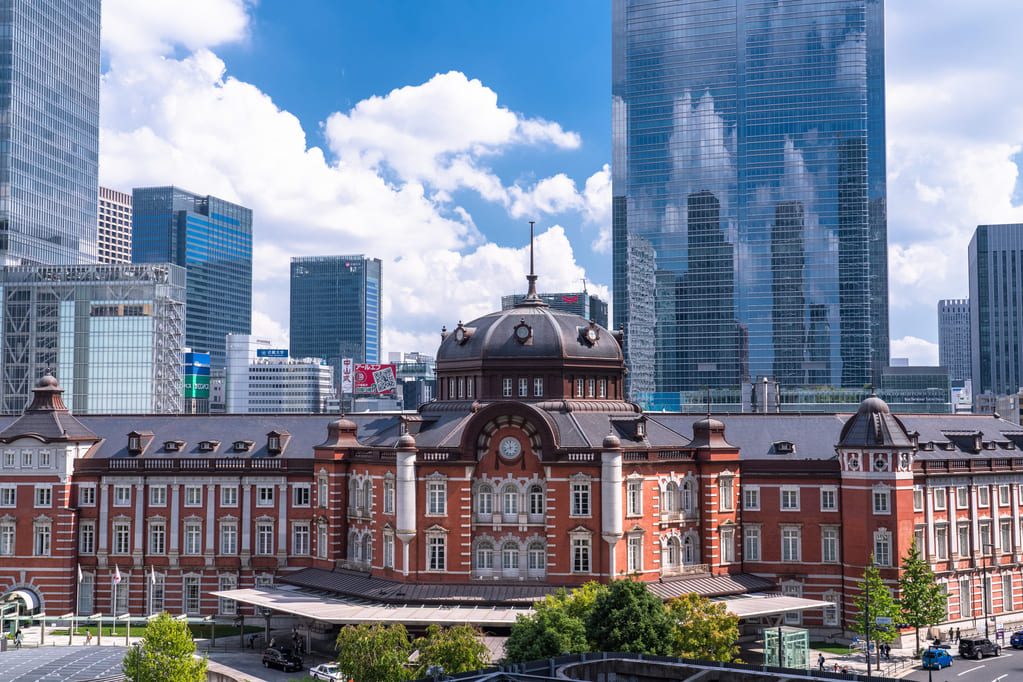
Tokyo Station — a front entrance facing the Imperial Palace
FactIn 1914, the red-brick Tokyo Station, designed by Tatsuno Kingo, opened. The front of the station building faces towards the Imperial Palace, and at its centre an entrance for the exclusive use of the Imperial Family was provided. Its roof and domes burned down in an air raid in 1945, and after the war it was repaired as a two-storey building, but in 2012 it was restored to its original three storeys and domes.
Asia's first subway
FactInspired by what he saw of the London Underground, the businessman Hayakawa Noritsugu worked tirelessly to build a subway in Tokyo too. On 30 December 1927, Asia's first subway opened over the 2.2 kilometres between Ueno and Asakusa. A poster proclaiming it "the only underground railway in the Orient" caused a sensation, and on opening day long queues formed to ride it. This line is today's Ginza Line. Hayakawa is known as "the father of the subway."
Is the Yamanote Line not actually a "loop line"?
FactThe Yamanote Line is known for its green trains that go all the way round. Yet the "Yamanote Line" as an official line covers only the section from Shinagawa via Shinjuku to Tabata. The rest, from Tabata via Tokyo to Shinagawa, is officially part of the Tohoku Main Line and the Tokaido Main Line. The "Yamanote Line" as an operating service combines these to run in a loop.
FactThe Yamanote Line began running in a loop as it does today in 1925, when the track between Tokyo and Kanda was connected. In 2020, Takanawa Gateway Station, the first new station in 49 years, opened, bringing the number of stations to 30.
Shinjuku, the world's busiest station
FactShinjuku Station is a gigantic terminal where JR, private railway and subway lines meet, and it is recognised by Guinness World Records as the station with the most passengers per day in the world. It is said to have more than 200 exits, and it is sometimes called "the Shinjuku Dungeon" (the Shinjuku room).
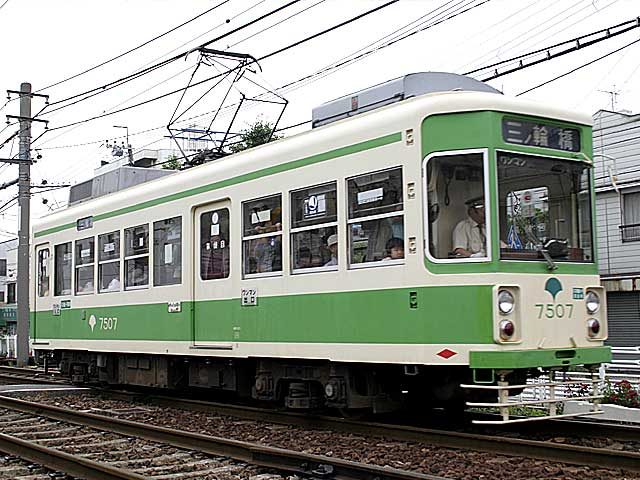
Look here: the Toden Arakawa Line (Tokyo Sakura Tram)
The Toden streetcars that once ran all over Tokyo were abolished one after another as cars became more common. Only one line remains today: the Arakawa Line, linking Waseda and Minowabashi. Ride a tram as it brushes past people's front gardens, and you will come across the scenery of Showa-era Tokyo.
Main sources: JR East, "Tokyo Station" / Tokyo Metro, "History of the Subway" / The Railway Museum / Guinness World Records / Bureau of Transportation, Tokyo Metropolitan Government, "Toden Arakawa Line"