Home / Reclaimed Land and Tokyo Bay
04 — RECLAIMED LAND
Reclaimed Land and Tokyo Bay
The office district of Marunouchi, the shopping streets of Ginza and the tourist spots of Odaiba were all once sea. For more than 400 years, Tokyo has grown by levelling hills, piling up rubbish and turning sea into land. We trace the "history of the coastline" on the map.
Labels: Factdocumented Likelysupported by most sources Legendoral tradition Urban legendlocal lore and rumour
The day the Hibiya inlet disappeared
FactWhen Ieyasu came to Edo, the Hibiya inlet spread out right in front of Edo Castle. Once the Edo shogunate was founded, the inlet was filled in with earth from the levelling of Kandayama hill (today's Surugadai), and daimyo estates and townspeople's districts took its place (the Village on an Inlet room).
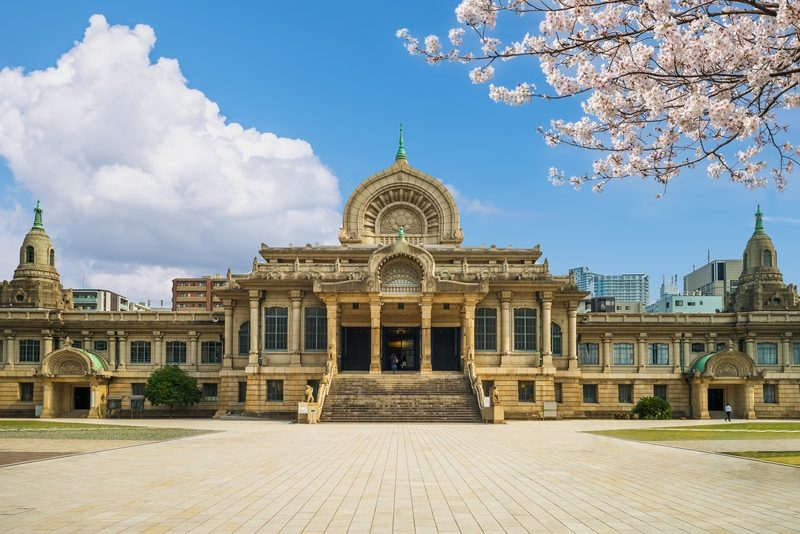
FactAfter the Great Meireki Fire, the area near the mouth of the Sumida River was also filled in, with rubble among other things, creating Tsukiji. Tsukiji means "built land" — in other words, reclaimed land. The Hongan-ji temple hall that had burned in the great fire was moved here and became today's Tsukiji Hongan-ji.
Odaiba — gun batteries against the Black Ships
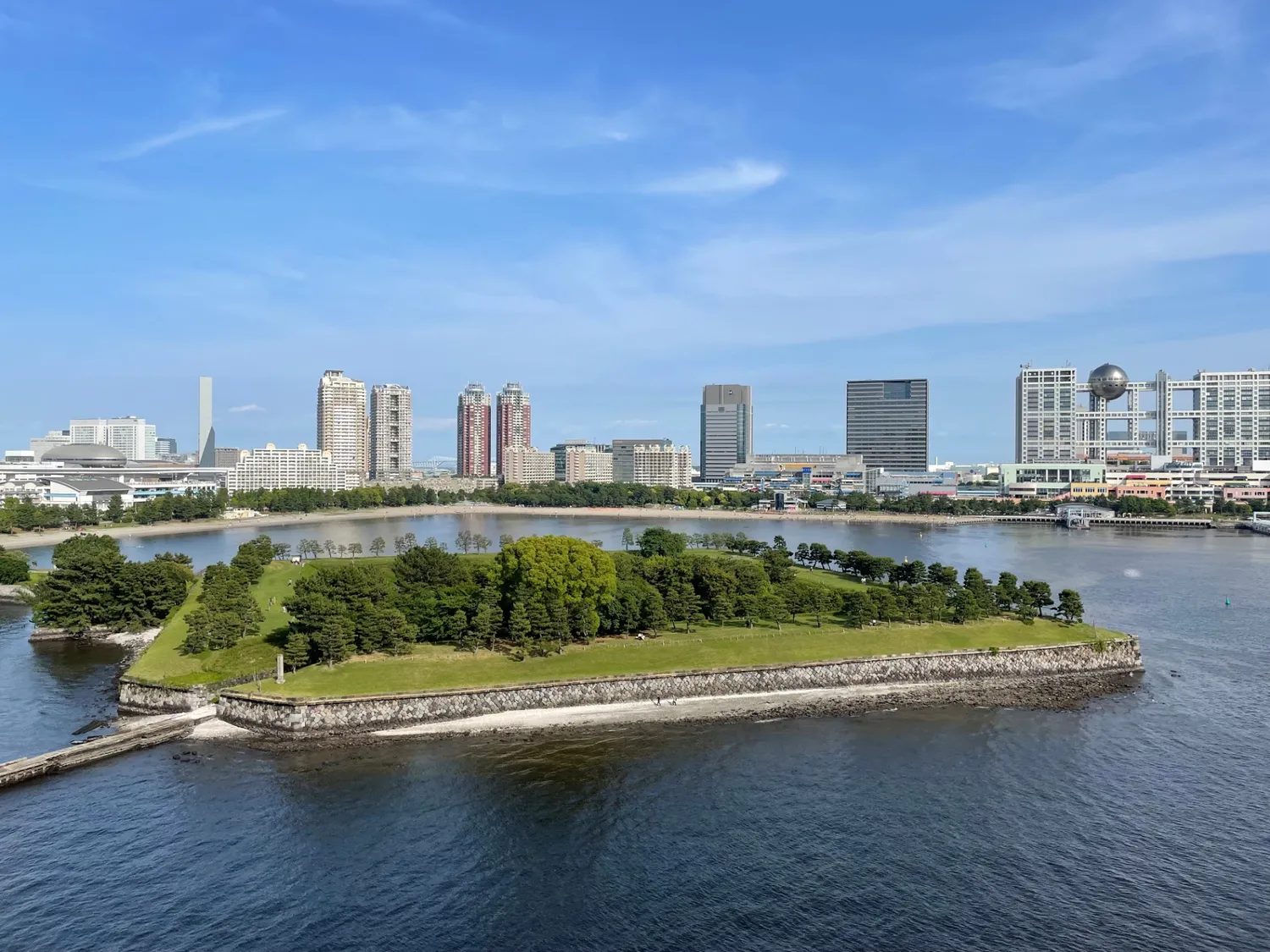
FactWhen Perry's Black Ships appeared at Uraga in 1853, the shogunate hurriedly built islands for gun batteries off Shinagawa to defend Edo Bay. These were the Shinagawa Daiba. Eleven were planned, but only some were completed. Out of respect for the shogunate's batteries, people called them "O-daiba," with an honorific "O," and so the place name Odaiba was born.
Look here: the islands beneath the Rainbow Bridge
Of the Shinagawa Daiba, the No. 3 Daiba and the No. 6 Daiba survive today and are designated National Historic Sites. The No. 3 Daiba, now joined to the mainland as Daiba Park, can be walked around, and you can see the remains of the gun emplacements and the powder magazine. Look down from the Rainbow Bridge, and the square shape of the islands is easy to make out.
Yumenoshima, the "Island of Dreams" made of rubbish
FactYumenoshima in Koto Ward was originally land whose reclamation began before the war to build an airfield. After the war, it became a landfill site for Tokyo's rubbish, and for about ten years from 1957, huge amounts of rubbish were brought here. Plagued by swarms of flies and by fires, the site was later landscaped as a park.
FactYumenoshima Park is home to a metropolitan exhibition hall displaying the hull of the Daigo Fukuryu Maru (Lucky Dragon No. 5), a tuna-fishing boat whose crew were exposed to radiation from an American hydrogen-bomb test in 1954.
A city spreading over the sea
FactReclamation continued after the Meiji era, and artificial land appeared one piece after another at the head of Tokyo Bay: Tsukishima, Harumi, Toyosu, Ariake and more. In 2018, the Central Wholesale Market in Tsukiji moved to Toyosu, on reclaimed land.
FactMeanwhile, eastern Tokyo has wide "zero-metre zones", where the ground has sunk, largely because of groundwater pumping, until it lies below sea level at high tide. In Koto, Sumida, Edogawa and other wards, embankments and floodgates protect the city from the water.
An Indian-style temple
The main hall of Tsukiji Hongan-ji, built in 1934, is in an ancient Indian style. It was designed by the architect Ito Chuta, who had surveyed Buddhist sites across Asia. After the wooden main hall burned in the Great Kanto Earthquake, it was rebuilt as a fireproof stone temple. On land reclaimed from the sea, there stands an Indian temple.
Main sources: Minato City, "Daiba" / Bureau of Port and Harbor, Tokyo Metropolitan Government, "History of the Port of Tokyo" / Daigo Fukuryu Maru Exhibition Hall / Tsukiji Hongan-ji