Home / The Taste of Edo-mae
24 — FOOD
The Taste of Edo-mae
Sushi, tempura, soba, eel. Today they are classics of refined Japanese cuisine, but in the Edo period they were fast food, eaten on the go from street stalls or bought from bote-furi pedlars who carried their wares on a shoulder pole. We trace the history of the Edo-mae flavours nurtured by the impatient, novelty-loving Edokko (true-born people of Edo).
Labels: Factdocumented Likelysupported by most sources Legendoral tradition Urban legendlocal lore and rumour
What does "Edo-mae" mean?
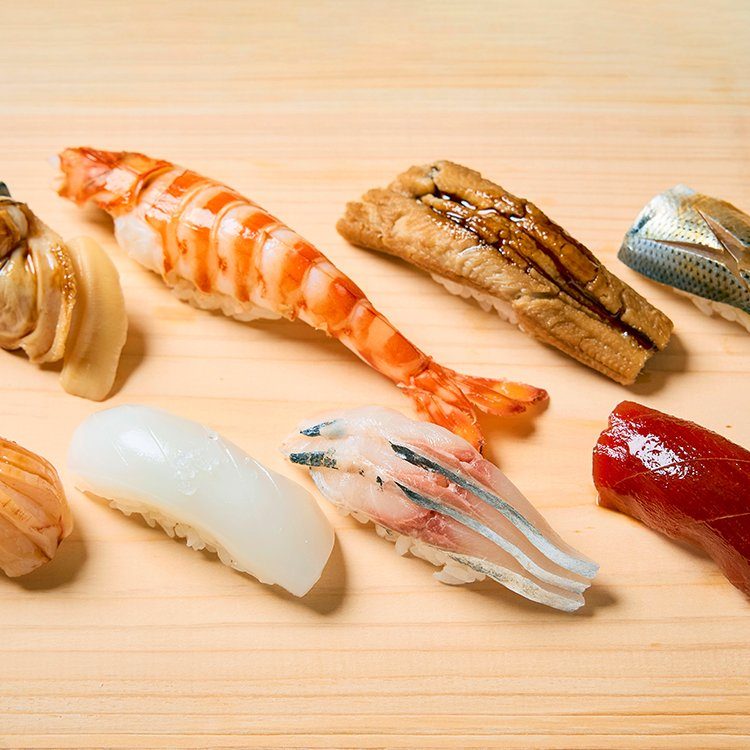
FactEdo-mae originally meant "the sea in front of Edo" — the fish and shellfish caught in the inner reaches of today's Tokyo Bay, which spread out in front of Edo Castle. In the Edo period, it is said, the term was used especially for eel caught in this sea, to distinguish it from eel from elsewhere (tabi-unagi, "travelling eel"). In time, nigiri sushi made with fresh fish from Tokyo Bay and the like also came to be called "Edo-mae".
Nigiri sushi: street-stall fast food
LikelyUntil then, sushi had mainly meant narezushi, in which fish was fermented by being packed with rice for a long time, or pressed sushi. In the early 19th century, in the Bunsei era, the person who popularised nigiri sushi — simply fresh fish placed on vinegared rice and pressed by hand — is said to have been Hanaya Yohei of Ryogoku.
FactNigiri sushi was sold at street stalls and could be eaten straight away, standing up — perfect for the impatient Edokko. Nigiri of the time are thought to have been two to three times the size of today's. Tempura, too, was sold on skewers at street stalls, partly because deep-frying indoors was frowned upon for fear of fire.
Nihachi soba and eel
LikelyThere are said to have been several thousand soba shops in the city of Edo. One theory says the name "nihachi soba" ("two-eight soba") comes from a mix of 80 percent buckwheat flour to 20 percent wheat flour; another says it comes from the price of a bowl, 16 mon (2 × 8).
The Ox Day of summer was Hiraga Gennai's slogan
A widely known story says that an eel shop struggling to sell eel in summer consulted the inventor Hiraga Gennai, who advised putting up a sign saying "Today is the Ox Day of Doyo". It was a huge hit, and the custom of eating eel on the Ox Day of the midsummer Doyo period spread.
No sources support the Gennai story
A saying that "eating something beginning with 'u' on the Ox (Ushi) Day keeps you from wilting in summer" is thought to have existed before then. There is no reliable record showing that Gennai started it, and the story is thought to have spread in a later period.
Tsukudani, monja and fukagawa-meshi
FactTsukudani is said to have begun when the fishermen of Tsukudajima simmered small fish that were no good for selling in soy sauce to preserve them. Because it kept well, samurai travelling under the alternate-attendance system took it home to their domains as a souvenir, and it spread throughout Japan (the Asakusa and Shitamachi room).
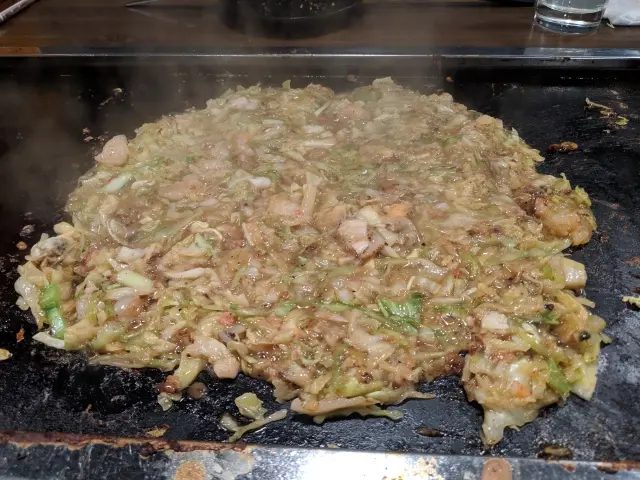
LikelyMonjayaki is said to be a corruption of "moji-yaki" ("letter-grilling"), a game in which children wrote letters on a hotplate with flour mixed with water. On Nishinaka-dori in Tsukishima, there is a "Monja Street" lined with dozens of monja restaurants. Fukagawa-meshi is said to have begun when the fishermen of Fukagawa simmered clams and spring onions in miso and ate them poured over rice.
Look here: Tsukiji Outer Market and Toyosu Market
Tsukiji's Central Wholesale Market moved to Toyosu in 2018, but the Tsukiji Outer Market, which had spread out around it, is still going strong and bustles with visitors snacking as they stroll. At Toyosu Market, you can watch the tuna auctions from the visitors' walkway.
Main sources: National Diet Library, "Kaleidoscope of Books: Food in Edo" / Tokyo Metropolitan Central Wholesale Market, "Toyosu Market" / Chuo City, "Tsukishima Monja" / Koto City, "Fukagawa-meshi"