Home / Asakusa, Shitamachi and the Sumida
13 — SHITAMACHI
Asakusa, Shitamachi and the Sumida
Asakusa, on the banks of the Sumida River, began with a single Kannon statue caught in a fishing net. The people of Edo set off fireworks over the river, went wild for sumo and threw themselves heart and soul into their festivals. This is the story of the "Shitamachi," the old downtown, which has lived on as a town of warm-hearted neighbours and festivals, however many times it was burned by great fires, earthquake and air raids.
Labels: Factdocumented Likelysupported by most sources Legendoral tradition Urban legendlocal lore and rumour
The Kannon caught in a net
LegendIn 628, a small statue of Kannon, the bodhisattva of mercy, was caught in the net of two brothers, Hinokuma Hamanari and Takenari, as they fished in the Sumida River. It is said that Senso-ji began when Haji no Nakatomo, the local headman, enshrined the statue. These three men are enshrined at Asakusa Shrine, next to Senso-ji, and its festival is the Sanja Matsuri ("Festival of the Three Shrines") (the Festivals room).
FactSenso-ji's principal image, the Kannon statue, is still an absolute hidden Buddha (zettai no hibutsu) that no one is allowed to see.
The great lantern of Kaminarimon
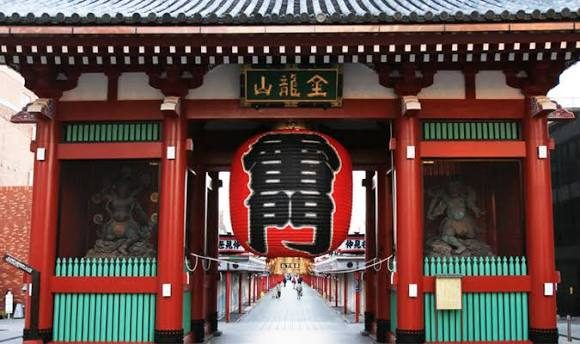
FactKaminarimon ("Thunder Gate"), the outer gate of Senso-ji, is officially called "Furaijinmon," and statues of Fujin, god of wind, and Raijin, god of thunder, stand on either side of it. It burned many times in the Edo period, and after a fire in 1865 it was not rebuilt for a long time. The present gate was rebuilt in 1960 with a donation from Matsushita Konosuke, founder of Matsushita Electric (today's Panasonic).
Look here: the dragon under the great lantern
Stand directly beneath the great lantern of Kaminarimon and look up. On the bottom of the lantern is a carved wooden dragon. Most people look only at the front of the lantern and walk on by, but looking up here is one of the pleasures of those in the know about Asakusa.
Ryogoku — a town of fireworks and sumo
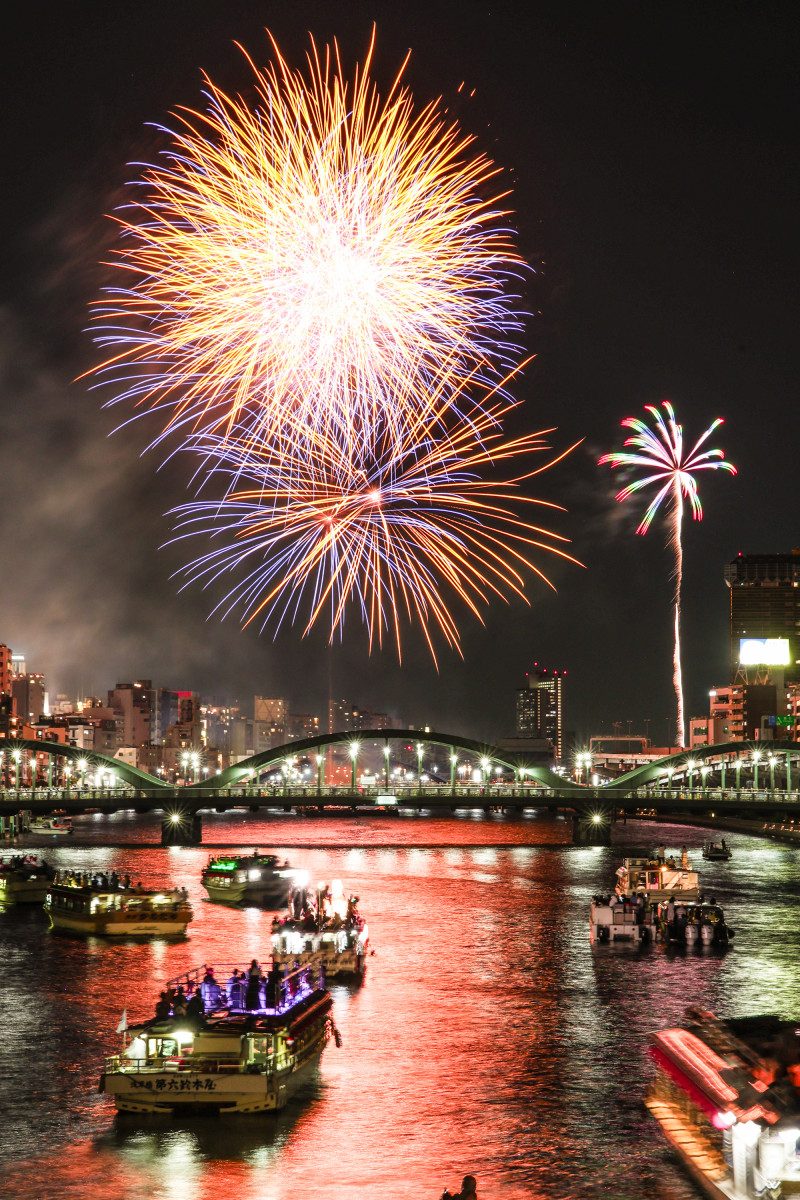
LikelyThe Sumida River fireworks are said to have begun in 1733, when fireworks were set off at a festival for the water god held to console the spirits of those who had died in the great famine and epidemics of the previous year and to drive away disease. The cries of "Tamaya!" and "Kagiya!," calling out the names of the fireworks makers, were born around this time. Today's Sumida River Fireworks Festival carries on that tradition.
FactRyogoku became the town of sumo thanks to the fund-raising sumo tournaments held in the grounds of Eko-in temple. The first Kokugikan sumo hall was built in 1909, and the present Kokugikan was completed in 1985. Sumo stables are still dotted around the streets of Ryogoku today (the Edo Chic and the Performing Arts room).
The fishermen of Tsukudajima
FactTsukudajima, at the mouth of the Sumida River, is an island made around 1644 by fishermen whom Ieyasu had brought from Tsukuda village in Settsu Province (Osaka), who filled in the tidal flats to create it. The fishermen caught whitebait and other fish and presented them to the shogun. Tsukudani, small fish simmered in a sweet-savoury soy sauce to preserve them, takes its name from this island (the Taste of Edo-mae room).
Yanaka, Nezu and Sendagi
FactYanaka, Nezu and Sendagi (known together as "Yanesen"), spreading north of Ueno, suffered relatively little damage in the Great Kanto Earthquake and the war, and old temples, wooden houses and narrow lanes survive there. Yanaka is a "temple town," to which many temples moved after the Great Meireki Fire, and some 70 temples are still gathered there today.
Main sources: Senso-ji, "The Origins of Senso-ji" / Sumida City, "History of the Sumida River Fireworks Festival" / Chuo City, "Tsukudajima" / Taito City, "Yanaka"