Home / Temples, Shrines and Tokyo's Gods
21 — SHRINES & TEMPLES
Temples, Shrines and Tokyo's Gods
In Tokyo, deep woods and old temple gates survive right next to high-rise buildings, and these temples and shrines hide some surprising histories: a forest made by people over 100 years, a temple where shoguns lie, the graves of the 47 Ronin, and a shrine whose god was once removed. These are the stories of Tokyo's gods and buddhas.
Labels: Factdocumented Likelysupported by most sources Legendoral tradition Urban legendlocal lore and rumour
Meiji Jingu: an "eternal forest" made over 100 years
FactIn 1920 Meiji Jingu was founded, enshrining Emperor Meiji and Empress Shoken. The site chosen was land in Yoyogi that had once held a daimyo estate, much of it fields and wasteland. So the forest surrounding the shrine had to be created from scratch by human hands.
FactThe forestry scholar Honda Seiroku and his colleagues planned an "eternal forest" in which the trees would renew themselves generation after generation, until eventually it could sustain itself without human help. About 100,000 trees were donated from all over Japan and planted through volunteer labour by youth groups and others. At first the forest was mainly pine, but over a little more than 100 years it has changed, just as planned, into a forest of evergreen broadleaf trees such as chinquapin, oak and camphor.
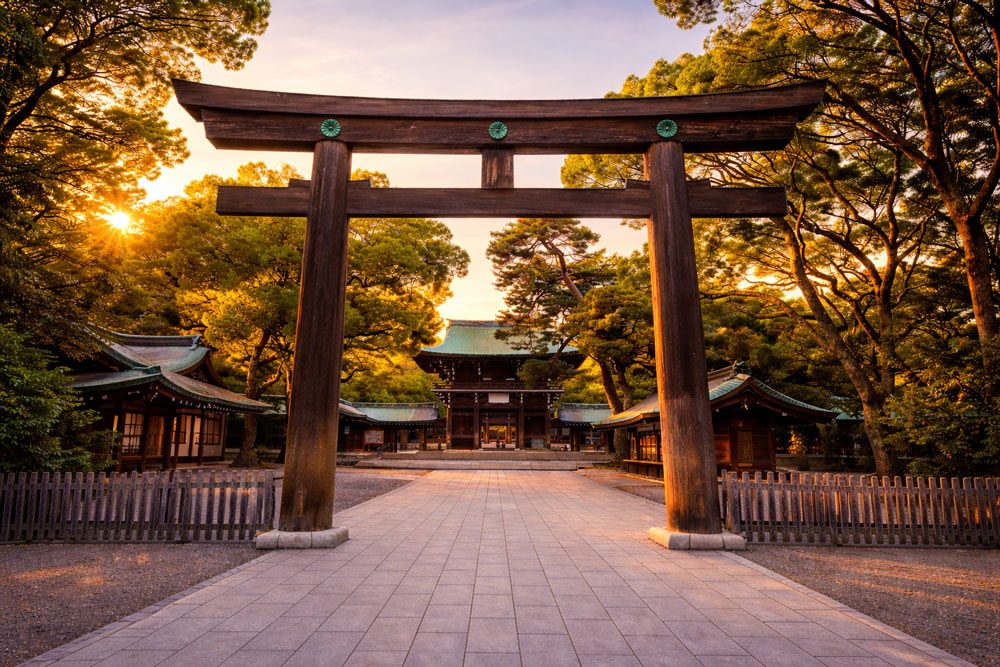
Look here: one of Japan's largest wooden torii gates
The great torii (shrine gate) on the approach to Meiji Jingu is 12 metres tall, one of the largest wooden myojin-style torii in Japan. The present gate was rebuilt in 1975 using Taiwan cypress said to be 1,500 years old, cut on Mt Dandai in Taiwan. The original gate, built when the shrine was founded, was also made of cypress from Alishan in Taiwan.
Zojo-ji and Sengaku-ji
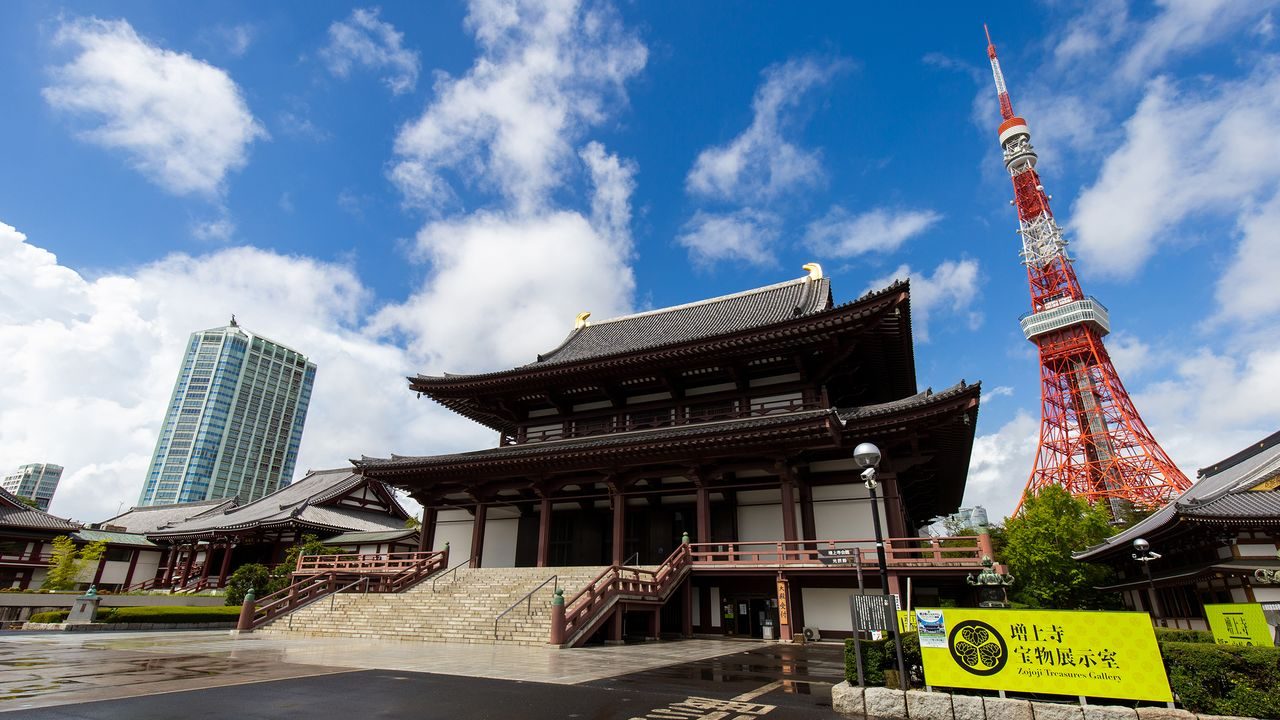
FactZojo-ji, at the foot of Tokyo Tower, is a family temple of the Tokugawa. Six shoguns, starting with the second, Hidetada, are buried here. Together with Kan'ei-ji in Ueno, it was one of the shoguns' two great family temples (the Ueno room). Its vermilion Sangedatsumon gate was built in 1622 and is a national Important Cultural Property.
FactSengaku-ji in Takanawa holds the graves of the 47 Ronin of Ako, who in 1703 killed Kira Kozukenosuke and avenged their lord. The ronin's graves are lined up beside that of their lord, Asano Takuminokami, and the smoke of incense never ceases even today. Every year on 14 December, many people come to pray at the Gishi-sai festival.
Kanda Myojin: the day Masakado came back
FactKanda Myojin, the guardian shrine of all Edo, is the ujigami (tutelary shrine) of the central districts of Edo, including Kanda, Nihonbashi, Akihabara and Marunouchi. One of its deities is Taira no Masakado, who led a rebellion in the Kanto region in the Heian period.
FactIn the Meiji era, it was deemed inappropriate to worship Masakado, who had rebelled against the emperor, so he was removed as a deity and moved to a separate shrine within the grounds. It was not until 1984, more than 100 years later, that Masakado returned as a deity of the main shrine. For Edokko (true-born Tokyoites), Masakado is still their local guardian (the Urban Legends and Ghost Stories room).
Yushima Tenjin and prayers for exam success
FactYushima Tenjin, which enshrines Sugawara no Michizane, the god of learning, is covered in ema (wooden votive plaques) praying for exam success every exam season. In the Edo period, the shogunate's academy, the Shoheizaka Gakumonjo (Yushima Seido), stood close by, and this was a district of learning. The shrine is also known for its plum blossoms.
Main sources: Meiji Jingu, "The Forest of Meiji Jingu" / Zojo-ji / Sengaku-ji / Kanda Myojin, "History of Kanda Myojin" / Yushima Tenmangu