Home / Akihabara: From Electric Town to Otaku Mecca
18 — AKIHABARA
Akihabara: From Electric Town to Otaku Mecca
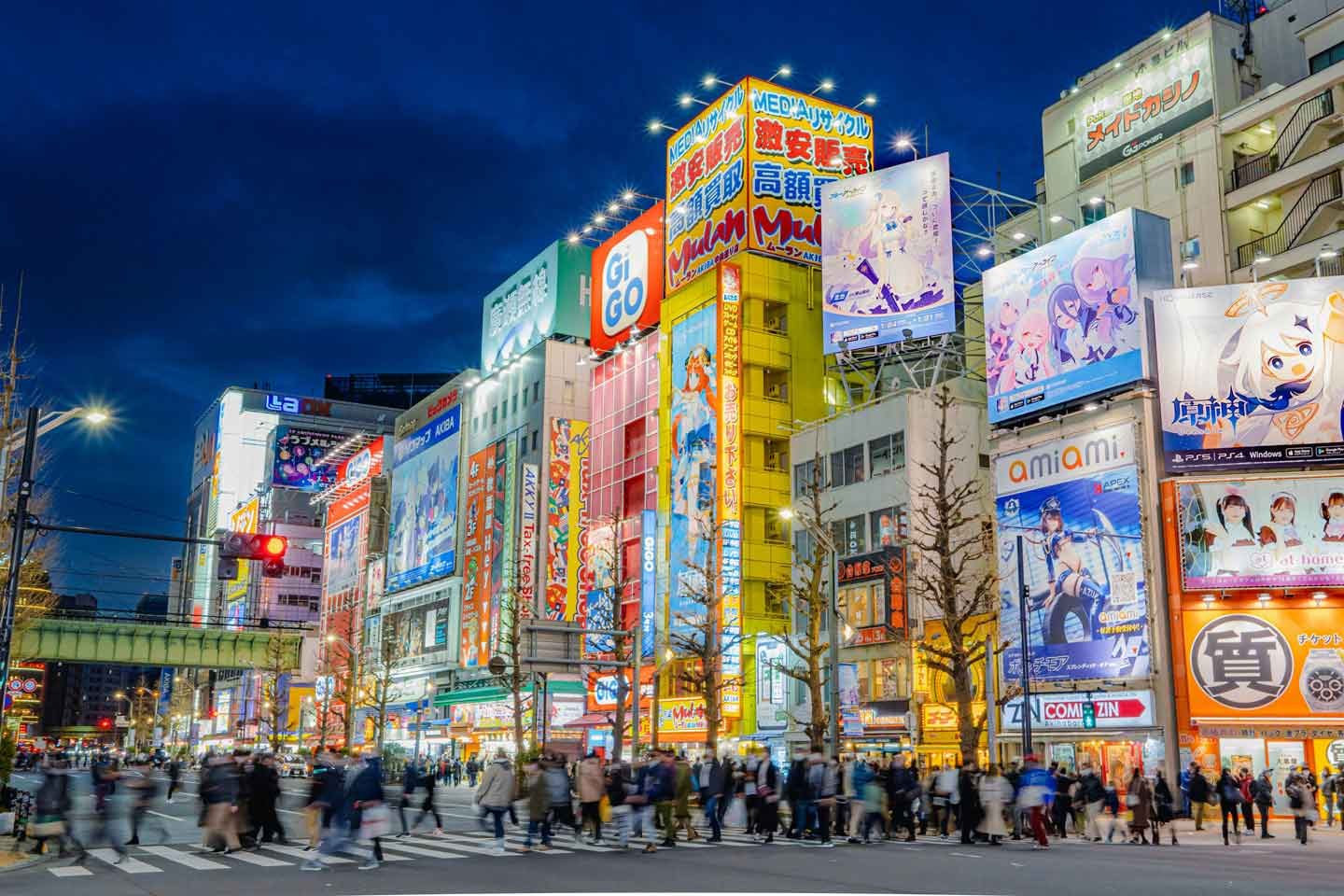
Akihabara has shown a completely different face in every era: a firebreak field, a produce market, radio-parts stalls, discount electrical goods, personal computers, and then anime, games and maid cafés. We trace its history of transformation into the world's "AKIBA".
Labels: Factdocumented Likelysupported by most sources Legendoral tradition Urban legendlocal lore and rumour
A firebreak field
FactAfter a great fire broke out in Kanda in 1869, the Meiji government turned the burned-out area into a hiyokechi (firebreak), and built a shrine there to a god of fire. People called it "Akiba-sama", the god who protects against fire, and the open ground came to be known as "Akiba no hara" or "Akibappara" (Akiba's field). In 1890 a freight station was built here, and the name, written as 秋葉原, came to be read "Akihabara" (the Place-Name Trivia room).
FactThe shrine later moved to Matsugaya in Taito City, where it is now enshrined as Akiba Shrine. The fact that locals still call Akihabara "Akiba" is a trace of this older reading.
From radio stalls to Electric Town
FactBefore the war, Akihabara was home to Kanda's fruit and vegetable market (known as the yatchaba). It became an electrical town only after the war. In the black market amid the ruins, stalls selling radio parts gathered, crowded with people building their own radios. Around 1950, when an order from GHQ (the Allied occupation headquarters) to clear street stalls banned stalls from the roads, the shops moved to places such as the space beneath the elevated tracks, and arcades like the Radio Center, packed with tiny parts shops, were born.
FactDuring the period of rapid economic growth, Akihabara became Japan's number one town for electrical appliances, filled with people seeking the "Three Sacred Treasures" — a television, a washing machine and a fridge. From the 1980s came personal computers, and from the late 1990s more and more shops selling anime, games and figures; in the 2000s, maid cafés became a talking point.
The ghost of Manseibashi Station
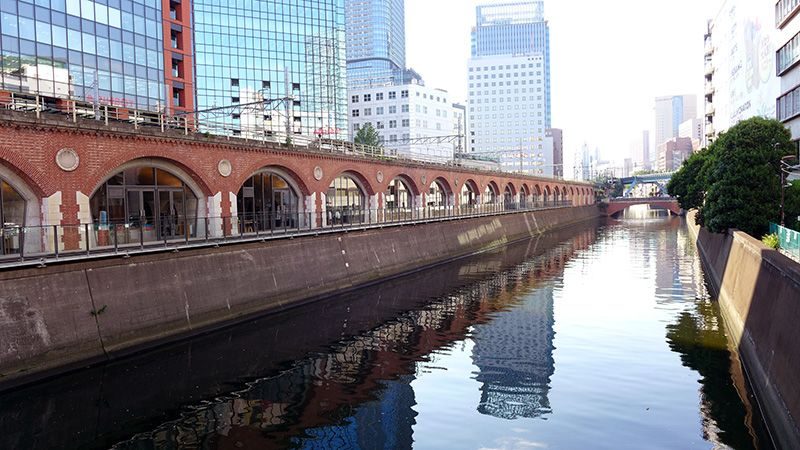
FactSouth of Akihabara Station, on the bank of the Kanda River, there was once a large terminal called Manseibashi Station. Its station building, opened in 1912, was a red-brick structure designed by Tatsuno Kingo, the architect of Tokyo Station. In front of it stood a bronze statue of Commander Hirose Takeo, a hero of the Russo-Japanese War, and the area was extremely lively.
FactBut the station building burned in the Great Kanto Earthquake, and as Akihabara and Kanda stations opened nearby, passenger numbers fell; in 1943 it closed. After a period as the Transportation Museum, in 2013 it was reborn as "mAAch ecute Kanda Manseibashi", a commercial complex making use of the red-brick viaduct. The site of the old platform is now an observation deck, with Chuo Line trains rushing past right beside it.
Look here: tiny parts shops under the tracks
Beneath the elevated Sobu Line tracks at Akihabara Station, tiny parts shops still line places such as the Akihabara Radio Center. Shelves in shops of barely one tsubo (about 3.3 square metres) are crammed with switches, resistors and cables. Step in from the main street lined with anime billboards, and you will find the origins of the postwar "Electric Town".
Main sources: Chiyoda City, "History of Akihabara" / JR East, "mAAch ecute Kanda Manseibashi" / Akihabara Radio Center