Home / The Izu and Ogasawara Islands
20 — ISLANDS
The Izu and Ogasawara Islands
Head south from Tokyo's Takeshiba Pier: first the Izu Islands — Oshima, Miyakejima, Hachijojima, Aogashima — and then, about 24 hours away by ship, the Ogasawara Islands. Islands of exiles, islands that live with volcanoes, islands first settled by Westerners — and all of them are part of Tokyo. We trace the little-known history of "island Tokyo".
Labels: Factdocumented Likelysupported by most sources Legendoral tradition Urban legendlocal lore and rumour
Hachijojima, island of exiles
FactIn the Edo period, the Izu Islands were islands of exile, where convicts were sent. Hachijojima in particular received many exiles up until the early Meiji era. The first is said to have been Ukita Hideie, a daimyo who fought as a leading commander of the Western Army at the Battle of Sekigahara. Exiled in 1606, Hideie lived on the island for about 50 years and died at the age of 84.
FactMany of the exiles had learning or skills, and they influenced the island's culture. Kihachijo, the silk fabric that is Hachijojima's speciality, is known for its checks in yellow and kite-brown, dyed with plants that grow wild on the island, and it was popular in Edo as well.
Islands that live with volcanoes
FactThe Izu Islands are volcanic. In 1986 Mt Mihara on Oshima erupted, and all of the island's roughly 10,000 residents were evacuated off the island for about a month. In 2000 Mt Oyama on Miyakejima erupted; because of volcanic gas the entire population was evacuated, and they were able to return only in 2005, about four and a half years later.
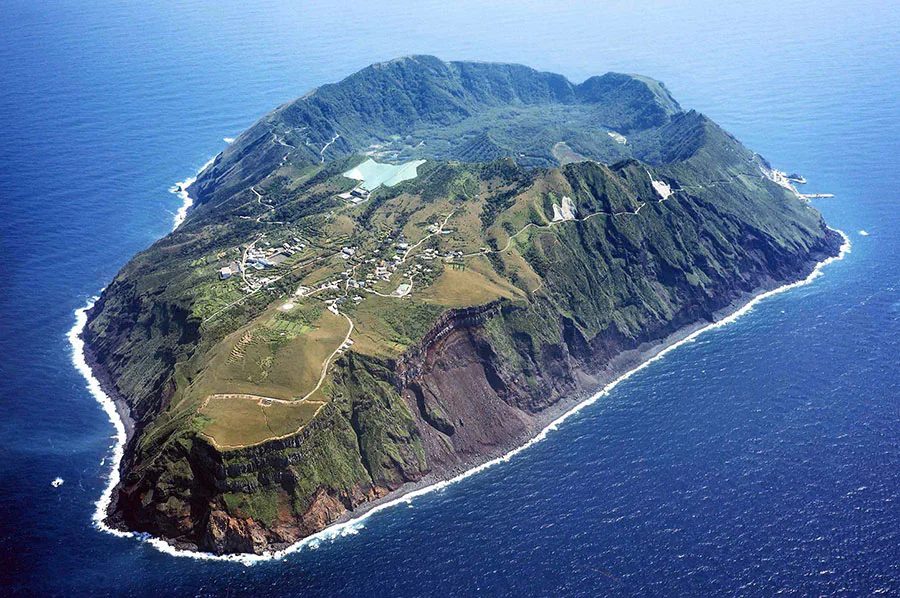
FactAogashima, further south still beyond Hachijojima, is an island with a double caldera — a second volcano inside the outer crater rim — something rare anywhere in the world. With a population of about 170, it is known as the least populated village in Japan.
Ogasawara: the first residents were Westerners
LikelyIn English, the Ogasawara Islands are also called the "Bonin Islands". The name is thought to be a corruption of "munin" (bunin), meaning "uninhabited".
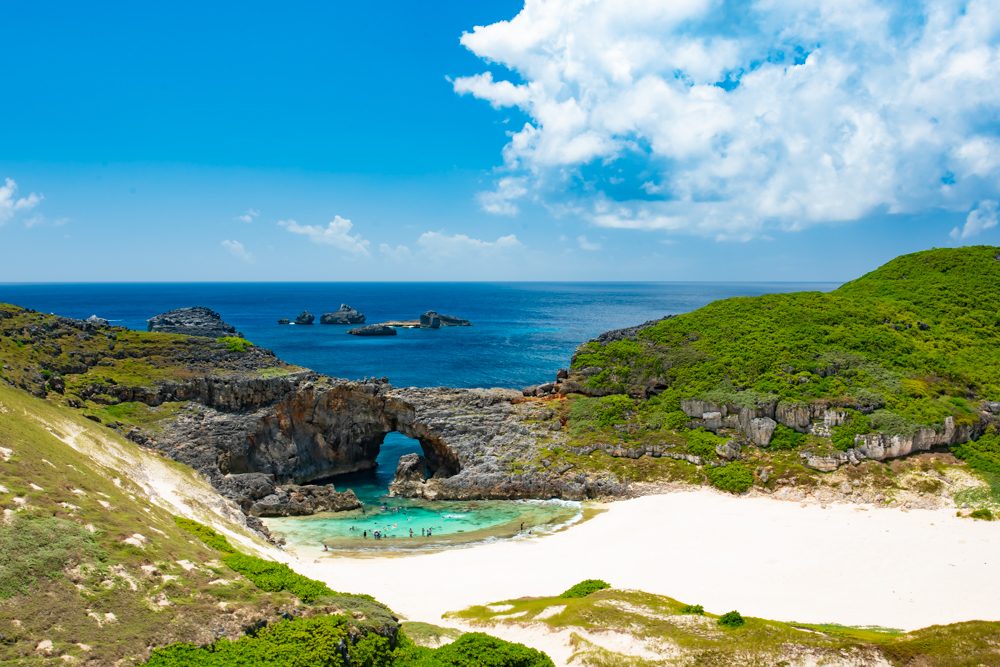
FactIn 1830, Americans and Europeans who had come from Hawaii, along with people from the Pacific islands, began living on Chichijima. They were Ogasawara's first settlers. In 1876 Japan notified other countries that it was making Ogasawara Japanese territory, and the Western-descended residents gained Japanese nationality and remained. Descendants of these Western families still live on the islands today.
FactIn 1944, during the Pacific War, many of the islanders were forcibly evacuated to mainland Japan. After the war Ogasawara was placed under US military administration, and only residents of Western descent were allowed to return. The islands were returned to Japan on 26 June 1968, and at last the other islanders could come home too.
FactBecause Ogasawara has never been connected to a continent, many of its plants and animals have evolved in unique ways, and it is sometimes called "the Galapagos of the Orient". In 2011 it was inscribed as a World Natural Heritage site.
Look here: Japan's easternmost and southernmost points are in Tokyo too
Minamitorishima, the easternmost point of Japan, and Okinotorishima, the southernmost, both belong to Ogasawara Village, Tokyo. In other words, by address, Japan's eastern and southern extremities are in "Tokyo".
Main sources: Ogasawara Village, "History of Ogasawara" / Ministry of the Environment, "Ogasawara Islands World Natural Heritage" / Hachijo Town, "History of Hachijojima" / Japan Meteorological Agency, "Volcanic Activity of Miyakejima and Izu-Oshima"