Home / Urban Legends and Ghost Stories
26 — LEGENDS
Urban Legends and Ghost Stories
In a corner of Otemachi, among the skyscrapers, stands a mound long feared to bring a curse on anyone who moves it. Mysterious devices guarding the city of Edo, the real Oiwa of the Yotsuya ghost story, secrets beneath the National Diet Building: we introduce the legends and urban legends told in Tokyo, marking where history ends and legend begins.
Labels: Factdocumented Likelysupported by most sources Legendoral tradition Urban legendlocal lore and rumour
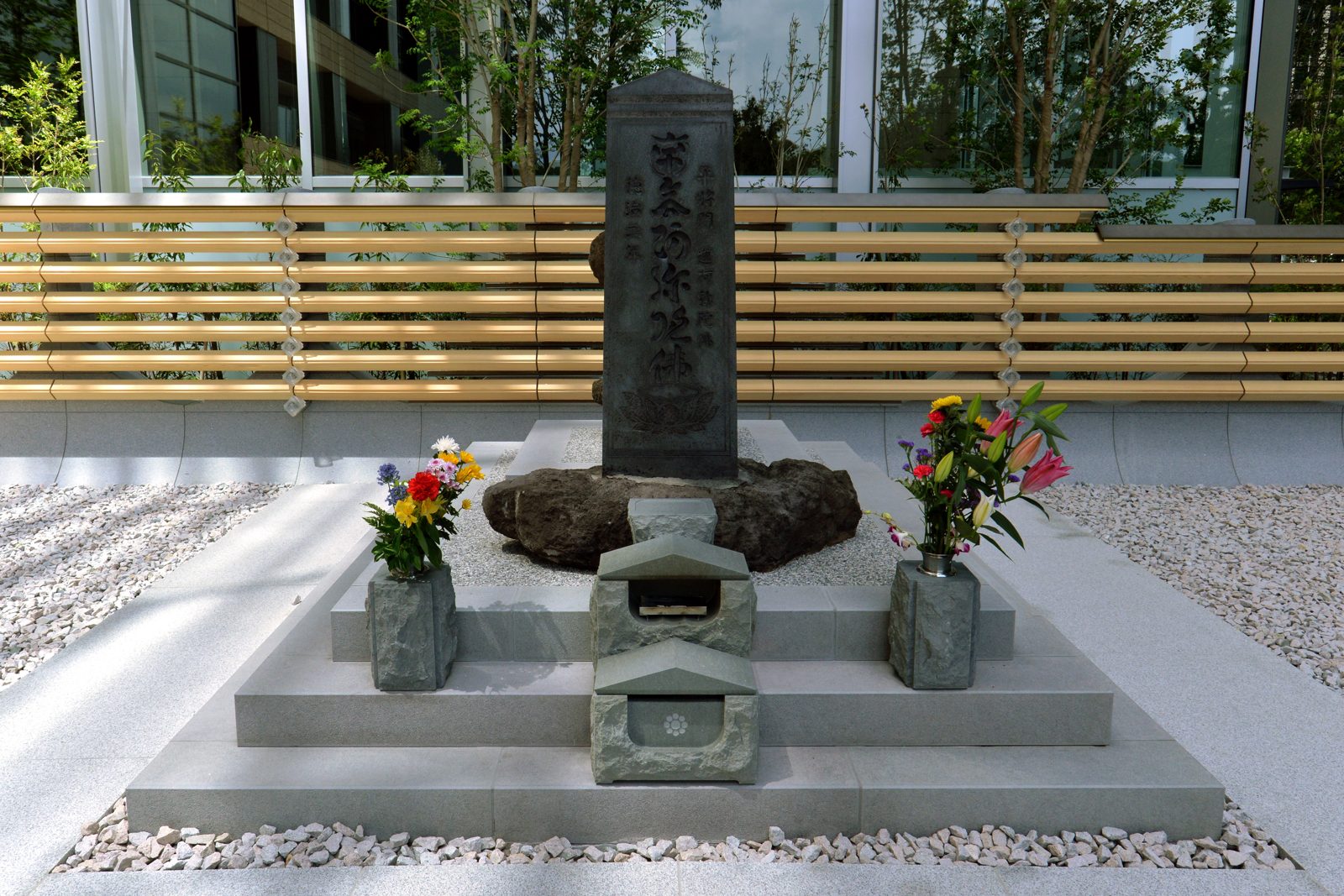
Masakado's head mound in Otemachi
FactIn 940, in the Heian period, Taira no Masakado, who had risen against the imperial court in the Kanto region, was killed, and his head was put on display in Kyoto. The Masakado-zuka, in a corner of the office district of Otemachi in Chiyoda City, is said to be the place where Masakado's head is enshrined.
"Move it and you will be cursed"
After the Great Kanto Earthquake, a temporary Ministry of Finance building was put up on top of the head mound, and the minister and officials died one after another. After the war, when GHQ (the Allied occupation headquarters) tried to demolish the mound to make a car park, a bulldozer overturned in an accident — or so the stories go, and the mound has long been feared: "move the head mound and you will be cursed".
A mound that has been carefully protected
It is on record that a temporary Ministry of Finance building was put up there and that people involved died, but nothing shows a link to any curse. The mound has been protected by local people; it was renovated in 2021, and flowers and incense are still always left there. It is also said that care is taken so that the windows of the surrounding buildings do not turn their backs on the mound.
"The head flew back from Kyoto"
A legend tells that Masakado's head, displayed in Kyoto, opened its eyes night after night and cried out for its body, until at last it flew through the sky towards Kanto. The place where the head fell is today's head mound.
A mound made by people who revered Masakado
The flying head is a legend, but Masakado was loved by the people of Kanto as a hero who stood up to the imperial court. The head mound is thought to be a place where such people held memorial rites for him (the Temples, Shrines and Tokyo's Gods room).
The "demon gate" and the "Five-Coloured Fudo" guarding Edo
FactKan'ei-ji was placed to the northeast of Edo Castle, in the direction of the kimon ("demon gate"), and Zojo-ji to the southwest, the ura-kimon (rear demon gate). It is clearly recorded that Kan'ei-ji was built in imitation of Enryaku-ji on Mt Hiei, which guards the demon gate of Kyoto (the Ueno room).
"The Five-Coloured Fudo form a protective barrier around Edo"
A widely told theory says that the five Fudo temples — Meguro, Mejiro, Meaka, Meki and Meao ("black-eyed", "white-eyed", "red-eyed", "yellow-eyed" and "blue-eyed" Fudo) — were placed by Tenkai as a protective barrier around Edo, based on the theory of the Five Elements.
Were the "five colours" put together later?
The five Fudo temples do exist, but their origins are unclear — there are two Meki Fudo, for example. The name "Five-Coloured Fudo" is thought to have spread only from the late Edo period onwards, and there are no sources showing that Tenkai placed them.
Oiwa of the Yotsuya ghost story
Oiwa, betrayed by her husband, becomes a ghost
In Tsuruya Nanboku's kabuki play Tokaido Yotsuya Kaidan (1825), Oiwa, whose face is disfigured after her husband Iemon poisons her, becomes a ghost and takes revenge on him. It is one of the most famous ghost stories in Japan.
Was the real Oiwa a good wife?
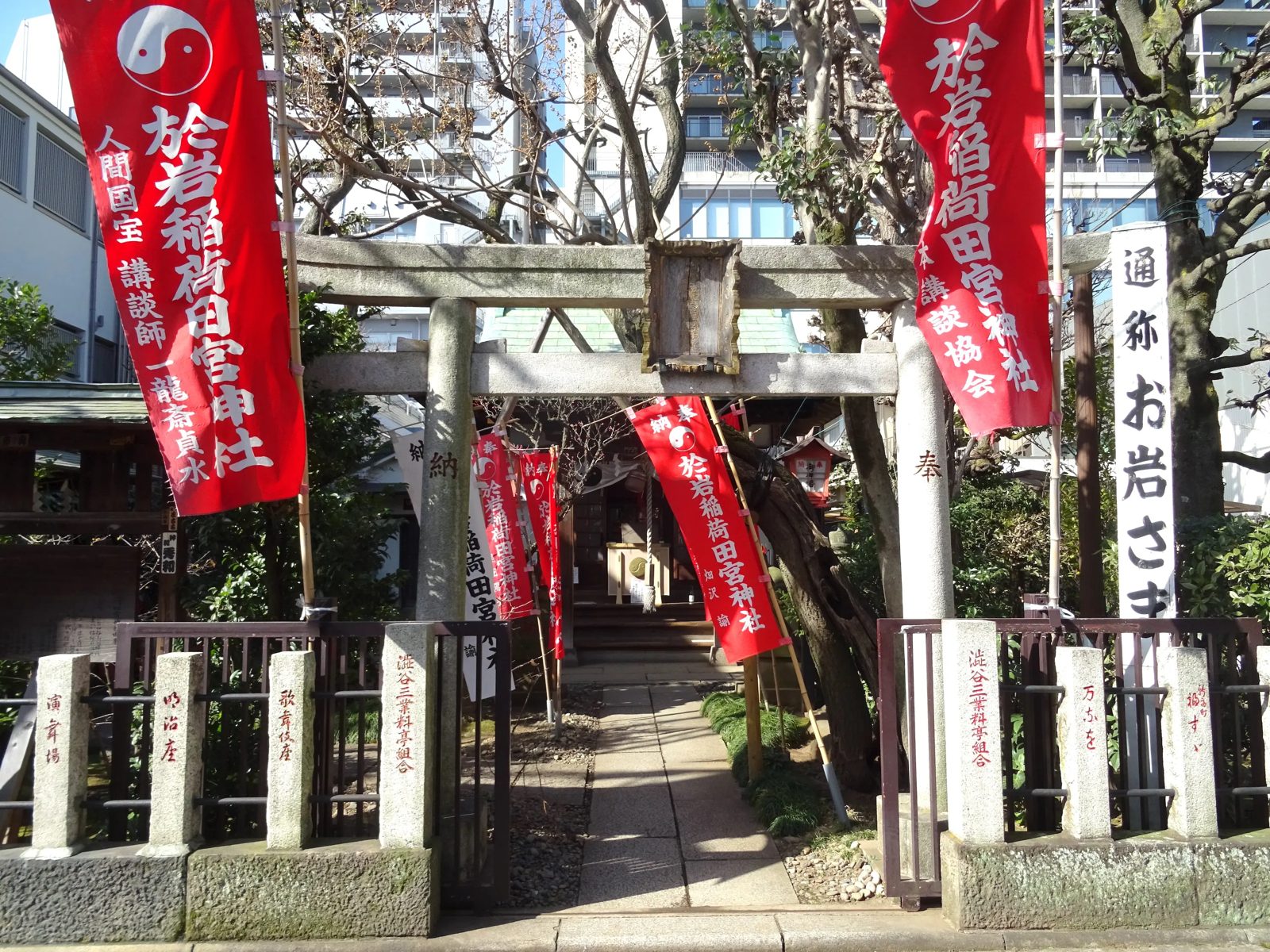
In Yotsuya there is Oiwa Inari Tamiya Shrine, which enshrines Oiwa of the Tamiya family, who really existed. According to the shrine's tradition, Oiwa was a good wife who got on well with her husband and restored the family's fortunes, and people came to pray there hoping to share in the blessings of her faith. The ghost story is thought to be Nanboku's invention, combining real incidents and other material. It is still customary for actors performing Yotsuya Kaidan to pay their respects at this shrine and others.
The Seven Wonders of Honjo
LegendIn Honjo, in the area of today's Sumida City, ghost stories known as the "Seven Wonders of Honjo" have been handed down. They include "Oitekebori" ("the Leave-It Moat"), where anyone who tries to take home the fish they have caught hears a voice from the moat calling "Leave it, leave it"; "Baka-bayashi", festival music heard when no one is there; and "Okuri-chochin" ("the escorting lantern"), a light that moves away in the middle of the night. Signs explaining the Seven Wonders still stand at various spots in Sumida City.
The tunnels under the National Diet Building
"There is a labyrinth under Nagatacho"
It is whispered that a network of secret tunnels runs beneath the National Diet Building, connecting it to the Prime Minister's Office and even to subway stations.
The underground passages really exist
The National Diet Building is in fact connected by underground passages to the members' office buildings of the House of Representatives and the House of Councillors across the road, and Diet members and their secretaries use them every day. However, stories of secret passages leading to the Prime Minister's Office or the subway have not been confirmed.
Main sources: Chiyoda City, "Masakado-zuka" / Kanda Myojin / Oiwa Inari Tamiya Shrine / Sumida City, "The Seven Wonders of Honjo" / House of Councillors, "The National Diet Building"