Home / Civilisation and Enlightenment
09 — CIVILISATION & ENLIGHTENMENT
Civilisation and Enlightenment
In Meiji-era Tokyo, the "West" appeared one thing after another: gas lamps, streets of brick, Western-style balls, a tall tower with a lift. People called it bunmei kaika, "civilisation and enlightenment," and they were amazed, amused and sometimes resentful. We trace the birth of Tokyo as a modern city.
Labels: Factdocumented Likelysupported by most sources Legendoral tradition Urban legendlocal lore and rumour
The Ginza Brick Town, born of a great fire
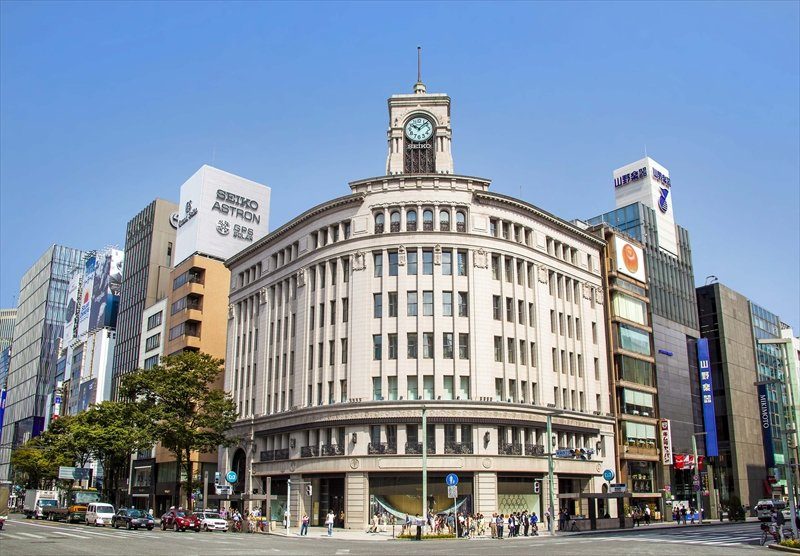
FactIn 1872, a fire that broke out near the Wadakura gate burned everything from Ginza to Tsukiji. Taking this as its cue to build a city that would not burn easily, the Meiji government constructed streets of brick buildings in Ginza, designed by the British engineer Thomas Waters. The Ginza Brick Town, completed around 1877, had broad streets with separate pavements and carriageways, lined with trees.
LikelyAt first, however, it is said that few people wanted to live there, because the buildings trapped damp and the rents were high, among other reasons. In time, newspaper offices, Western clothing shops and watchmakers gathered there, and Ginza became the place where fashions were born.
Gas lamps and "Gin-bura"
FactIn 1874, gas lamps were lit along the streets of Ginza (Japan's first gas lamps had appeared in Yokohama in 1872). Crowds flocked to Ginza to see the lights brightening the night streets. By the Taisho period, strolling aimlessly along the streets of Ginza had come to be called "Gin-bura".
"Gin-bura" means "Brazilian coffee in Ginza"
A theory has spread in recent years that "Gin-bura" originally meant drinking Brazilian coffee at a café in Ginza.
"Strolling about" is the usual view
Based on Taisho-era sources and other evidence, the usual view is that the word was used to mean "strolling about (bura-bura) in Ginza." The coffee theory is thought to have spread at a later date.
The Rokumeikan and "Westernisation"
FactIn 1883, the Rokumeikan, a Western-style hall for social gatherings, was completed in Hibiya. It was designed by the British architect Josiah Conder. Aiming to revise the unequal treaties with the Western powers, the government held balls here in an effort to show that Japan was a "civilised nation." But the unfamiliar Western dress and dancing were also criticised as "aping." The Rokumeikan was demolished in 1940, and today only a monument marks its site.
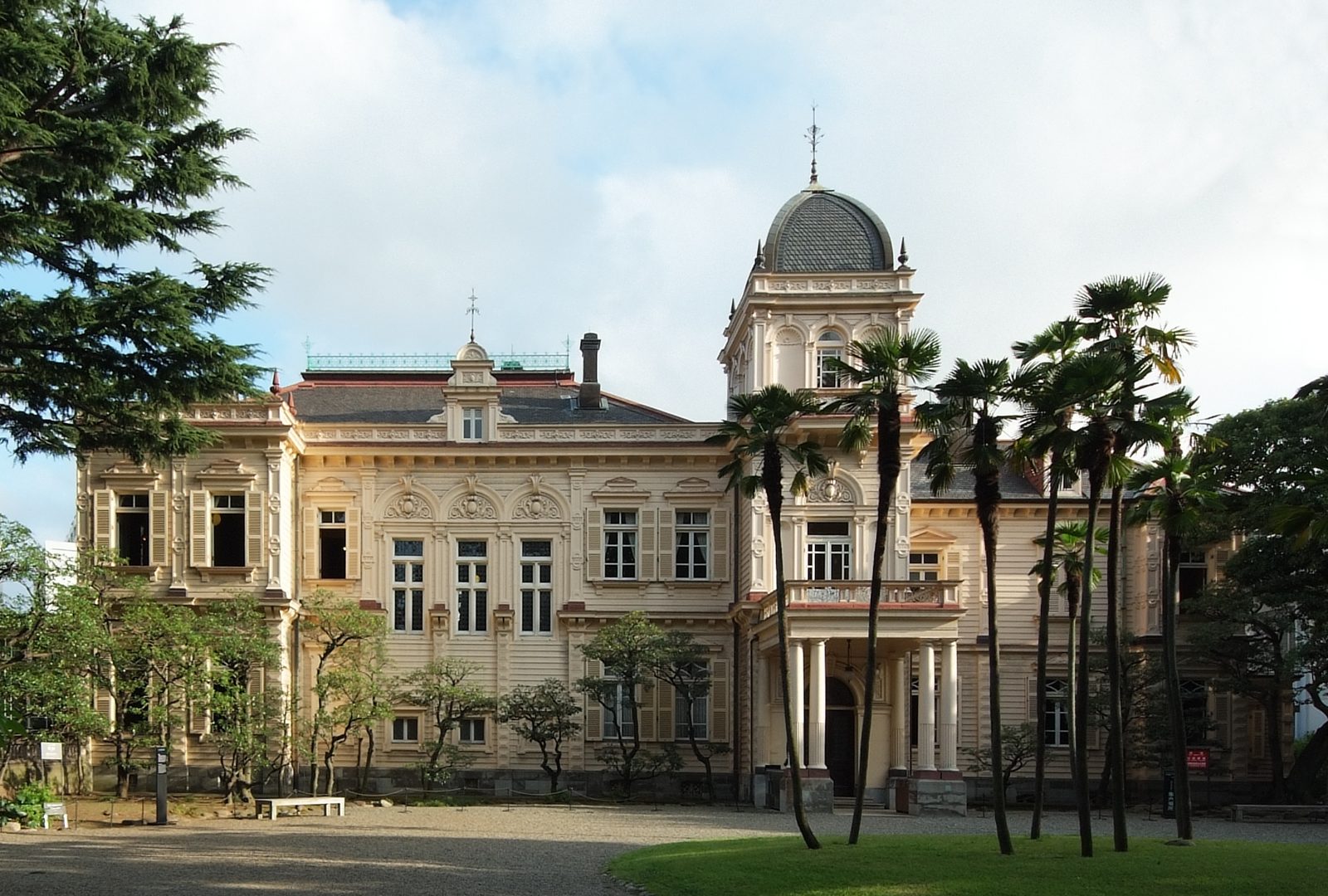
FactAt the Imperial College of Engineering (today's Faculty of Engineering at the University of Tokyo), Conder trained Japanese architects, including Tatsuno Kingo, who designed Tokyo Station. Among his works, the Former Iwasaki Residence in Yushima and Nikolai-do cathedral, whose construction he supervised, still stand today.
The Asakusa Twelve Storeys — Japan's first lift
FactIn 1890, the Ryounkaku, a twelve-storey tower about 52 metres tall, was completed in Asakusa. People called it the "Asakusa Twelve Storeys" (Asakusa Junikai). It was astonishingly tall for its time, and it also caused a stir by having the first electric lift in Japan.
FactIn the Great Kanto Earthquake of 1923, however, the Ryounkaku collapsed from the upper floors down and was later demolished. In 2018, bricks thought to be from the Ryounkaku's foundations were found on a construction site in Asakusa.
Look here: the Former Iwasaki Residence Garden in Ueno
This Western-style house was built in 1896 as the main residence of the Iwasaki family, founders of Mitsubishi. It was designed by Conder. A two-storey wooden Western-style house, a Japanese-style house and a billiard room survive, and they are an Important Cultural Property of Japan. Here you can walk right inside and experience the "West" of Meiji-era Tokyo.
Main sources: Chuo City, "Ginza Brick Town" / Tokyo Metropolitan Government, "Former Iwasaki Residence Garden" / Taito City, "Ryounkaku" / Chiyoda City, "Site of the Rokumeikan"