Home / Ueno: Kan'ei-ji and Saigo
14 — UENO
Ueno: Kan'ei-ji and Saigo
Ueno Park, home to art galleries, museums and a zoo, was once the grounds of a vast temple that guarded the unlucky northeast of Edo Castle. It became a battlefield in the Boshin War, then Japan's first park, and finally the site of a statue of Saigo with his dog. We trace how the hill of Ueno has changed.
Labels: Factdocumented Likelysupported by most sources Legendoral tradition Urban legendlocal lore and rumour
Kan'ei-ji, the Mt Hiei of the East
FactIn 1625 the monk Tenkai, who had served three generations of Tokugawa shoguns — Ieyasu, Hidetada and Iemitsu — founded Kan'ei-ji on the Ueno plateau. Seen from Edo Castle, Ueno lay to the northeast, the direction of the kimon ("demon gate"), through which demons were believed to come and go. Just as Enryaku-ji on Mt Hiei guarded the demon gate of the imperial palace in Kyoto, Kan'ei-ji was given the mountain name Toeizan, meaning "the Mt Hiei of the East".
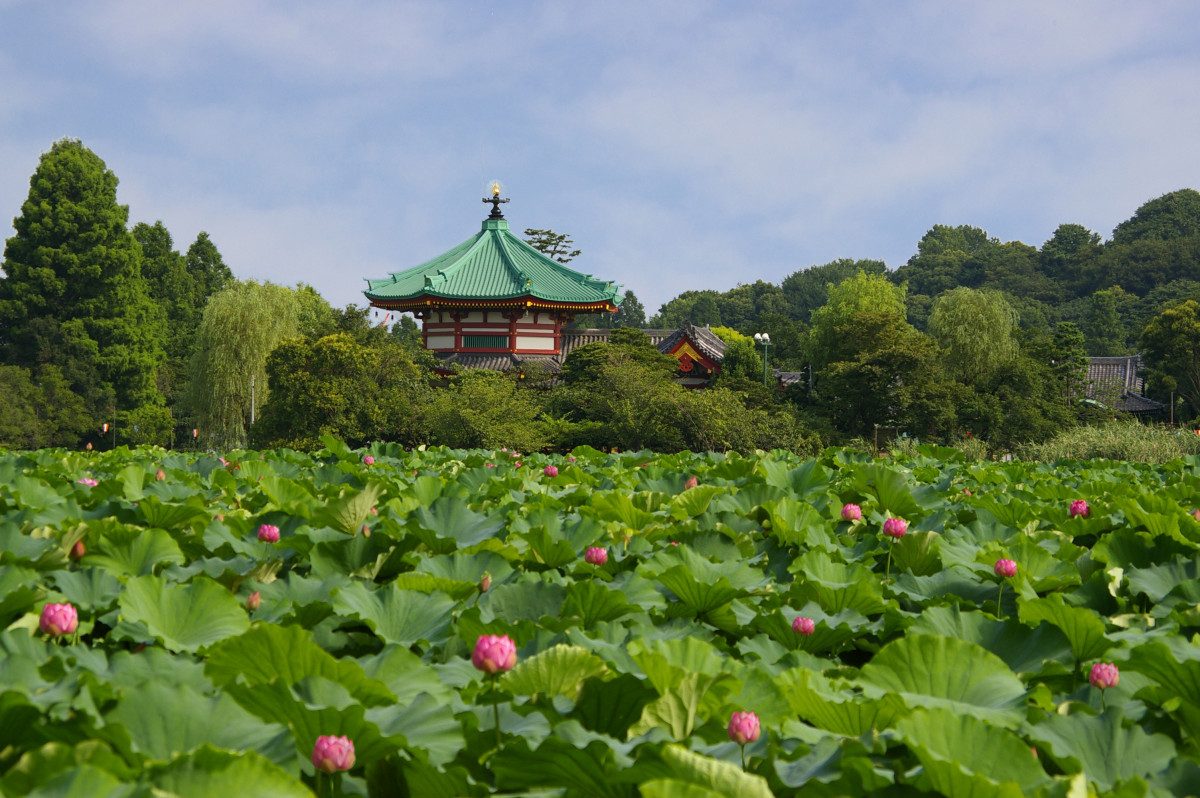
FactTenkai modelled Ueno on Kyoto: Shinobazu Pond stood in for Lake Biwa, and Benten Island in the pond for Chikubushima, the island in Lake Biwa, where he built the Bentendo hall. Kan'ei-ji became a family temple of the Tokugawa shoguns, and six shoguns are buried there.
The Shogitai and the burned temple
FactAt its height, Kan'ei-ji was a huge temple whose grounds covered almost all of today's Ueno Park. But in 1868 the Shogitai, a band resisting the new government, barricaded themselves inside, and the Battle of Ueno broke out. The Shogitai were defeated in a single day of fighting, and many of Kan'ei-ji's buildings burned down (the From Edo to Tokyo room).
Japan's first park and zoo
FactAt first there was a plan to build a hospital on the burned-out site. But the Dutch doctor Bauduin, who came to inspect it, is said to have advised the government to keep this beautiful wood as a park. In 1873 Ueno, along with Shiba, Asakusa and others, was designated one of Japan's first parks.
FactThe first National Industrial Exhibition was held here in 1877, and in 1882 Japan's first zoo, Ueno Zoo, opened as an annex to the museum. In 1972, when the giant pandas Kang Kang and Lan Lan arrived to mark the normalisation of relations between Japan and China, Ueno was swept up in a huge panda craze.
Saigo in a yukata
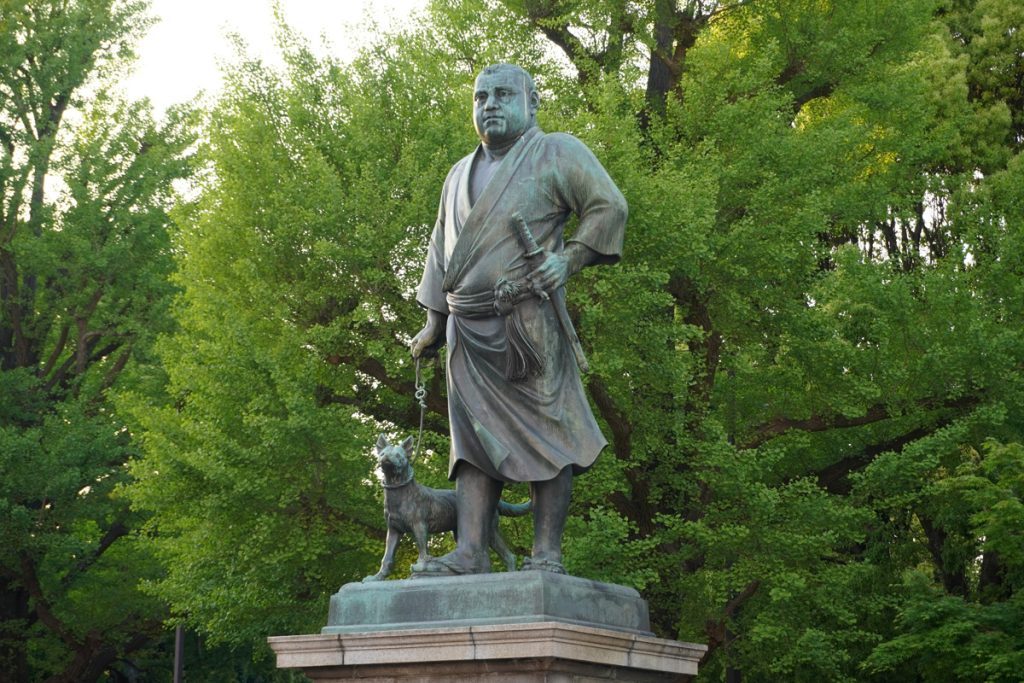
FactThe bronze statue of Saigo Takamori at the entrance to Ueno Park was unveiled in 1898. It shows him not in military uniform but in a yukata (light cotton kimono), walking his dog. Because Saigo had risen up against the government in the Satsuma Rebellion, a statue in uniform was thought inappropriate, and so, it is said, he was shown in everyday clothes. The dog's name is Tsun.
"My husband was not like this"
A well-known story says that Saigo's wife, Ito, who was invited to the unveiling, looked at the statue and said, in Satsuma dialect, "My husband was not a man like this."
Not that it was a poor likeness, but…
Opinions differ on whether she meant the face did not look like him, or that he was not the kind of man to appear in public in a yukata. Saigo left no photographs, so the statue is said to have been modelled partly on the faces of his relatives.
Look here: the National Museum of Western Art and the Shogitai grave
The main building of the National Museum of Western Art in Ueno Park was designed by the French architect Le Corbusier and was inscribed as a World Cultural Heritage site in 2016. Meanwhile, just behind the Saigo statue stands the quiet grave of the Shogitai men killed in the Battle of Ueno. The memories of former enemies stand side by side on the same hill.
Main sources: Kan'ei-ji / Taito City, "History of Ueno Park" / Tokyo Metropolitan Ueno Zoological Gardens / National Museum of Western Art