Home / Festivals and the Seasons
22 — FESTIVALS
Festivals and the Seasons
The Edokko — true-born people of Edo — felt the turning of the seasons through festivals and fairs: mikoshi (portable shrines) in early summer; morning glories, lantern plants and fireworks in summer; lucky bamboo rakes in late autumn. In today's Tokyo, too, festivals and fairs handed down from Edo brighten the city season by season. We introduce them, month by month through the year.
Labels: Factdocumented Likelysupported by most sources Legendoral tradition Urban legendlocal lore and rumour
The three great festivals of Edo
FactThe three great festivals of Edo are Kanda Myojin's Kanda Matsuri, Hie Shrine's Sanno Matsuri, and Tomioka Hachimangu's Fukagawa Hachiman Matsuri. The Kanda and Sanno festivals in particular were called "Tenka Matsuri" ("festivals of the realm"), because their processions entered Edo Castle and were watched by the shogun. Today the two festivals hold their grand festival in alternate years.
FactThe Fukagawa Hachiman Matsuri is also known as the "water-throwing festival", because spectators along the route drench the mikoshi bearers with water. At the height of the summer heat, mikoshi and spectators alike get soaked to the skin as the excitement builds.
May: the Sanja Matsuri
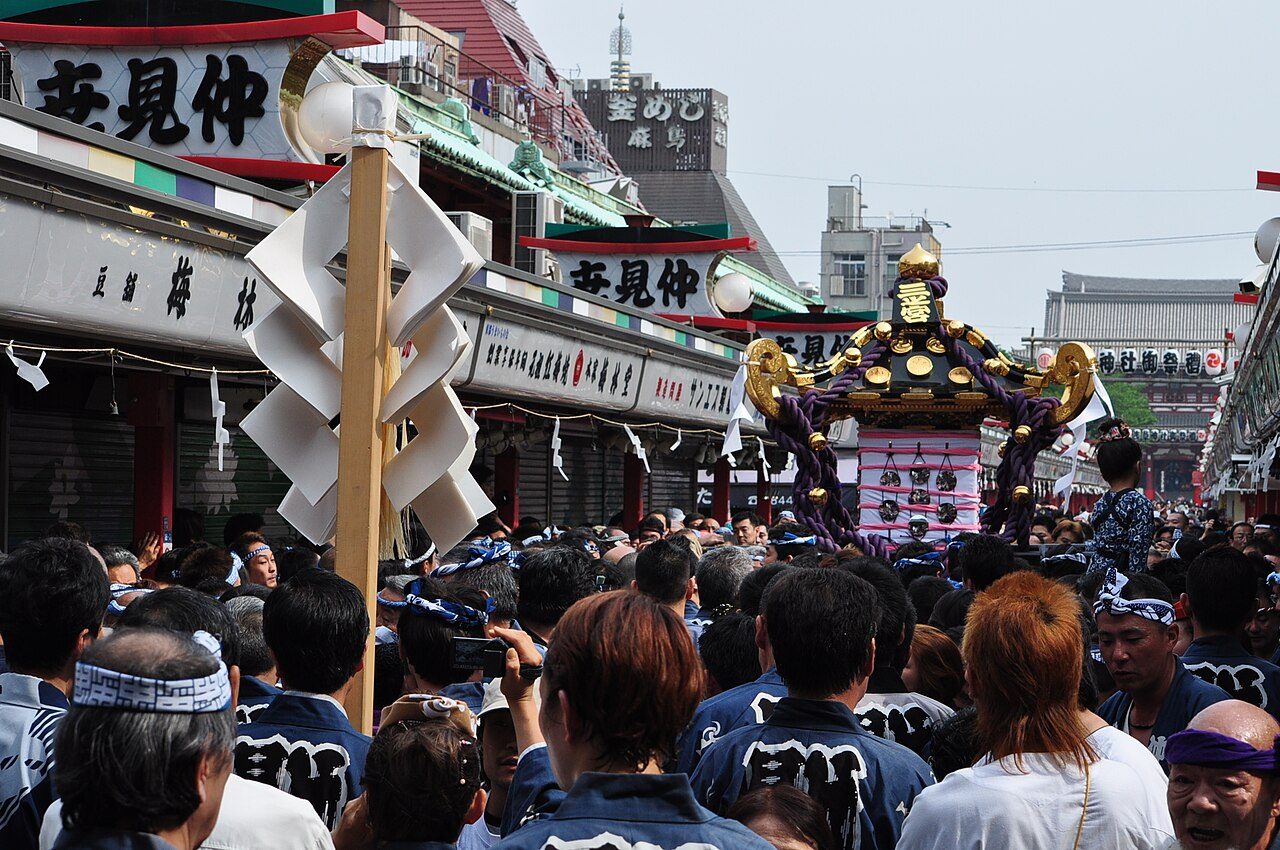
FactEvery May, at Asakusa Shrine's Sanja Matsuri, around 100 neighbourhood mikoshi parade through the streets of Asakusa over three days. On the final day, the shrine's three main mikoshi are carried out. "Sanja" ("three shrines") comes from the three people the shrine honours: the two brothers who hauled up Senso-ji's statue of Kannon in their fishing net, and the local headman who enshrined it (the Asakusa and Shitamachi room).
Summer: the morning-glory and lantern-plant fairs
FactIn early July, a morning-glory fair is held around the Kishimojin temple in Iriya. It goes back to a craze for growing morning glories in the late Edo period, when "henka asagao" (mutant morning glories) of unusual colours and shapes changed hands for high prices.
FactOn 9 and 10 July, Senso-ji holds its hozuki-ichi (lantern-plant fair). 10 July is a special day even among Kannon's fair days: a visit on this day is said to bring the same blessings as 46,000 days of worship, so it is called "Shiman-rokusen-nichi" ("46,000 Days"). Lantern plants were also sold as a medicinal herb.
November: Tori-no-ichi
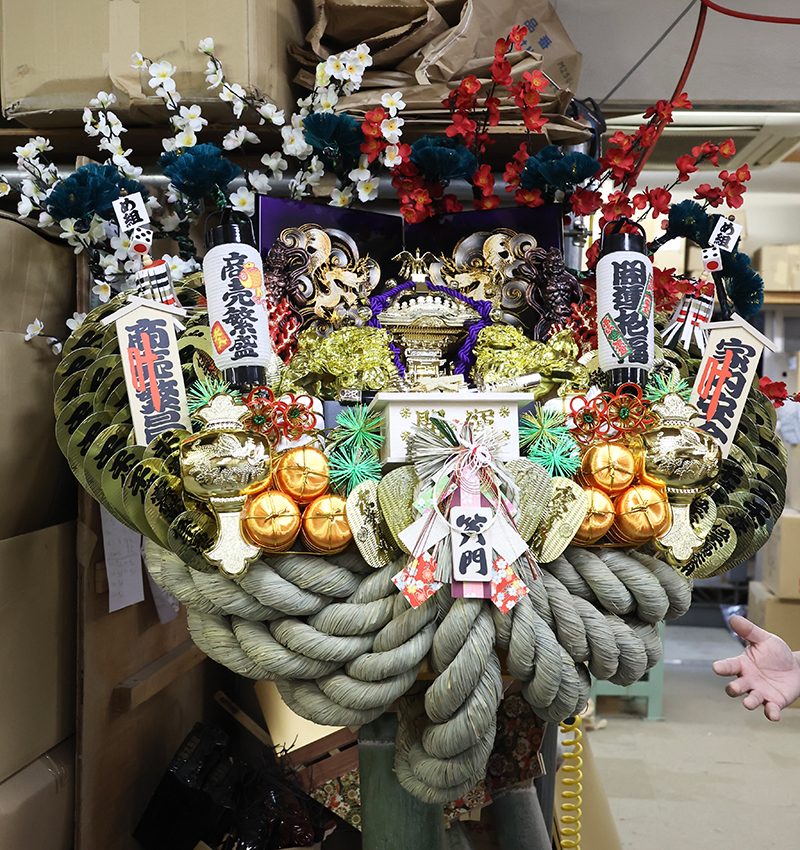
FactOn the Days of the Rooster in November, Tori-no-ichi (Rooster Fairs) are held at Otori Shrine in Asakusa and elsewhere, selling lucky kumade — bamboo rakes for "raking in good fortune". It is the custom for people praying for business success to trade up to a slightly bigger rake each year. When a rake is sold, the stallholders and the customer perform a lively tejime (rhythmic ceremonial handclap). In years with three Rooster Days in November, an old saying warns that "a year with a third Rooster Day has many fires".
Look here: haggling over a kumade, and the "tip"
At Tori-no-ichi, haggling down the price of a kumade is considered stylish. But it is customary to hand the amount you knocked off straight back to the stall as a "goshugi" (celebratory tip). Enjoying the back-and-forth over the price for its own sake is a playful spirit very typical of the Edokko.
Main sources: Kanda Myojin / Hie Shrine / Tomioka Hachimangu / Asakusa Shrine, "Sanja Matsuri" / Senso-ji, "Hozuki-ichi" / Otori Shrine, "Tori-no-ichi"