Home / Tokyo's Hidden Secrets
07 — SECRETS
Tokyo's Hidden Secrets
In places that crowds of people walk past every day, some astonishing secrets lie hidden: the empty pedestal in the Diet Building, the reference point for Japan's "heights," the zodiac animals in Tokyo Station's roof, a ghost subway platform and a railway that ran over the sea. Here we have gathered Tokyo's secrets — the kind you'll want to tell someone once you know them.
Labels: Factdocumented Likelysupported by most sources Legendoral tradition Urban legendlocal lore and rumour
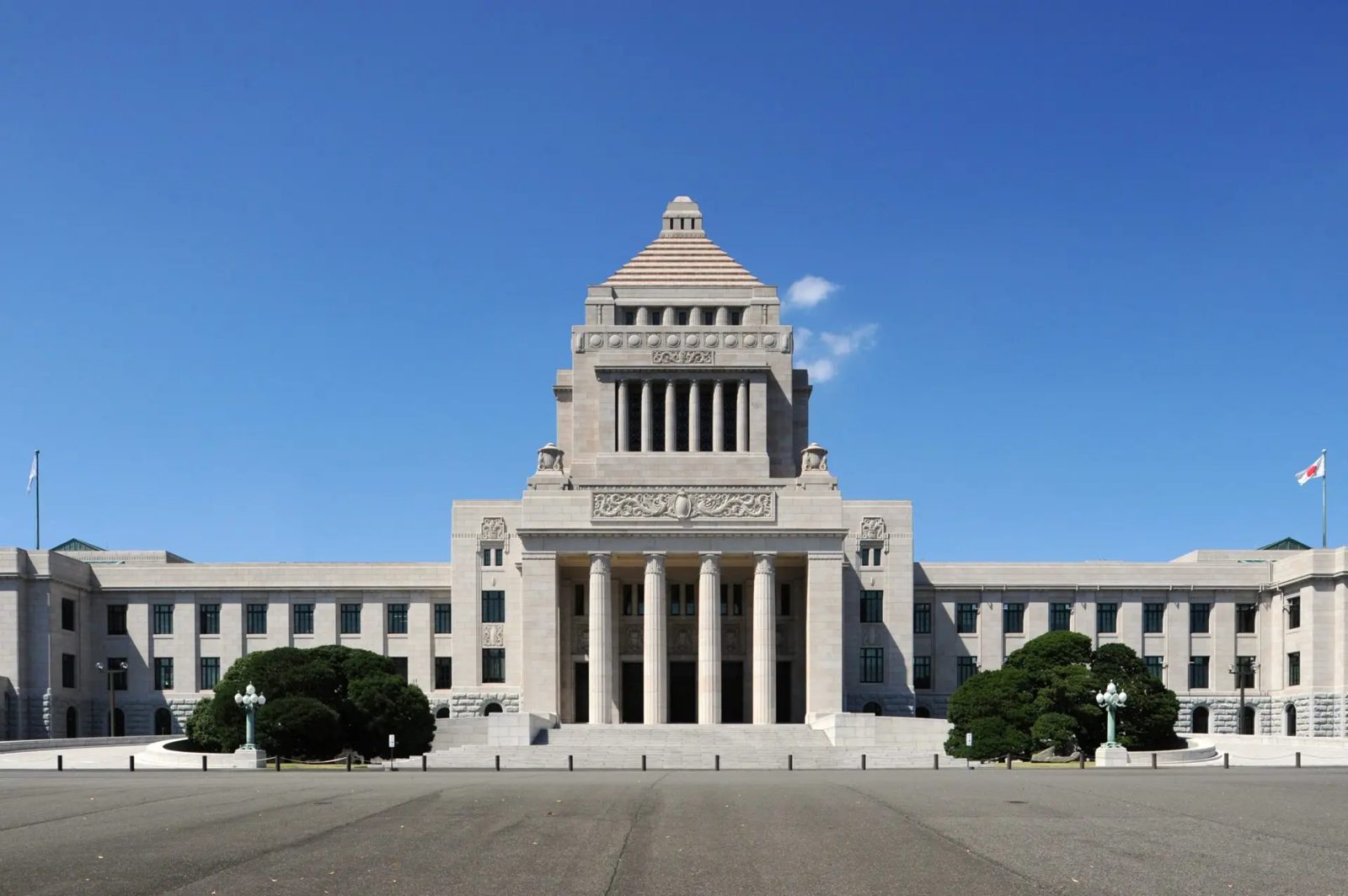
The Diet's "fourth pedestal"
FactIn the central hall of the National Diet Building, completed in 1936, stand bronze statues of three men who laid the foundations of parliamentary government: Ito Hirobumi, Okuma Shigenobu and Itagaki Taisuke. Of the pedestals in the four corners of the hall, however, one remains empty.
LikelyExplanations vary: that no one could decide who the fourth person should be, or that it carries the meaning "politics is never complete" or "we wait for a worthy figure to appear in the future."
FactThe Diet Building was built with a determination to use Japanese-made materials for almost everything. Only a tiny fraction, such as the stained glass and the door locks, is said to have come from abroad.
Where Japan's "height" and "position" begin
FactThe height of Mt Fuji, the elevation of the Skytree — every "height" has a reference point. That reference, the Japan Datum of Leveling, is located in the Diet's front garden, opposite the Diet Building (Nagatacho, Chiyoda Ward). The reference scale is housed inside a small stone building constructed in the Meiji era.
FactAfter the crustal movements caused by the Great East Japan Earthquake of 2011, the height of the datum was revised to 24.3900 metres. The earthquake had moved the very reference for Japan's heights.
FactLikewise, the Japan Geodetic Datum Origin, the reference for longitude and latitude on maps, is in Azabudai, Minato Ward. The maps of Japan are measured from two points in Tokyo.
The zodiac in Tokyo Station's domes
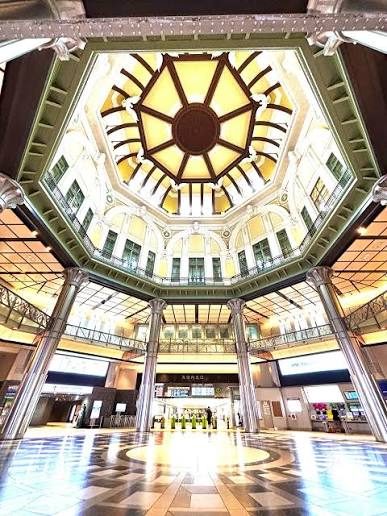
FactThe Marunouchi building of Tokyo Station was completed in 1914 and restored to its original appearance in 2012. Look up at the ceilings of its north and south domes, and you will see carvings of the animals of the Chinese zodiac. But not all twelve are there — only eight. This is because the corners of each octagonal dome face the intermediate directions (north-east, south-east and so on), and the zodiac animals assigned to those directions were placed there. The rat (north), rabbit (east), horse (south) and rooster (west) are missing.
Look here: the dome ceilings at the Marunouchi North and South exits
Stand outside the ticket gates, directly under the dome, and look straight up. On the cream-coloured ceiling you will find eagle figures and reliefs of the zodiac animals. Why the building's architect, Tatsuno Kingo, chose the zodiac is not clearly known.
The Ginza Line's "ghost platform"
FactAt Shinbashi Station on the Tokyo Metro Ginza Line there is a "ghost platform" that is no longer in use. Today's Ginza Line was originally built as two separate lines by two different companies. In 1939, the Tokyo Rapid Railway, coming from Shibuya, built its own Shinbashi station, which was used for only about eight months. Once through services between the two companies' lines began, the platform fell out of use.
A railway that ran over the sea
FactJapan's first railway, opened in 1872 between Shinbashi and Yokohama, ran for part of its route on an embankment built out over the sea, because acquiring military land had proved difficult. Remains of this Takanawa Embankment were found in 2019 during redevelopment work around Shinagawa Station, and in 2021 they were designated a National Historic Site (the Tokyo by Rail room).
The highest "natural hill" in the 23 wards
FactMt Atago in Minato Ward stands 25.7 metres above sea level — the highest natural hill in the 23 wards. The steep stone steps leading to Atago Shrine on the summit are called the "Steps of Success," and a story is told that in the Edo period, a samurai who rode his horse up these steps was praised by the shogun. Incidentally, the highest point inside the Yamanote Line loop is Mt Hakone in Shinjuku Ward (44.6 metres), but that is an artificial hill made in the garden of a daimyo estate (the Yamanote room).
Is Tokyo Tower made of tanks?
A well-known story says that some of the steel in Tokyo Tower came from scrapped American tanks used in the Korean War.
The reuse of scrap is regarded as fact
According to records from the time of construction and other sources, it is regarded as fact that steel recycled from the scrap of tanks and other material was used in the tower's upper framework. Exactly how much was used, and where, is not clear, however.
Main sources: House of Representatives, "The National Diet Building" / Geospatial Information Authority of Japan, "Japan Datum of Leveling" and "Japan Geodetic Datum Origin" / JR East, "Tokyo Station Marunouchi Building" / Tokyo Metro / Minato City Board of Education