Home / From the Ashes to the Olympics
12 — POSTWAR
From the Ashes to the Olympics
In 1945, Tokyo lay in scorched ruins. Just 19 years later, in 1964, the city hosted the Olympics and stepped onto the world stage. From black markets to towers, the shinkansen and skyscrapers: we trace how postwar Tokyo rose to become one of the world's great cities.
Labels: Factdocumented Likelysupported by most sources Legendoral tradition Urban legendlocal lore and rumour
Black markets and Ameyoko
FactIn postwar Tokyo there was not enough food, and people could not live on rations alone. In the burned-out areas in front of stations such as Shinjuku, Shibuya, Ikebukuro, Ueno and Shinbashi, black markets sprang up almost overnight, where everything imaginable was bought and sold.
LikelyAmeyoko (Ameya-yokocho), between Ueno and Okachimachi, was one of them. There are two theories about its name: that it comes from the many shops selling sweets (ame) such as sweet-potato candy, or that it was "America-yokocho" ("America Alley"), from the many shops dealing in US military surplus goods.
1958: Tokyo Tower
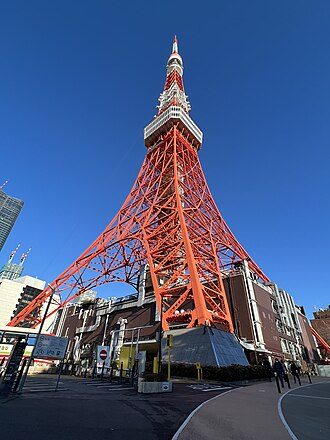
FactWhen television broadcasting began, a plan emerged to transmit signals from one large tower instead of having each broadcaster build its own. In December 1958, the 333-metre Tokyo Tower was completed. At the time it was the tallest self-supporting steel tower in the world, surpassing the Eiffel Tower in Paris.
1964: the Tokyo Olympics
FactOn 10 October 1964, the first Olympic Games in Asia opened in Tokyo. The city was transformed for the Games. The Metropolitan Expressway, the Tokaido Shinkansen (opened on 1 October), the Tokyo Monorail, Ring Road No. 7 and more were completed one after another.
Fact10 October, the day of the opening ceremony, later became a national holiday, Health and Sports Day (now Sports Day). The site of the athletes' village in Yoyogi became Yoyogi Park, and the Yoyogi National Gymnasium, designed by Tange Kenzo, is still in use today.
Look here: the suspended roof of the Yoyogi National Gymnasium
The First Gymnasium of the Yoyogi National Gymnasium, built for the 1964 Games, amazed architects around the world with its distinctive form, its roof hung from cables. In 2021, it was designated an Important Cultural Property of Japan.
A city reaching for the sky
FactIn earthquake-prone Japan, building heights were long limited to 31 metres. After this limit was lifted, the Kasumigaseki Building (147 metres, 36 storeys), completed in 1968, became Japan's first skyscraper. In time, skyscrapers also rose in rows on the site of the Yodobashi water-purification plant in Shinjuku, and in 1991 the Tokyo Metropolitan Government moved from Yurakucho to Shinjuku (the Shinjuku room).
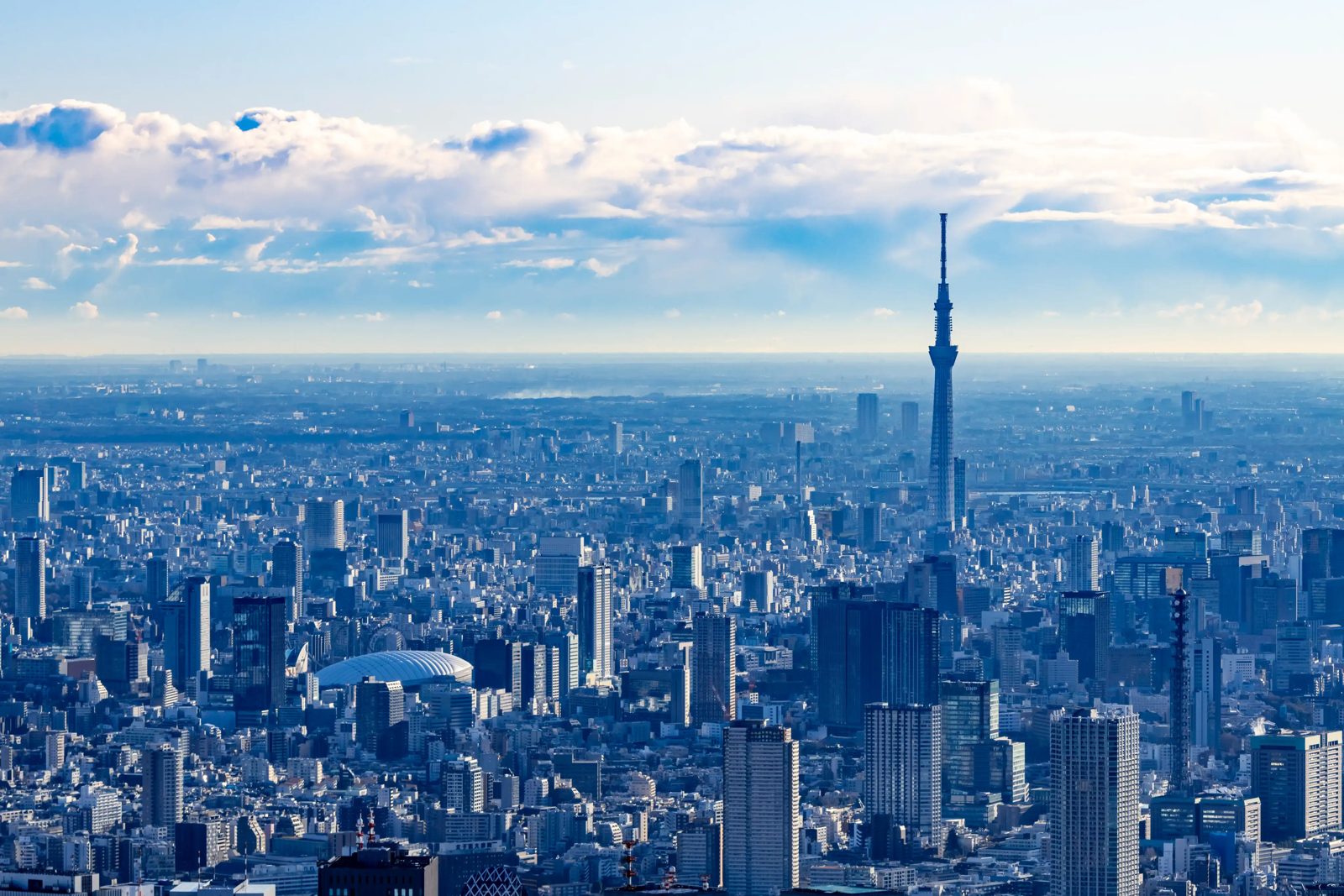
FactIn 2012, the 634-metre Tokyo Skytree opened. The number 634 is a play on "Musashi" (mu-sa-shi, 6-3-4), the old name of the province in which Tokyo lies. In 2021, the second Tokyo Olympic and Paralympic Games, postponed by a year because of COVID-19, were held almost entirely without spectators.
Main sources: Tokyo Metropolitan Archives, "The Tokyo Olympics" / Nippon Television City Corporation (Tokyo Tower) / Tobu Tower Skytree / Mitsui Fudosan, "Kasumigaseki Building" / Agency for Cultural Affairs, "Yoyogi National Gymnasium"