Home / Legends and Urban Legends
17 — LEGENDS
Legends and Urban Legends
The grave of Jesus Christ lies in a mountain village in Aomori. Minamoto no Yoshitsune did not die at Hiraizumi, but fled north and crossed the sea. Dragons fought over who would be master of a lake. Aomori, at the northern end of Honshu, has a wealth of strange tales. Let's enjoy them, while drawing a clear line between legend and historical fact.
Labels: Factdocumented Likelysupported by most sources Legendoral tradition Urban legendlocal lore and rumour
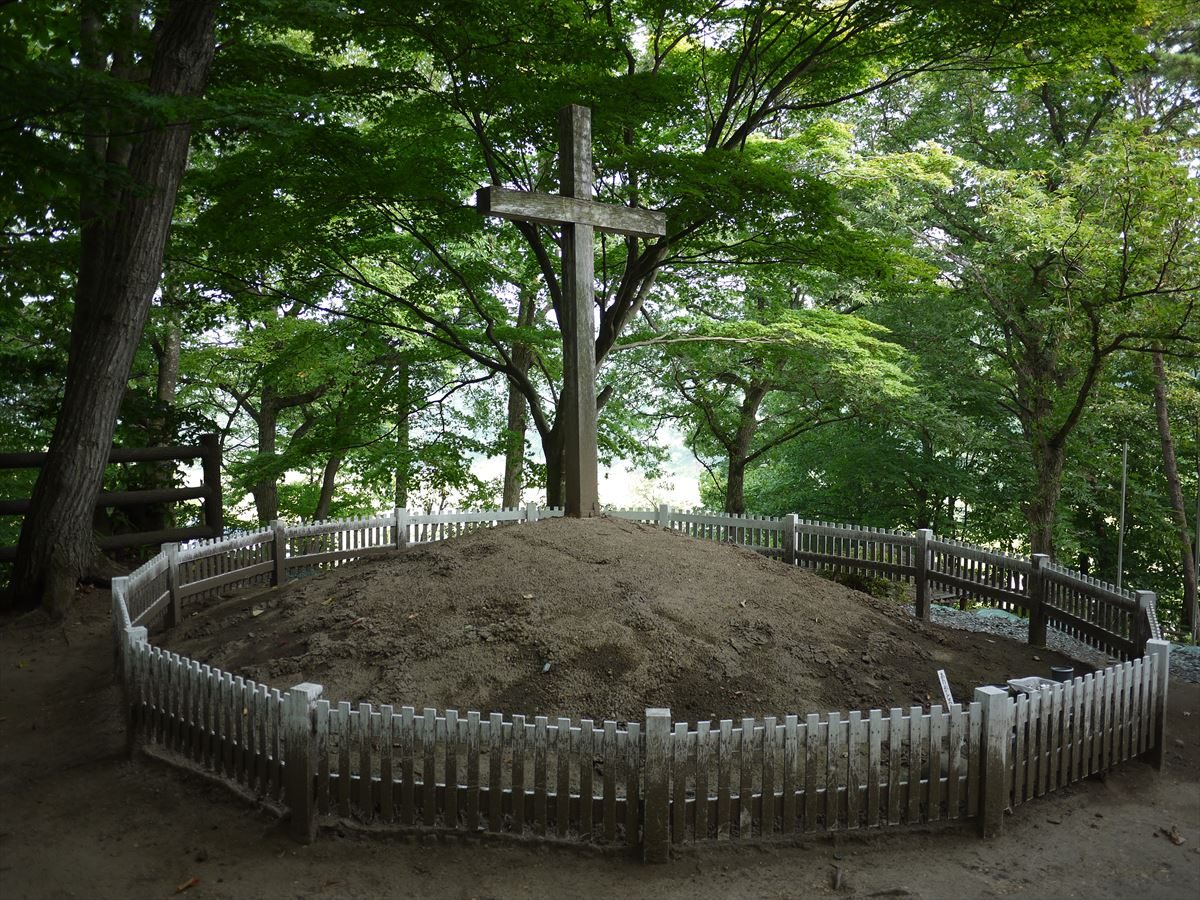
The Tomb of Christ in Shingo
Urban legendIn Shingo village (formerly Herai village), east of Lake Towada, there is a "Tomb of Christ". The story goes that the man executed on the hill of Golgotha was Jesus's younger brother, Isukiri, while Jesus himself travelled to Japan and lived in this village until the age of 106.
FactThe story originated in 1935, when a visitor to the village declared an old mound there to be the grave of Christ, on the basis of the "Takenouchi Documents", which he claimed were ancient texts. Historians regard the Takenouchi Documents as a forgery. Even so, the village has kept the story alive as a valued tourist attraction, and every June it holds a "Christ Festival". It is a curious sight: in front of the grave, a Shinto priest recites prayers and people dance to "Nanyadoyara", a Bon dance song.
"Nanyadoyara is Hebrew"
One theory claims that the obscure lyrics of "Nanyadoyara" are in fact Hebrew words praising God. The place name Herai, too, is said to come from "Hebrai" (Hebrew).
A Bon dance song found throughout the Nanbu region
Nanyadoyara is a Bon dance song handed down not only in Shingo but widely from southern Aomori Prefecture to northern Iwate Prefecture. There are several theories interpreting its meaning through old Japanese or dialect, and the Hebrew theory is not accepted by scholars.
The legend of Yoshitsune's flight north
FactIn 1189, at Koromogawa in Hiraizumi in Oshu, Minamoto no Yoshitsune took his own life after being attacked by Fujiwara no Yasuhira. This is Yoshitsune's end as recorded in the historical chronicles.
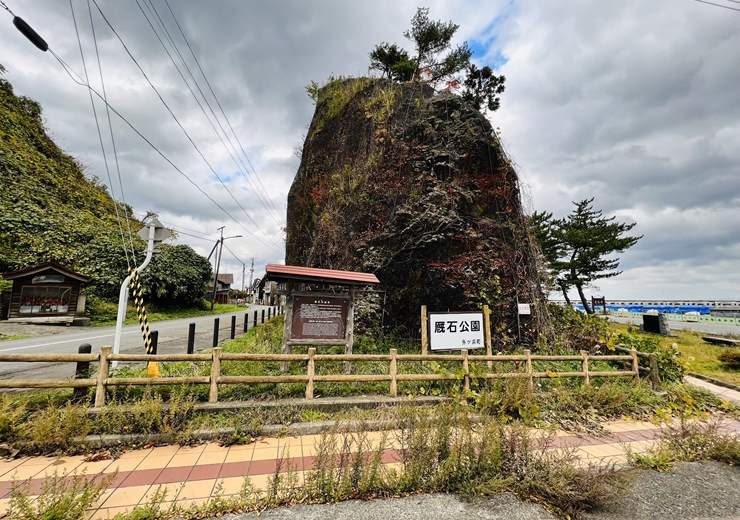
LegendYet from Tohoku to Hokkaido, the "legend of Yoshitsune's flight north" has been handed down, telling that he did not die at Hiraizumi but escaped northwards. At Minmaya in the town of Sotogahama, at the northern tip of the Tsugaru Peninsula, a legend tells that when Yoshitsune tried to cross the sea he was held back by rough waves, and when he prayed to Kannon, the bodhisattva of mercy, three dragon horses appeared. The rocky cave where the horses were said to have been tethered is "Mayaishi" (Stable Rock), and the name Minmaya ("three stables") is also said to come from this.
The dragons of Lake Towada: Hachirotaro and Nansonobo
LegendLong ago, a young man named Hachirotaro ate his companions' share of char as well as his own. Parched with thirst, he kept drinking from the river until he turned into a dragon and became the master of Lake Towada. One day, however, Nansonobo, a monk who had undergone long ascetic training, arrived and fought him for seven days and seven nights for mastery of the lake. Defeated, Hachirotaro left the lake and in time became the master of Hachirogata in Akita: so the legend goes (the Towada room).
Tsugaru Sotosangunshi: the forgery of the century
FactIn the 1970s, an old document said to have been found in the attic of a private house in Goshogawara City, the Tsugaru Sotosangunshi ("Chronicle of the Three Outer Districts of Tsugaru"), caused a sensation by claiming that Tsugaru had once had its own kingdom that fought against the Yamato court. At one point it was even included in the source volumes of a village's official history.
FactHowever, studies of its vocabulary, paper and handwriting have shown that the document is a forgery written in the modern era or later, and this is now the established view among scholars. The affair shows how "manufactured history" can spread.
Look for this: the Christ Village Legend Museum
Next to the "Tomb of Christ" in Shingo stands the Christ Village Legend Museum (Kirisuto no Sato Denshokan), which introduces the legend and the life of the village. Of the two mounds topped with crosses, one is said to be the grave of Christ and the other that of his brother Isukiri. Rather than asking whether it is true, enjoy the spirit of the villagers who have such fun with the story.
Main sources: Shingo Village, "Christ Village" / Sotogahama Town, "The Yoshitsune Legend" / Towada Lake National Park Association / Saito Mitsumasa, Gisho "Tsugaru Sotosangunshi" Jiken