Home / Hachinohe: A Nanbu Port Town
11 — HACHINOHE
Hachinohe: A Nanbu Port Town
Facing the Pacific, Hachinohe is the centre of eastern Aomori Prefecture and the port town of the Nanbu region. In the Edo period it was the castle town of the Hachinohe domain, ruled by the Nanbu clan; today it is a fishing port with one of the largest catches in Japan. A vast market at dawn on Sundays, an island of black-tailed gulls, a festival with 300 years of history and alleys that come alive at night: walk through an Aomori with a flavour quite different from Tsugaru.
Labels: Factdocumented Likelysupported by most sources Legendoral tradition Urban legendlocal lore and rumour
A Nanbu castle town
FactIn 1664, 20,000 koku were split off from the Morioka domain (the Nanbu domain) to create the Hachinohe domain. As a castle town of the Nanbu clan, Hachinohe followed a history separate from that of Tsugaru's Hirosaki domain (the Tsugaru and Nanbu room). Its speech, too, is Nanbu dialect (the Dialect room).
FactFrom the Meiji period onwards it prospered on landings of sardines, mackerel and squid, becoming one of the foremost fishing ports in Japan. Superb Jomon-period lacquerware has been found at the nearby Korekawa site, showing that people have lived here since ancient times (the Jomon room).
Sunday at dawn, 300 stalls
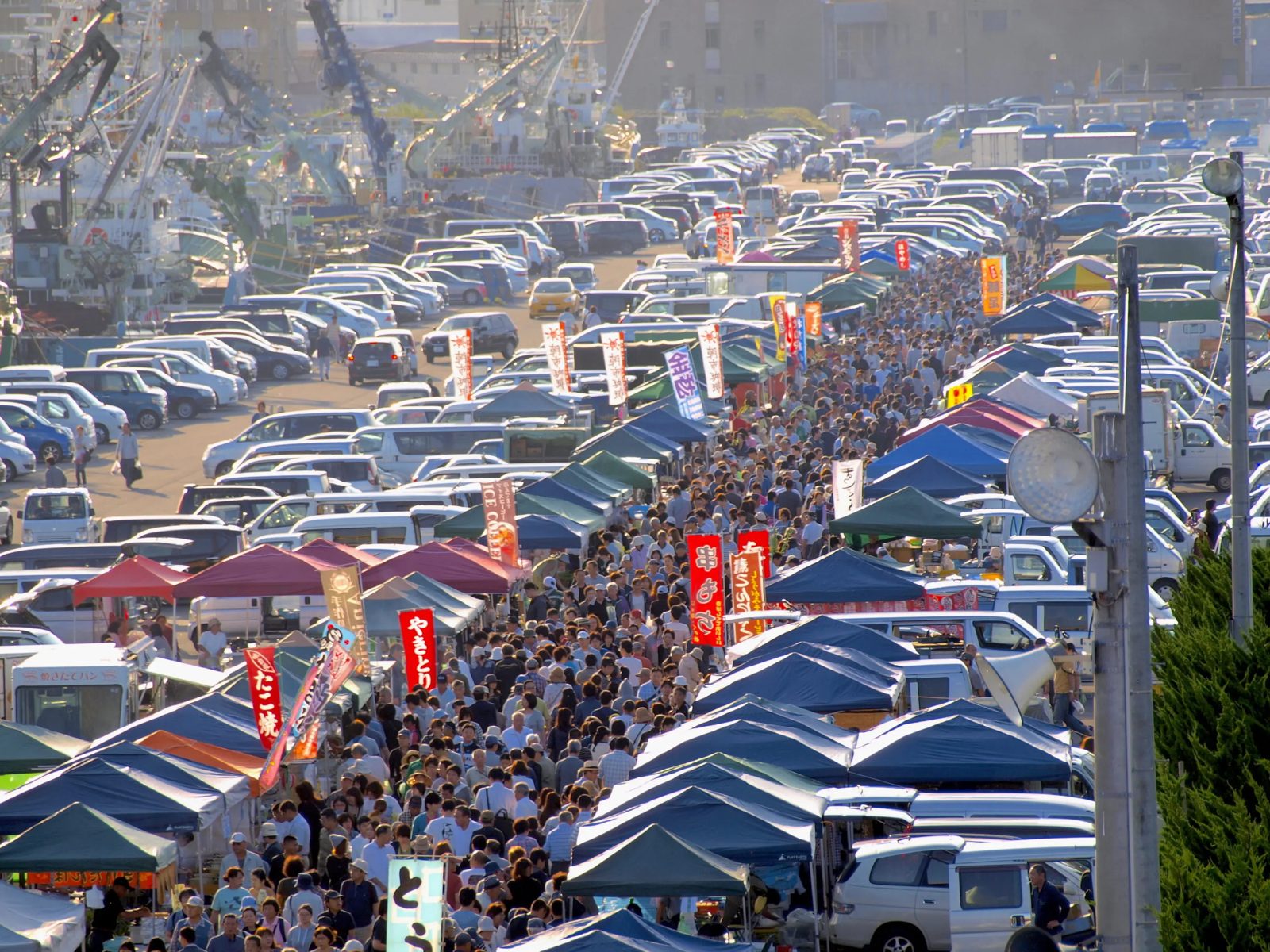
FactEvery Sunday at daybreak, more than 300 stalls line the fishing-port quay for about 800 metres. This is the Tatehana Wharf Morning Market. It is held from March to December and sells everything imaginable, from fish caught that morning, vegetables, bread and coffee to second-hand goods.
FactHachinohe also has a culture of morning baths at public bathhouses, which locals visit from early in the day. Breakfast at the morning market followed by a warm soak at the bathhouse: that is the Hachinohe way to spend a Sunday.
Kabushima, the island of gulls
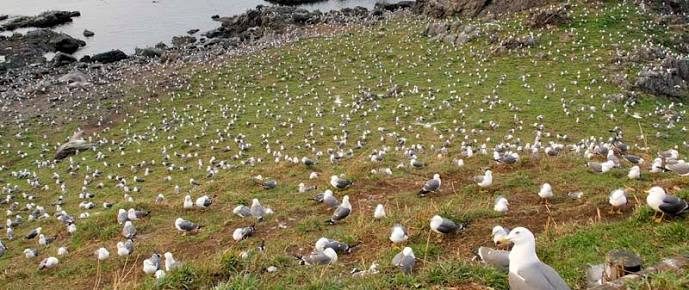
FactKabushima, near the port, was designated a Natural Monument of Japan in 1922 as a breeding ground where black-tailed gulls gather to raise their young. From spring into summer, tens of thousands of gulls cover the island. Kabushima Shrine on its summit burned down in 2015 but was rebuilt in 2020.
Hit by droppings, you "get luck"
It is said that good fortune comes to anyone whose head is hit by gull droppings. The shrine has at times even issued certificates of "luck received" to people who were hit.
Gulls as a guide for fishermen
Where gulls flock there are often shoals of fish, so for fishermen the gulls were an important sign. Kabushima Shrine is also a shrine where people pray for safety at sea and for good catches.
The Sansha Taisai and Enburi
FactThe Hachinohe Sansha Taisai, held every year from 31 July to 4 August, began in the mid-Edo period and has a history of nearly 300 years. Huge floats based on myths and kabuki make their way through the town, mechanically unfolding sideways and upwards as they go. In 2016, together with festivals from across Japan, it was inscribed on UNESCO's Intangible Cultural Heritage list as part of "Yama, Hoko, Yatai, float festivals in Japan".
FactIn February comes Enburi, which prays for a good harvest in the year ahead. Dancers called "tayu", wearing eboshi hats shaped like horses' heads, perform while swinging their heads in great sweeps: a festival held in the snow. It is designated an Important Intangible Folk Cultural Property of Japan.
Look for this: Hachinohe's yokocho alleys
The town centre has a number of narrow drinking alleys that keep the atmosphere of the Showa era, beginning with Miroku Yokocho. Sitting shoulder to shoulder with locals in tiny counter-only bars, enjoying fish and local sake: that is a Hachinohe night. The city-run bookshop, Hachinohe Book Center, is also worth a visit for book lovers.
Main sources: Hachinohe City, "The History of Hachinohe" / Tatehana Wharf Morning Market Association / Hachinohe Convention & Visitors Bureau / Hachinohe Sansha Taisai Management Committee / Agency for Cultural Affairs