AOMORI
A land of Jomon,
snow and the strait.
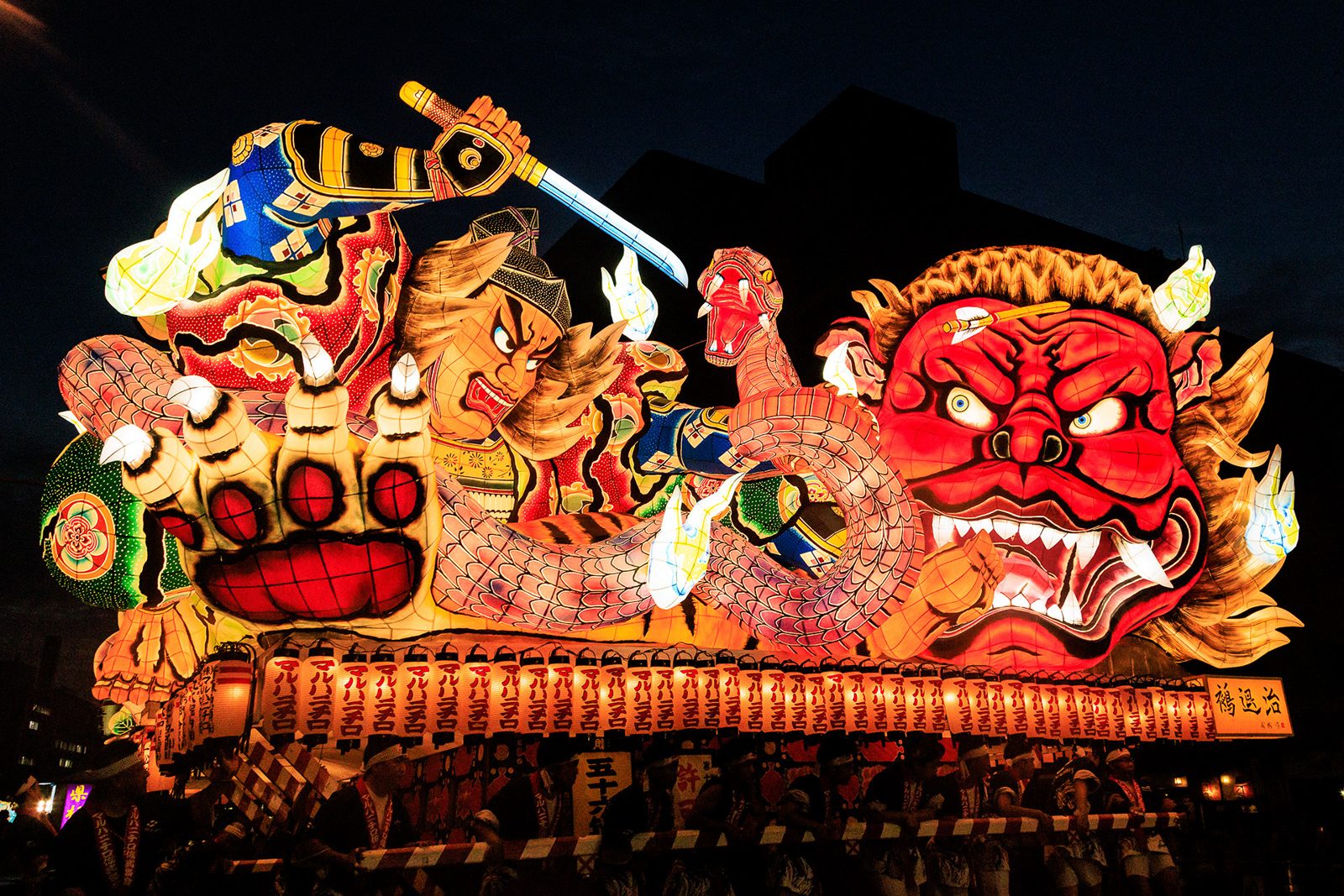
Five thousand years ago, a great Jomon village stood on the shores of this bay. In the Edo period a port was opened at a village called Utou and named "Aomori", and in time it became the gateway for people and goods crossing to Hokkaido. The tragedy in the Hakkoda snow, the ferries that crossed the strait, the nebuta lantern floats that set summer ablaze, apples that began with three saplings: this site traces the "whys" of Aomori that tourist guides leave out, marking where history ends and legend begins.
FOUR KEYS
Four keys to understanding Aomori
Almost everything that has happened in this land connects back to one of these four.
Jomon country
Aomori is rich in remains of the Jomon period, from fragments of pottery 15,000 years old to a great settlement of 5,000 years ago and clay figures with eyes like snow goggles. In 2021, eight of these sites became part of a World Heritage Site.
Tsugaru and Nanbu
"Tsugaru" in the west of the prefecture and "Nanbu" in the east were separate domains in the Edo period, and long rivals. Two regions with different dialects, festivals and temperaments became a single prefecture in the Meiji era.
Gateway to the strait
At the northern tip of Honshu, Aomori was the gateway for people and goods crossing to Hokkaido. Ferries plied the strait for 80 years, and today the Shinkansen runs through a tunnel beneath the sea.
Living with snow
Among cities with large populations, Aomori City is one of the snowiest in the world. The harsh winters led to the tragedy of the snow march, but they also nurtured a culture all their own: kogin-zashi stitching, Tsugaru lacquerware, and short, warm words.
WHY HERE?
Why the head of this bay?
Aomori City lies at the very head of Mutsu Bay, embraced by the Tsugaru and Shimokita peninsulas. The mouth of the bay is narrow, so even when the open sea is rough, the water inside stays relatively calm. And across the Tsugaru Strait lies Hokkaido.
Supported by the riches of the bay and the harvest of the forests, the Jomon people built a great village here. In the Edo period the Hirosaki domain opened a port, in the Meiji era the prefectural office was placed here, and with railways and ferries linking Honshu and Hokkaido, the town became the gateway to the strait.
BUTTERFLY EFFECT
Small events that made today's Aomori
One event ripples out to places no one expected. Aomori has several of these "butterfly effects".
20 ROOMS
Twenty rooms into Aomori
Start wherever you like. Read from the top, and the rooms join into a single story — from a Jomon village, through the Tsugaru–Nanbu rivalry and the gateway to the strait, to the land of nebuta and apples.
Sannai-Maruyama
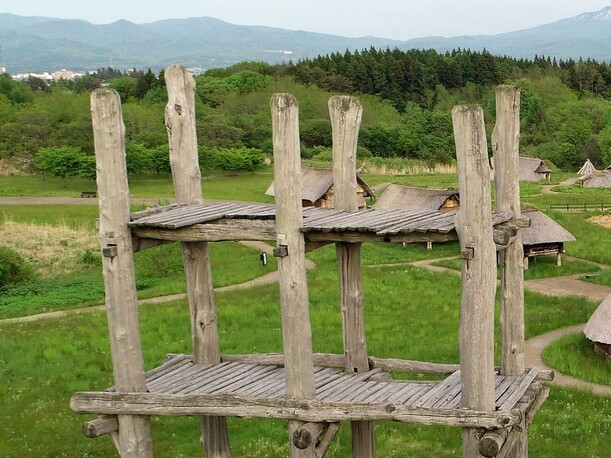
A great Jomon village stood here 5,000 years ago.
Read →The Jomon Sites and the Goggle-Eyed Figurine
Not an alien: a clay figure with snow-goggle eyes.
Read →Tsugaru and Nanbu
One prefecture, two worlds of dialect, festivals and temperament.
Read →The Birth of Port Aomori
From the village of Utou to a prefectural capital.
Read →The Hakkoda Snow March
199 of 210 men. What happened in the Hakkoda snow?
Read →The Seikan Ferries
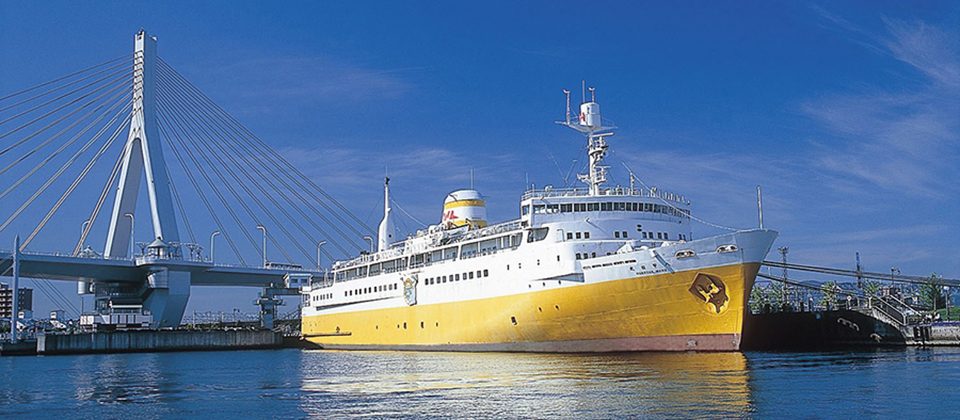
For 80 years, ships linked Honshu and Hokkaido.
Read →The Seikan Tunnel and Cape Tappi
53.85 km under the sea, decades in the making.
Read →Nebuta, Neputa and Tachineputa
Aomori says nebuta, Hirosaki says neputa.
Read →Apple Country
From three saplings to Japan's apple kingdom.
Read →Scallops, Oma Tuna and Senbei-jiru
Crackers, simmered in a hotpot.
Read →Hirosaki: Castle, Blossoms and Western Buildings
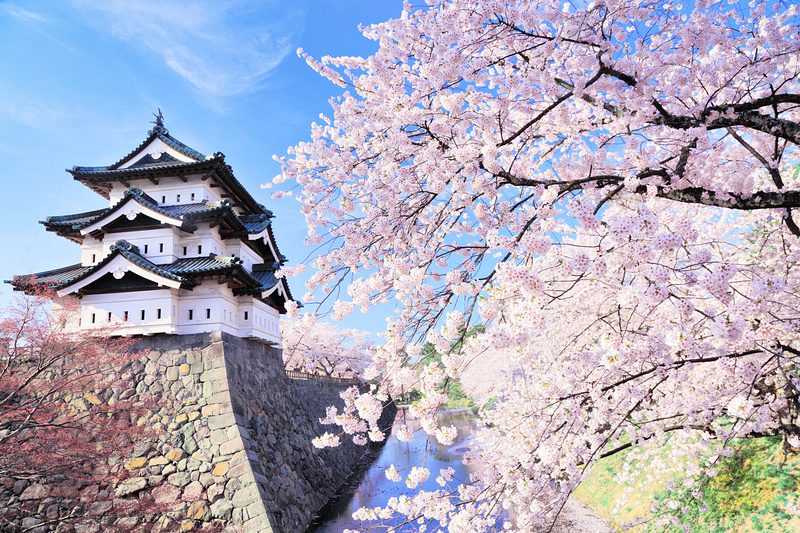
The keep that moved, and a castle overflowing with cherries.
Read →Hachinohe: A Nanbu Port Town
On Sunday mornings, 300 stalls line the quay.
Read →Shimokita and Mt Osore
A mountain of the dead, and exiles from Aizu.
Read →Towada and Oirase
The family that brought water to a wasteland.
Read →Munakata, Dazai and Terayama
The young man who vowed to become Van Gogh.
Read →Tsugaru Lacquer and Kogin Stitching
Needle and thread from farmers not allowed cotton.
Read →Tsugaru and Nanbu Dialects
'Dosa?' 'Yusa.' The world's shortest conversation?
Read →Legends and Urban Legends
Is Jesus Christ buried in an Aomori village?
Read →Walking Aomori
From a Jomon village to the home of the nebuta.
Read →Further Reading
From Dazai's Tsugaru to the Hakkoda death march.
Read →START HERE
Three places to begin
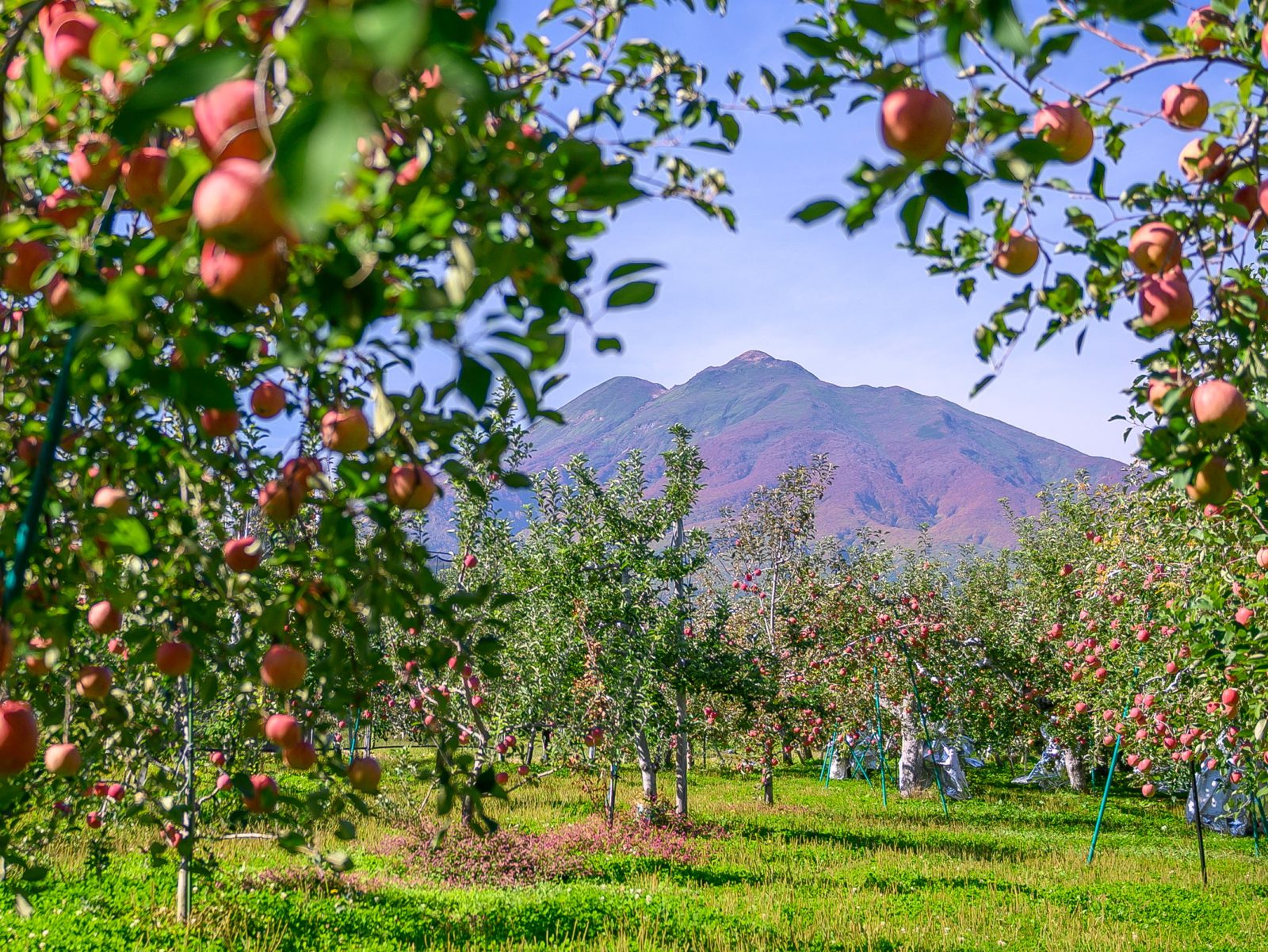
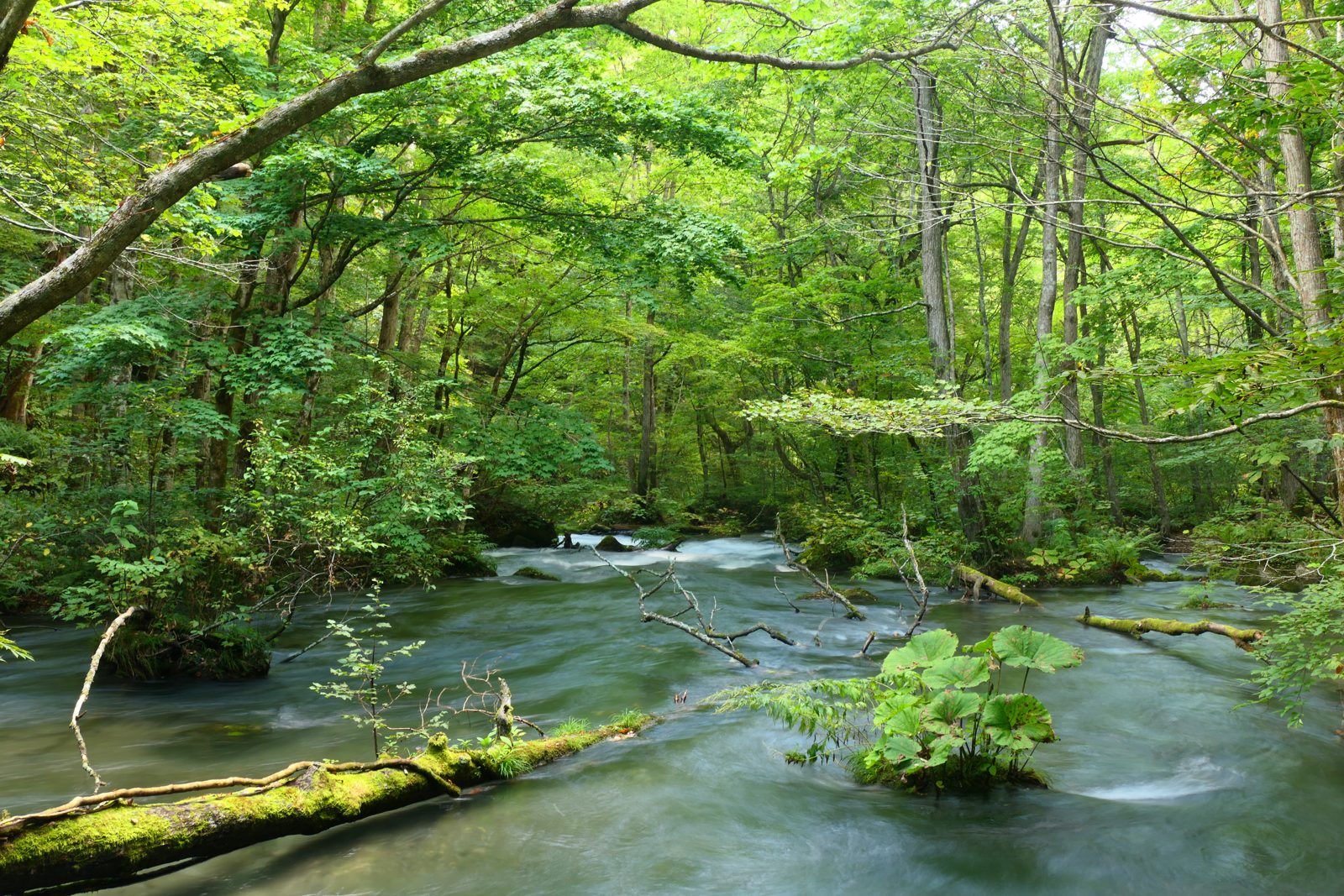
LOCAL COMMON SENSE
"Common sense" to Aomori people
Things that surprise visitors a little, but that locals take for granted.
- "Aomori", "Tsugaru" and "Nanbu""People from Aomori" is too broad a term: Tsugaru in the west and Nanbu in the east differ completely in dialect and temperament. Which side you come from is an important topic for locals.
- No work gets done in nebuta seasonIn early August, the whole of Aomori City is carried away by the preparations for the Nebuta Festival and the festival itself. It is not unusual for people to own their own haneto (festival dancer) costume.
- Apples come by the boxApples are bought not "one by one" but "by the box". Relatives and friends often give them away by the cardboard boxful, and blemished ones are sold cheaply as "wakeari" (seconds).
- Snow shovelling is a daily chore in winterAmong cities with large populations, Aomori City is one of the snowiest in the world. Shovelling snow in the morning is part of winter life.
- Public baths and hot springs are close byAomori Prefecture has a great many hot springs, and public baths and hot springs that open in the morning are not unusual. A morning bath is a habit for many people.
- "Dosa?" "Yusa."The exchange "Where are you going?" "To the bath" can be done in just these two words in Tsugaru dialect (the Dialect room).
TIMELINE
A timeline of Aomori
Some of the oldest pottery
Fragments of some of the oldest pottery in Japan have been found at the Odai Yamamoto site in Sotogahama.
The village at Sannai-Maruyama
From around this time, a large settlement is occupied at Sannai-Maruyama for about 1,700 years.
Tsugaru Tamenobu breaks away
Having broken away from the Nanbu clan, Tamenobu has his domain recognised by Toyotomi Hideyoshi.
Hirosaki Castle completed
Under the second lord, Tsugaru Nobuhira, the castle and castle town of Hirosaki take shape.
The port of Aomori opens
The Hirosaki domain is said to have opened a port at Utou village and named it "Aomori".
Aomori Prefecture is born
After the abolition of the domains, the prefectural office moves from Hirosaki to Aomori.
Apple saplings
Three saplings handed out by the government are planted in the grounds of the prefectural office.
The Hakkoda snow march
199 of the 210 men of Aomori's 5th Infantry Regiment die in the Hakkoda snow.
The Seikan ferries begin
State-run ferries linking Aomori and Hakodate begin service.
The Aomori air raid
In the air raid of 28 July, most of Aomori City's urban area burned.
The Seikan Tunnel opens
On 13 March the tunnel opens, and on the same day the Seikan ferries complete their service.
The Tohoku Shinkansen reaches Shin-Aomori
Tokyo and Aomori are linked by Shinkansen. The Hokkaido Shinkansen also opened in 2016.
The Jomon sites become World Heritage
The "Jomon Prehistoric Sites in Northern Japan" are inscribed, including eight sites in the prefecture.
Labels: Factdocumented Likelysupported by most sources Legendoral tradition Urban legendlocal lore and rumour