Home / The Birth of Port Aomori
03 — THE PORT
The Birth of Port Aomori
Aomori City, the prefectural capital, is not a castle town. It began in the early Edo period as a port opened at a small fishing village on Mutsu Bay. We follow the story of a port town that flourished as the gateway to Hokkaido, was burned to the ground twice, by great fires and by air raids, and rose again each time.
Labels: Factdocumented Likelysupported by most sources Legendoral tradition Urban legendlocal lore and rumour
A port at Utou village
FactIn 1624, Tsugaru Nobuhira, the second lord of the Hirosaki domain, ordered a port to be opened at Utou village on Mutsu Bay. It was a port for shipping the domain's rice to Edo. The town took shape under Moriyama Yashichiro, who was put in charge of the works, and the place came to be called "Aomori".
LikelyThe generally accepted theory is that the name "Aomori" ("green forest") comes from a small wooded hill near the port, thick with green trees, that served as a landmark for ships approaching from the sea.
A bird called utou
"Utou" is a seabird, the rhinoceros auklet. At Utou Shrine a legend is told that Utou Chunagon Yasukata, driven out of the capital, drifted ashore here and his spirit became the bird. The Noh play Utou, too, is the story of a hunter of Sotogahama and this bird.
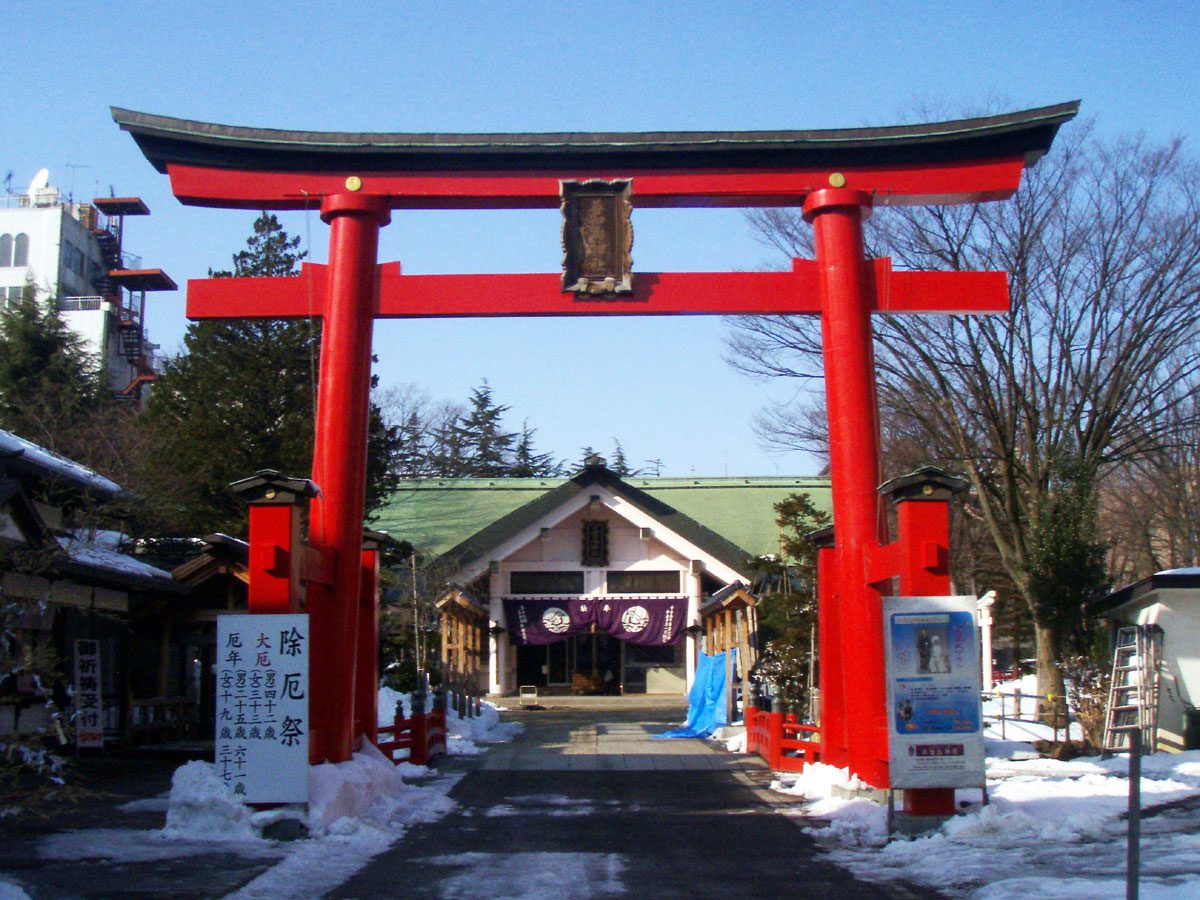
Utou Shrine is still at the heart of the city
Utou Shrine, in the centre of Aomori City, is regarded as the birthplace of the town of Aomori. The pond in its grounds is said to be a remnant of a former inlet.
The prefectural office came, then the railway
FactIn 1871 the prefectural office was moved from Hirosaki, and Aomori became the centre of the prefecture (the Tsugaru and Nanbu room). In 1891 the railway from Ueno to Aomori (today's Tohoku Main Line) opened along its full length, and in 1908 the state-run Seikan ferries entered service (the Ferries room). All people and goods travelling from Tokyo to Hokkaido now changed from train to ship at Aomori.
Burned to the ground, twice
FactAomori, with its strong winter monsoon winds, was often struck by great fires. In the great fire of 1910 in particular, most of the urban area burned.
FactOn 14 and 15 July 1945, the Seikan ferries were attacked by US carrier-based aircraft, and many of the ships were sunk. Then, on the night of 28 July, Aomori City suffered a massive air raid: most of the urban area was destroyed and more than 1,000 people died. The Aomori City centre of today is a town built during the postwar reconstruction.
ASPAM and the Bay Bridge
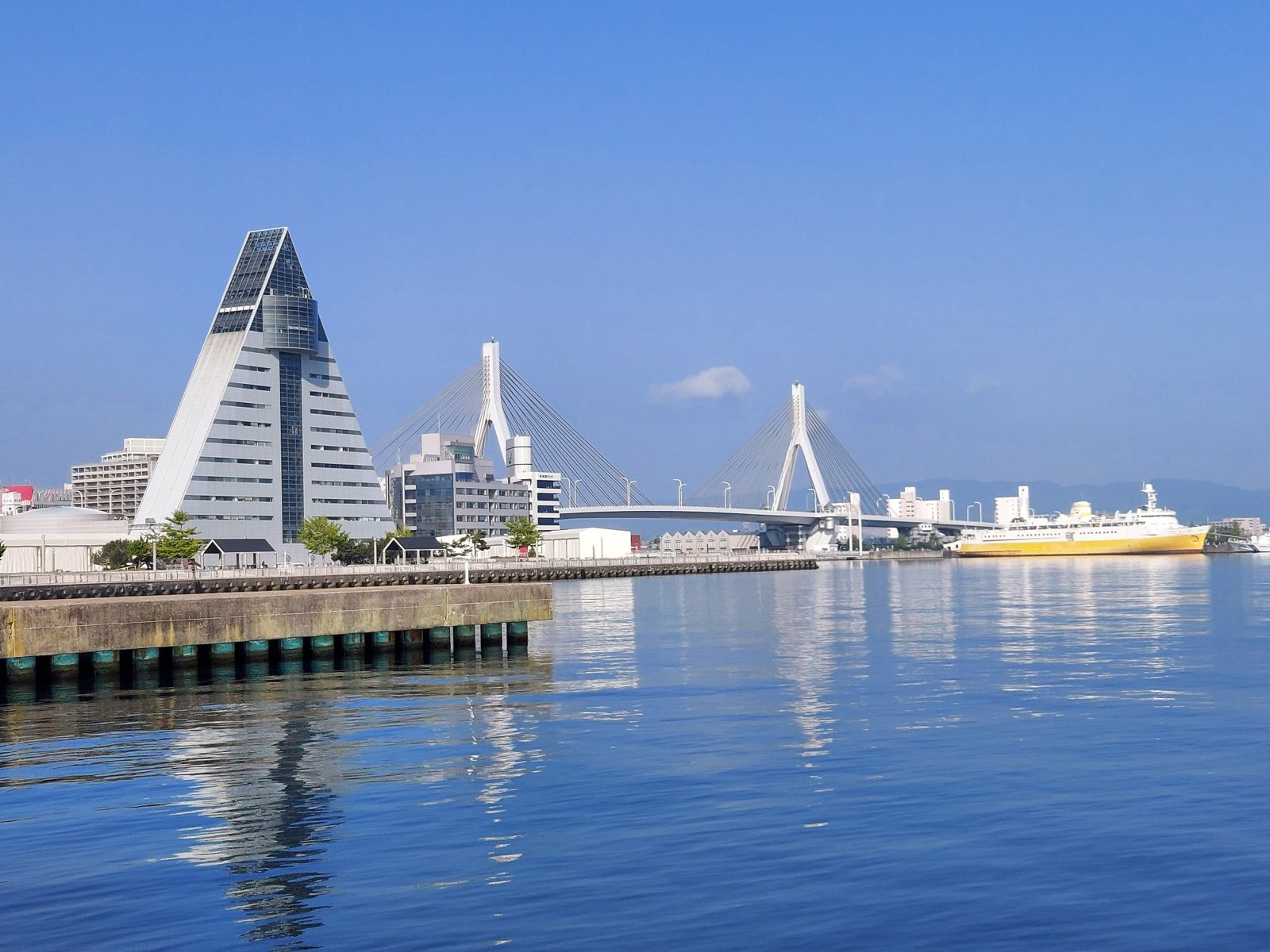
FactWhen the Seikan Tunnel opened in 1988 and the ferries were withdrawn, the port facilities that had spread north of Aomori Station had served their purpose. The site was reborn as a bay area, now home to the triangular tourism and local products centre ASPAM (opened 1986), the white cable-stayed Aomori Bay Bridge, the Nebuta Museum Wa Rasse (the Festivals room) and the preserved ferry Hakkoda Maru.
Look here: ASPAM's "A"
The 76-metre ASPAM is a triangular building shaped like the letter "A", the initial of Aomori. Seen from the side, the main towers of the Bay Bridge are "A"-shaped too. Aomori's "A" is hidden all around the harbour.
Main sources: Aomori City, "History of Aomori City" / History of Aomori City / Utou Shrine / Aomori Prefectural Tourist Center ASPAM