Home / Apple Country
08 — APPLES
Apple Country
About 60% of Japan's apples are grown in Aomori Prefecture. It all began with just three saplings sent by the government in the early Meiji era. Samurai who traded their swords for hoes, battles against disease and pests, and the "apples that didn't fall" in a typhoon year: we trace 150 years of the apple kingdom.
Labels: Factdocumented Likelysupported by most sources Legendoral tradition Urban legendlocal lore and rumour
Three saplings
FactIn the spring of 1875 (Meiji 8), the government (the Home Ministry) sent three Western apple saplings to Aomori Prefecture, and they were planted in the grounds of the prefectural office. This is regarded as the start of apple growing in Aomori Prefecture.
FactIt was Hirosaki's former samurai, who had lost their livelihoods, who spread apple growing. Among them, Kikuchi Tatee learned the technique of grafting, multiplied the saplings and distributed them around the region, and is known as "the founder of Aomori apples". The Meiji-era missionary John Ing is also known as one of those who introduced apples to Hirosaki.
Japan's oldest apple trees
FactIn an orchard in Tsugaru City stand Japan's oldest apple trees, planted in 1878 and designated a Natural Monument of the prefecture. More than 140 years on, they still bear fruit every year.
FactIn the late Meiji era, disease and pests spread, and the orchards faced the threat of total ruin. Farmers pulled through by devising "fukurokake" (bagging), in which every single fruit is covered with a paper bag, and by improving their spraying. They also honed pruning techniques, training apple trees low and cutting back branches so the sun reaches every part. These pruning skills would later also help protect the cherry trees of Hirosaki Castle (the Hirosaki room).
"Fuji" was born in Fujisaki
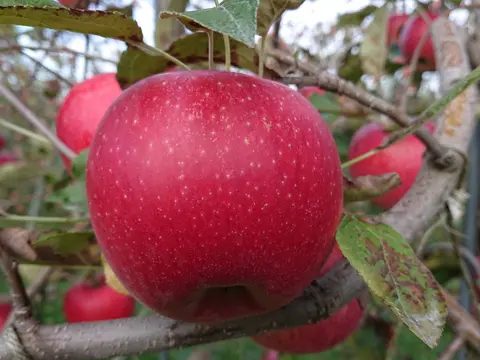
Fact"Fuji", now one of the most widely grown apple varieties in the world, was produced by crossing "Kokko" and "Delicious" at a national horticultural experimental station that stood in Fujisaki, Aomori Prefecture. It was named in 1962.
LikelyThe name "Fuji" is said to come from Fujisaki, the town where it was born, and from Mt Fuji, Japan's highest mountain.
1991: the apple typhoon
FactIn September 1991, Typhoon No. 19 struck Aomori Prefecture, and strong winds knocked many of the apples to the ground just before harvest. This damage, known as the "apple typhoon", dealt farmers a heavy blow.
FactAmid all this, apples that had withstood the winds and stayed on their branches became talismans for students praying to pass their entrance exams, as "apples that didn't fall" (in Japanese, "falling" also means failing an exam). They sold even at high prices and caused a stir. It is an episode that speaks of the tenacity of Aomori's people, who turned misfortune to their advantage.
Look here: Hirosaki Apple Park
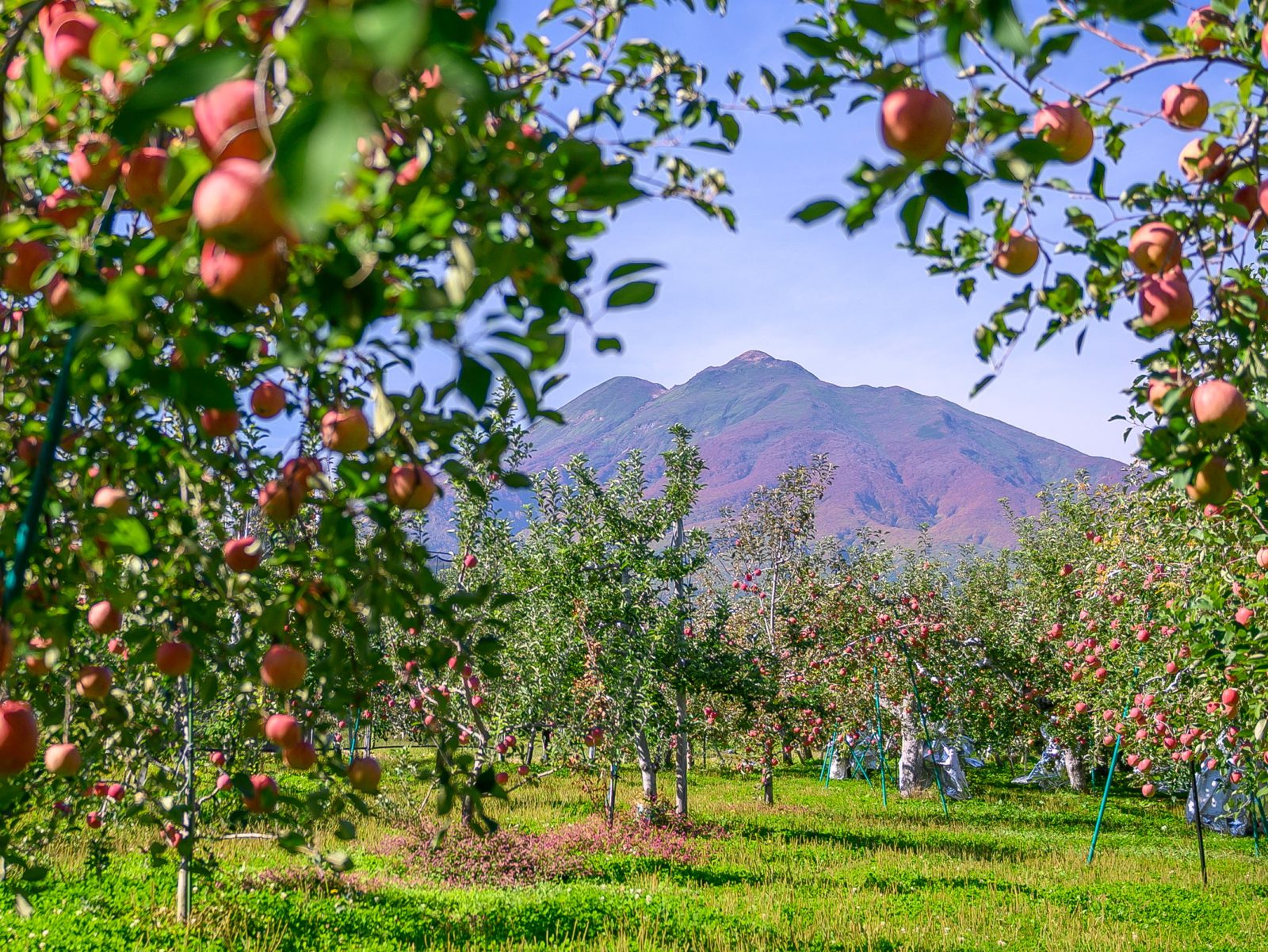
At Hirosaki City's Apple Park, apple trees of many varieties are grown, so you can compare the fruit of each. Depending on the season, you can also try apple picking. Apple orchards with Mt Iwaki behind them are a classic Tsugaru landscape.
Main sources: Aomori Prefecture, "History of Apples" / Aomori Apple Association / NARO Institute of Fruit Tree and Tea Science, "Fuji" / Hirosaki Apple Park