Home / The Hakkoda Snow March
04 — IN MEMORIAM
The Hakkoda Snow March
In January 1902, 210 men of Aomori's 5th Infantry Regiment set out into the snow of the Hakkoda Mountains. Only 11 came back alive. This is regarded as one of the worst mountain disasters in the world. We trace it quietly, following the facts and figures on record.
Labels: Factdocumented Likelysupported by most sources Legendoral tradition Urban legendlocal lore and rumour
Why they went into the winter mountains
FactIn 1902 (Meiji 35), Japan was conscious that war with Russia was approaching. To prepare for fighting in bitterly cold lands, the army needed experience and information on moving troops through snow. Aomori's 5th Infantry Regiment planned a winter march from Aomori across the northern side of the Hakkoda Mountains towards Tashiro.
FactOn the morning of 23 January, 210 men, led by Captain Kannari Bunkichi and accompanied by the battalion commander, Major Yamaguchi Yutaka, and others, left their barracks in Aomori.
In a record-breaking cold wave
FactAt the time, extremely cold air had flowed in over Japan. On 25 January, -41.0°C was recorded in Asahikawa, Hokkaido. It remains Japan's official record low temperature.
FactThe unit lost its way in a ferocious blizzard, and as they spent night after night bivouacking in the mountains, soldiers collapsed one after another from frostbite and exhaustion. It was several days after their departure that rescue teams began searching.
FactOne of the first survivors to be found, Corporal Goto Fusanosuke, was discovered standing upright in the snow, barely alive. His discovery is said to have been the clue that revealed the unit's disaster.
The Hirosaki unit made it through
FactDuring the same period, a small unit of Hirosaki's 31st Infantry Regiment, led by Captain Fukushima Taizo, also carried out a winter march on a longer route: from Hirosaki around Lake Towada, then across Hakkoda to Aomori. Having hired local villagers as guides and prepared thoroughly, every man in the unit completed the route.
LikelyFactors cited as separating the two units' outcomes include the size of the party, equipment and preparation, whether or not they had local guides, and confusion in the chain of command. However, the 5th Regiment's march plan and the decisions made on the day are still debated among researchers.
A disaster that became a story
FactIn 1971 the event became Nitta Jiro's novel Hakkodasan Shi no Houko ("Death March on Mount Hakkoda"), and in 1977 it was released as the film Mount Hakkoda, which attracted great attention. The novel and film are fiction based on historical fact, and the names of characters and some events have been changed (the Books room).
Look here: the statue at Umatateba and Kohata Cemetery
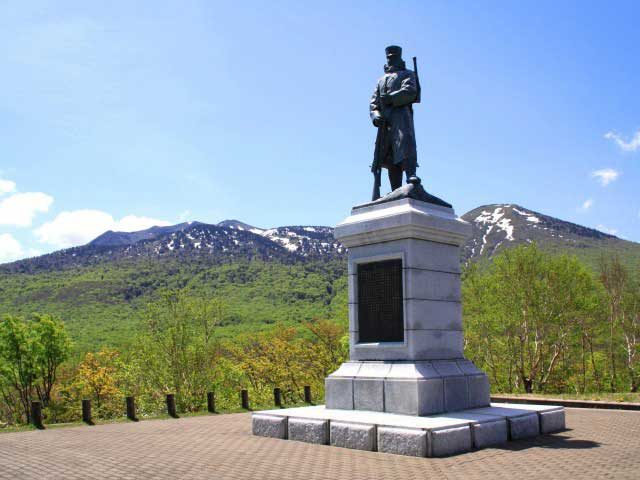
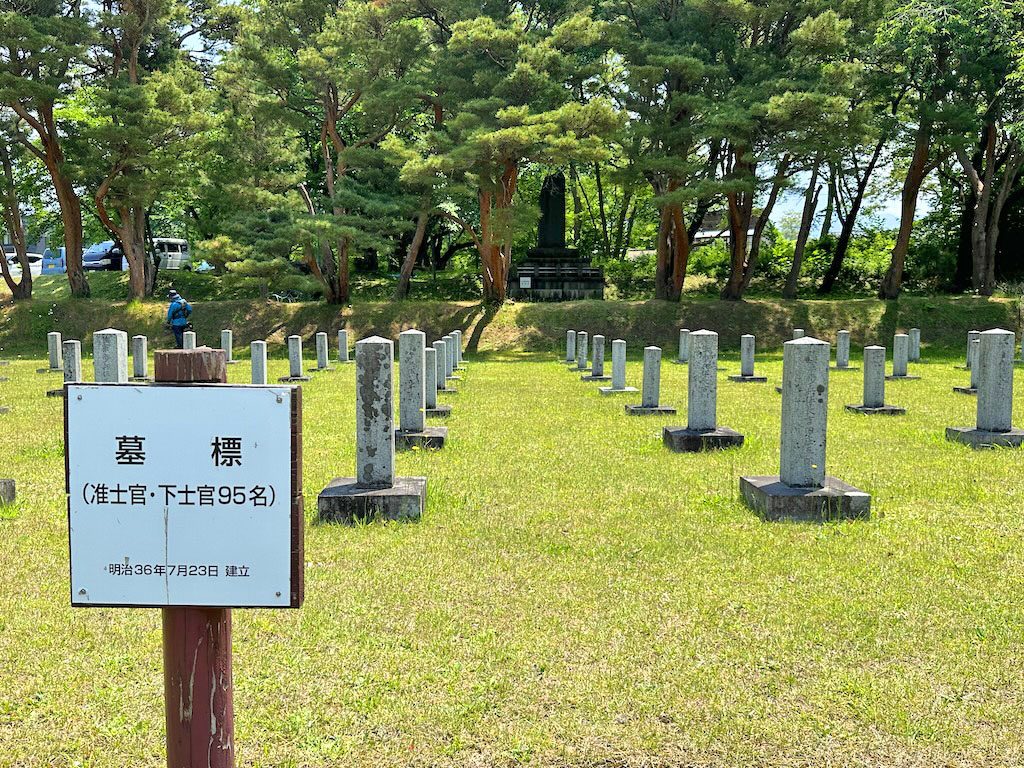
At Umatateba in the Hakkoda Mountains stands the "Snow March Disaster Memorial Statue", modelled on Corporal Goto, watching over the scene of the disaster. At Kohata Cemetery (the former Army cemetery) on the outskirts of Aomori City, the grave markers of the soldiers who died stand in neat rows, and the records of the time can be seen at the neighbouring Hakkoda Snow March Disaster Museum.
Main sources: Hakkoda Snow March Disaster Museum / Aomori City, "Kohata Cemetery" / Japan Meteorological Agency, "All-time national rankings (lowest temperature)" / Ministry of the Army, Sonan Shimatsu (Report on the Disaster)