Home / Scallops, Oma Tuna and Senbei-jiru
09 — FOOD
Scallops, Oma Tuna and Senbei-jiru
Surrounded by sea on three sides and shut in by deep snow in winter, Aomori sets a table full of the sea's bounty and of the know-how needed to survive long winters. From a tuna that sold for more than 300 million yen to crackers dropped into a hotpot and scallop shells used as cooking pans, these are the stories behind the flavours of Aomori.
Labels: Factdocumented Likelysupported by most sources Legendoral tradition Urban legendlocal lore and rumour
The scallops of Mutsu Bay
FactMutsu Bay is one of Japan's leading producers of scallops. The catch of wild scallops used to vary greatly from year to year, but in the 1960s a technique of aquaculture was established, in which young scallops are collected in the sea and raised there, and the harvest became stable. For the people of Aomori, scallops are not a treat for special occasions but an everyday ingredient.
FactKaiyaki miso, a home-cooked dish of Tsugaru and Shimokita, uses a large scallop shell in place of a pan: the ingredients are simmered in stock and miso, then bound with beaten egg. It is a taste of home, eaten even when people are ill.
The tuna of Oma
FactThe fishermen of Oma, at the tip of the Shimokita Peninsula, catch the bluefin tuna that migrate through the Tsugaru Strait by pole-and-line and longline fishing. Oma tuna fetches the top price at the New Year's first auction at Tokyo's Toyosu Market almost every year, and at the first auction of 2019 a single 278-kilogram fish sold for 333.6 million yen (the Shimokita room).
Crackers, simmered in a hotpot
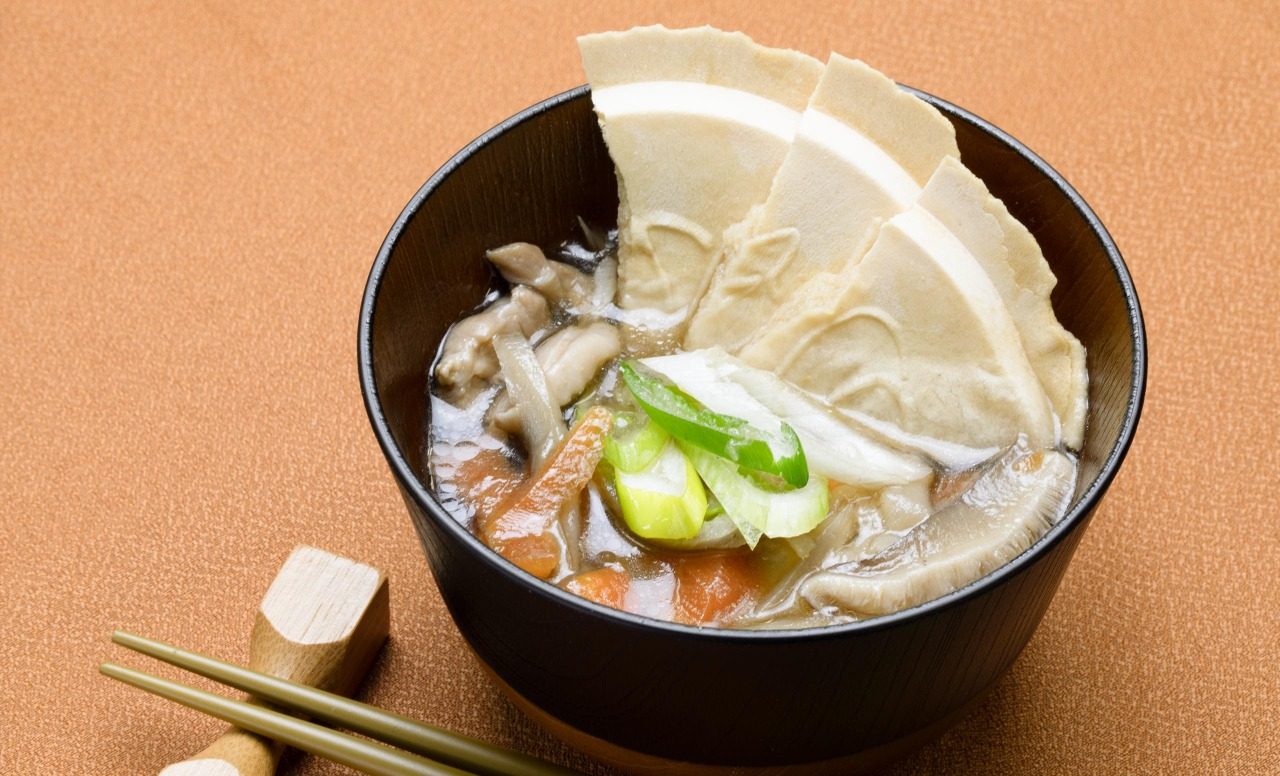
FactIn Hachinohe, in the Nanbu region, Nanbu senbei, crackers made of baked wheat flour, are broken into a pot and simmered. This is senbei-jiru (cracker soup). Soaked in the broth, the crackers take on a chewy texture like suiton dumplings. There is even a special "kayaki senbei" made for the dish, and it is said to have been eaten by the late Edo period. In 2012 it won the top prize, the Gold Grand Prix, at the B-1 Grand Prix, a national contest of local comfort food (the Hachinohe room).
FactHachinohe also has ichigo-ni ("strawberry soup"), a clear soup made with sea urchin and abalone. There are no strawberries in it: it takes its name from the way the sea urchin in the bowl looks like wild strawberries glimpsed through the morning mist.
Know-how for getting through winter
FactTsugaru's kenoshiru is a soup of finely chopped daikon radish, carrot, burdock, mountain vegetables such as bracken and royal fern, and freeze-dried tofu, simmered in miso. It is made in a big pot at Koshogatsu (Little New Year) and kept to be eaten over the following days; it is also said that this gave women a little rest from cooking for the New Year.
LikelyIn Aomori City, oden is served with ginger miso poured over it. The most widely accepted theory is that it began after the war at food stalls, which served it to warm people changing through the snow to the Seikan ferries.
Look for this: nokke-don
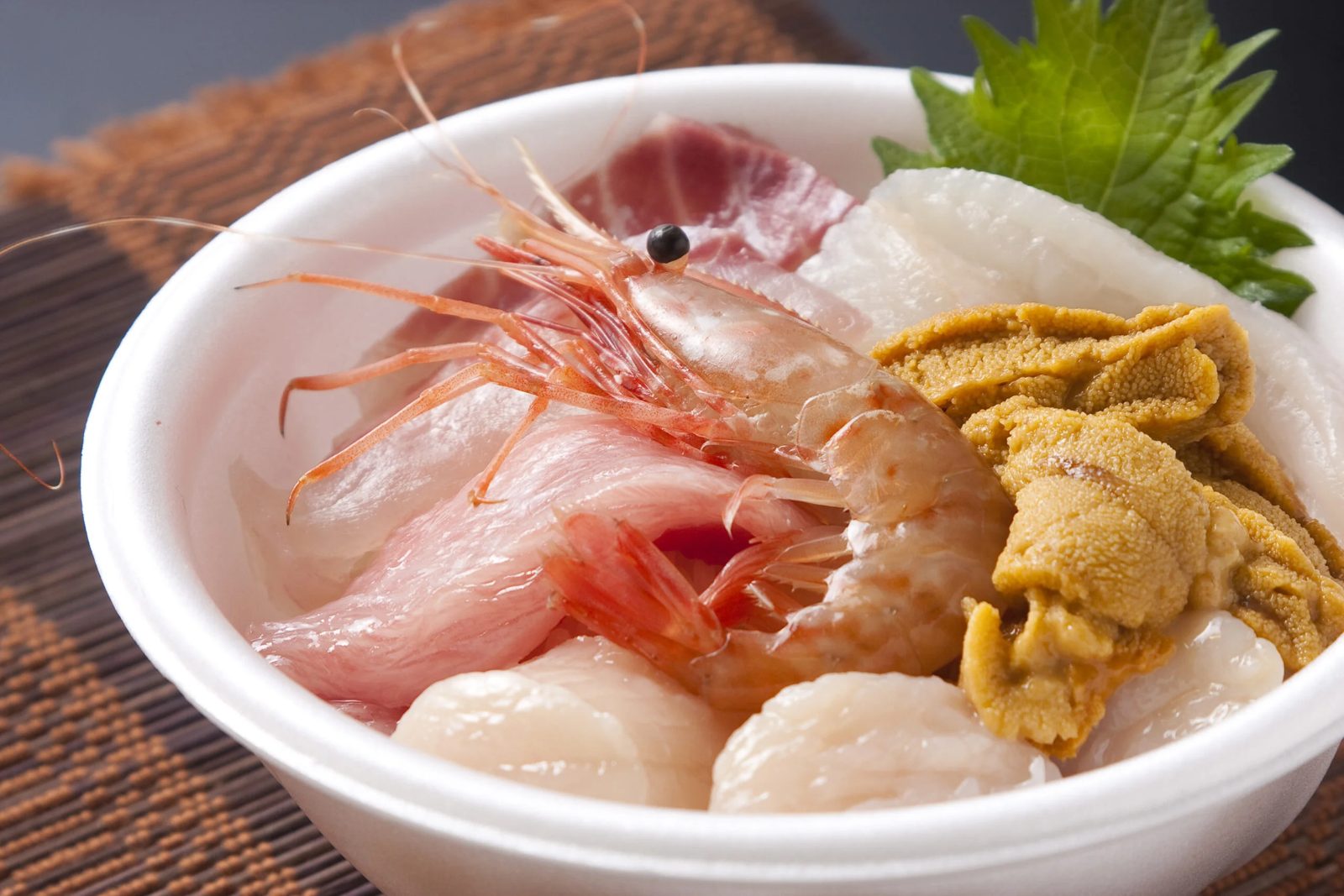
At the Aomori Gyosai Center near Aomori Station, you first buy meal tickets and receive a bowl containing only rice. You then take it round the market stalls, "putting on" (nokke) a little of whatever sashimi you like: this is nokke-don, and the result is a seafood bowl all your own.
Main sources: Aomori Prefecture, "Aomori's Food" / Aomori Prefectural Federation of Fisheries Cooperative Associations / Hachinohe Senbei-jiru Research Institute / Aomori Gyosai Center / Tokyo Metropolitan Central Wholesale Market