Home / Nebuta, Neputa and Tachineputa
07 — FESTIVALS
Nebuta, Neputa and Tachineputa
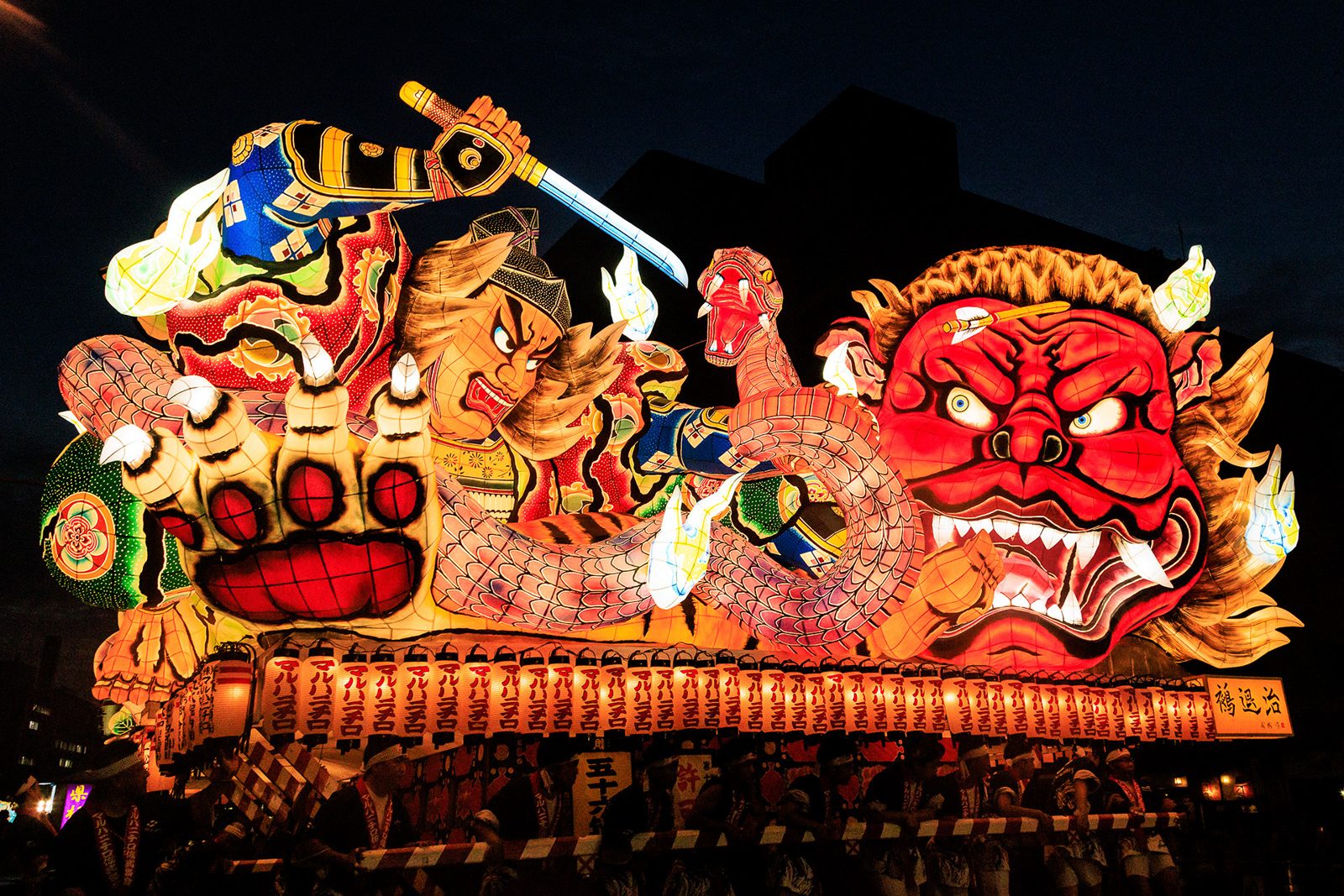
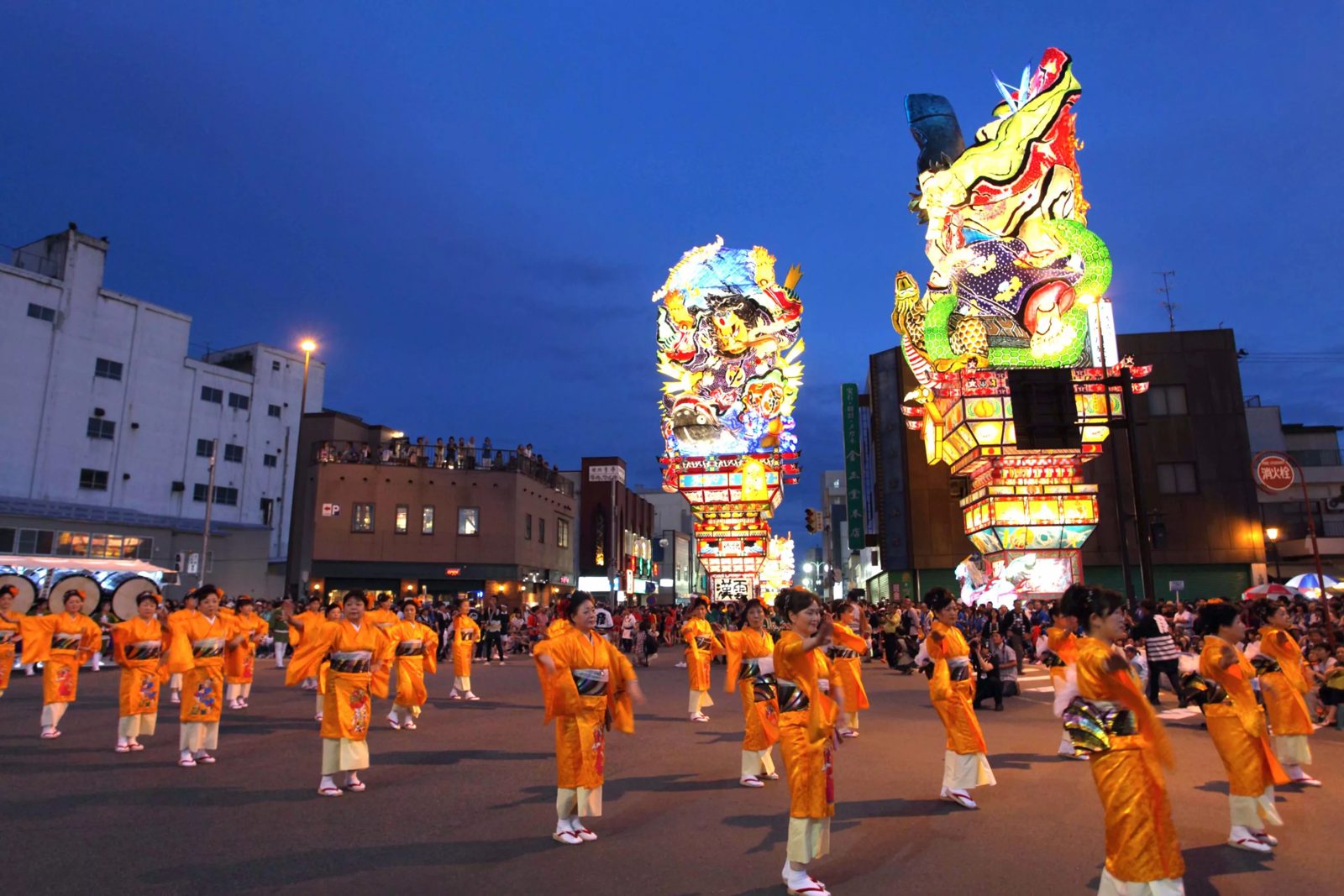
In early August, the nights of Tsugaru are filled with glowing floats of giant figures. In Aomori they are "nebuta"; in Hirosaki, "neputa". They may look like the same festival, but their shapes and their chants are different. From here to Goshogawara's Tachineputa, more than 20 metres tall, let us take a look at Tsugaru's fiery summer.
Labels: Factdocumented Likelysupported by most sources Legendoral tradition Urban legendlocal lore and rumour
The origins of nebuta
LikelyNebuta is thought to have originated in "nemuri-nagashi" ("sending away sleepiness"), a custom around the time of Tanabata in which the drowsiness and impurities of summer were transferred to lanterns and floated away on rivers or the sea. The leading theory is that the names "nebuta" and "neputa" themselves are dialect forms of "nemutai" ("sleepy").
Sakanoue no Tamuramaro's ruse
A legend tells that in the Heian period, Sakanoue no Tamuramaro, campaigning against the Emishi, lured the enemy out with huge lanterns in the shape of figures. The nebuta festival's top prize was once called the "Tamuramaro Prize".
Tamuramaro never came as far as Tsugaru
Historical sources contain no record of Tamuramaro advancing as far as today's Aomori Prefecture. The legend is thought to have been attached later, and the top prize is now the "Nebuta Grand Prize".
Aomori Nebuta: anyone can be a haneto
FactThe Aomori Nebuta Festival runs from 2 to 7 August every year. Giant lantern floats in the shape of figures, about 9 metres wide and 5 metres tall and depicting warriors, gods and buddhas, parade through the night streets to the music of flutes and drums. In 1980, together with Hirosaki Neputa, it was designated a national Important Intangible Folk Cultural Property.
FactThe dancers who leap around the floats, shouting "Rassera, rassera!", are the haneto (leaping dancers). As long as you wear the proper costume, anyone, visitors included, can join in. Costumes can be bought or hired at shops in the city.
FactNebuta are made by specialist craftsmen called "nebuta-shi" (nebuta masters). They build a frame of wood and wire, cover it with washi paper, paint it and fit lights inside. A single float takes several months to make.
Hirosaki Neputa: fans and "Yaa yaa doo"
FactHirosaki's neputa are mainly fan-shaped "ogi-neputa". The front bears a heroic warrior painting called the "kagami-e" (mirror picture), and the back a "miokuri-e" (send-off picture), such as a portrait of a beautiful woman. The chant is "Yaa yaa doo!" It is said that if Aomori's nebuta is a festival that builds to a peak with leaping, Hirosaki's neputa is one that conveys the quiet intensity of warriors before they set out for battle.
Goshogawara's Tachineputa: revived after 80 years
FactIn the Meiji era, gigantic neputa that towered overhead paraded through Goshogawara, as wealthy merchants and landowners competed to show off their power. But once electric wires were strung up, the big neputa disappeared. In the 1990s, citizens attempted to recreate them from old photographs and plans, and in 1998, for the first time in 80 years, the Tachineputa ("standing neputa") walked the streets again. Today floats about 23 metres tall appear at the festival from 4 to 8 August.
Look here: Wa Rasse and Tachineputa-no-Yakata
You can see nebuta even outside festival time. At "Nebuta Museum Wa Rasse" (opened 2011) in front of Aomori Station, large nebuta, including that year's Grand Prize winner, are on display. At Goshogawara's "Tachineputa-no-Yakata", Tachineputa over 20 metres tall tower inside an atrium, and on festival days they set out from here.
Main sources: Aomori Nebuta Festival Executive Committee / Hirosaki Neputa Festival Coordinating Council / Goshogawara City, "Tachineputa-no-Yakata" / Agency for Cultural Affairs, Cultural Heritage Online