Home / Munakata, Dazai and Terayama
14 — ART & LETTERS
Munakata, Dazai and Terayama
Somehow, Aomori, at the far northern end of Honshu, has produced one artist after another whose work speaks to the world. A blacksmith's son who idolised Van Gogh, a writer born into a great landowning family of Tsugaru, a tanka poet who founded a theatre troupe, and a painter of big-headed little girls: meet the creative minds Aomori has given the world.
Labels: Factdocumented Likelysupported by most sources Legendoral tradition Urban legendlocal lore and rumour
"Wa da ba Gohho ni naru": Munakata Shiko
FactMunakata Shiko was born in 1903, the third son of a blacksmith in Aomori City. As a boy he was deeply moved on seeing a picture of Van Gogh's Sunflowers, and he is said to have vowed "Wa da ba Gohho ni naru" ("I'm going to be Van Gogh" in Tsugaru dialect).
FactAfter moving to Tokyo, Munakata came to devote himself to woodblock printing. He called his prints "hanga" written with the characters for "board pictures", and, being extremely short-sighted, he carved at great speed with his face almost pressed against the block. In 1956 he won the Grand Prize for printmaking at the Venice Biennale, and became "Munakata" to the world. In 1970 he received the Order of Culture.
Dazai Osamu and Tsugaru
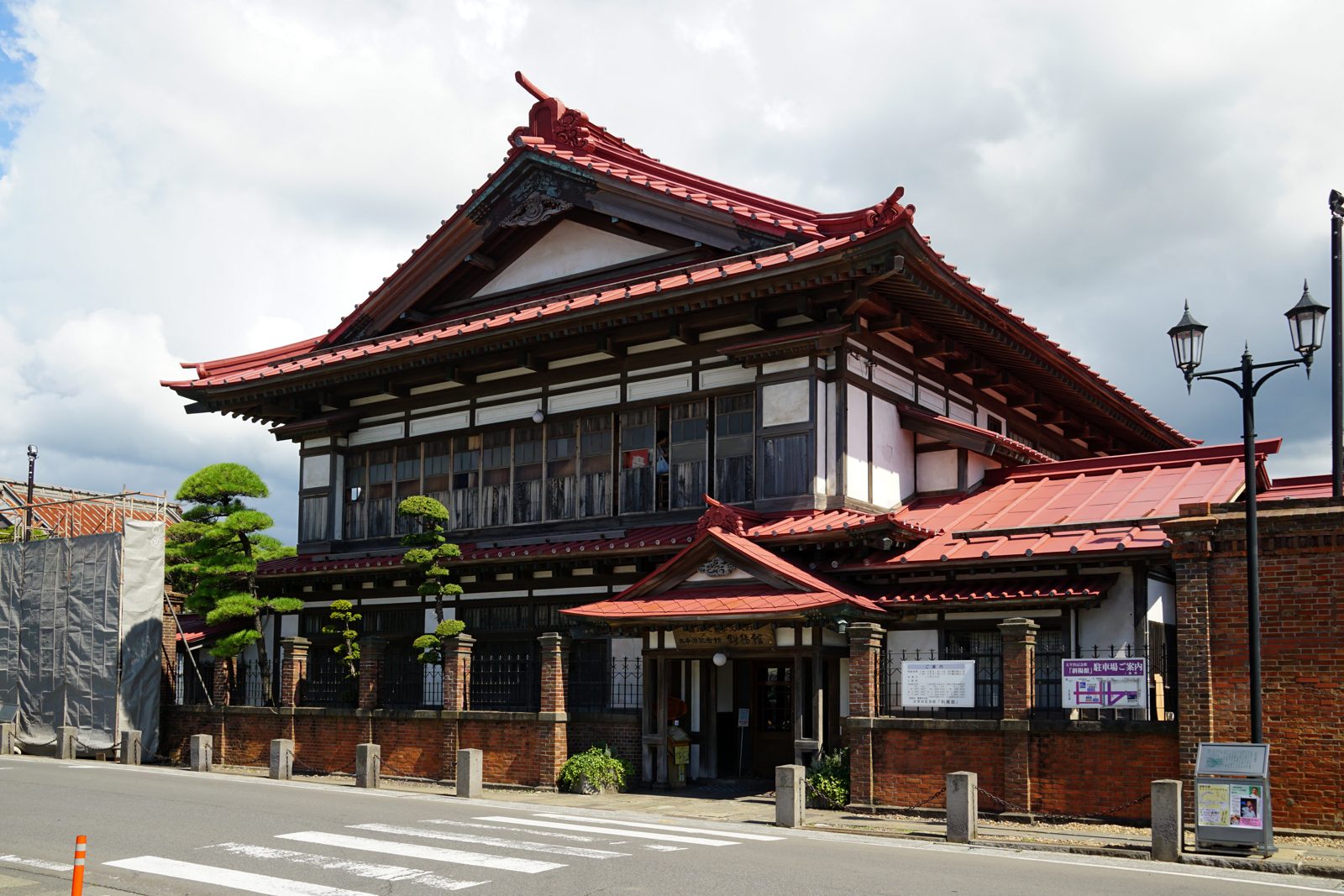
FactDazai Osamu (real name Tsushima Shuji) was born in 1909 into a great landowning family in Kanagi village in Tsugaru (now part of Goshogawara City). His birthplace, a large mansion with a hip-and-gable roof built at the end of the Meiji period, is now open to the public as the Dazai Osamu Memorial Hall, "Shayokan", and is designated an Important Cultural Property of Japan.
FactIn 1944 Dazai travelled around the Tsugaru Peninsula, his home region, and wrote the travelogue novel Tsugaru (published in English as Return to Tsugaru). The book closes with the scene in which he is reunited in Kodomari, after 30 years, with Koshino Take, the nursemaid who had raised him. In Kodomari a statue depicting that reunion now stands (the Books room).
Terayama Shuji, magician of words
FactBorn in Hirosaki in 1935, Terayama Shuji spent his boyhood in Aomori and was active in many fields, from tanka poetry, verse, theatre and film to writing on horse racing. Leading the theatre troupe Tenjo Sajiki, he staged avant-garde productions around the world. The Terayama Shuji Memorial Museum is in Misawa City.
Nara Yoshitomo and Aomori-ken
FactThe contemporary artist Nara Yoshitomo, born in Hirosaki in 1959, is known worldwide for his paintings of glaring children and dogs.
Look for this: Aomori-ken at the Aomori Museum of Art
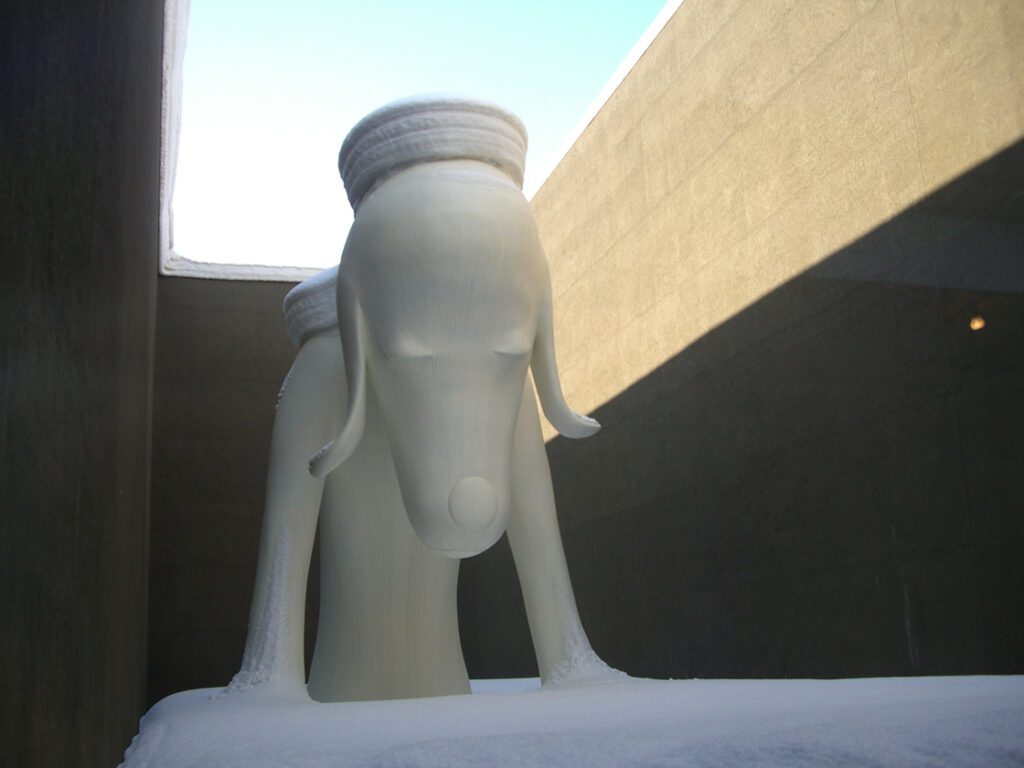
At the Aomori Museum of Art (opened in 2006), next to the Sannai-Maruyama site, stands Nara Yoshitomo's 8.5-metre white dog sculpture, Aomori-ken (Aomori Dog). It looks as though it is sitting in an excavation pit (the Sannai-Maruyama room). The museum's great hall displays the huge backdrops Chagall painted for the ballet Aleko, and works by Munakata Shiko can also be seen here.
Main sources: Aomori Museum of Art / Munakata Shiko Memorial Museum / Dazai Osamu Memorial Hall "Shayokan" / Misawa City Terayama Shuji Memorial Museum / Goshogawara City