Home / The Jomon Sites and the Goggle-Eyed Figurine
01 — JOMON
The Jomon Sites and the Goggle-Eyed Figurine
In 2021, seventeen sites in Hokkaido and northern Tohoku were inscribed as World Heritage under the name "Jomon Prehistoric Sites in Northern Japan". Eight of them are in Aomori Prefecture. Fragments of pottery 15,000 years old, circles of arranged stones, and a clay figure with eyes like snow goggles: Aomori is a treasure house of the Jomon.
Labels: Factdocumented Likelysupported by most sources Legendoral tradition Urban legendlocal lore and rumour
Eight World Heritage sites in Aomori Prefecture
FactOf the World Heritage "Jomon Prehistoric Sites in Northern Japan", the following eight are in Aomori Prefecture: Sannai-Maruyama (Aomori City), Komakino (Aomori City), Odai Yamamoto (Sotogahama), the Tagoyano Shell Mound and the Kamegaoka Stone Age Site (Tsugaru City), the Futatsumori Shell Mound (Shichinohe), Omori Katsuyama (Hirosaki City) and Korekawa (Hachinohe City). Together they show how a settled Jomon way of life, not dependent on farming, changed over more than 10,000 years.
FactAbove all, the Odai Yamamoto site has yielded fragments of pottery said to be about 15,000 years old. It is some of the earliest pottery in Japan.
The goggle-eyed figurine: eyes like snow goggles
FactThe clay figure excavated at the Kamegaoka Stone Age Site in Tsugaru City has large, wide, bulging eyes. Because their shape resembles the shakoki (snow goggles) that northern peoples used to shield their eyes from the glare of snow, it came to be called the shakoki dogu, or "goggle-eyed figurine". It dates from the end of the Jomon period, is designated an Important Cultural Property and is held by the Tokyo National Museum. Its left leg is missing.
"It depicts an alien"
Because of its large eyes and bulging body, a theory spread during the occult boom that the goggle-eyed figurine represents an alien wearing a spacesuit.
Thought to be an object for prayer
Most clay figures depict women, and many are found broken. The general view is that they were objects for praying for plentiful harvests, safe childbirth, recovery from illness and so on. The eyes, too, are not thought to be a copy of real snow goggles.
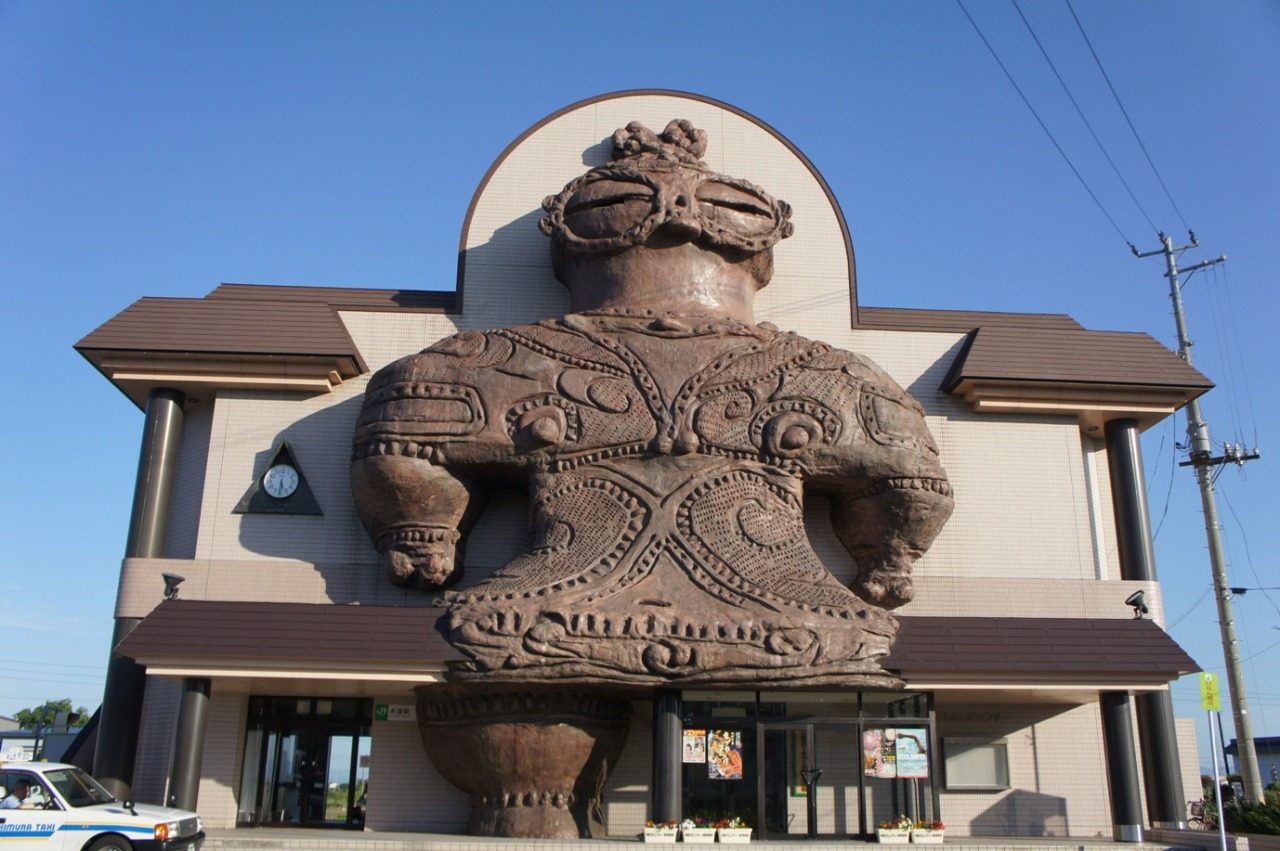
Look here: the giant figurine at JR Kizukuri Station
At Kizukuri Station on the JR Gono Line in Tsugaru City, a giant goggle-eyed figurine about 17 metres tall towers over the front of the station building. Its eyes even light up when a train arrives: once seen, it is a station you will never forget.
The lacquer of Korekawa, and the gassho dogu National Treasure
FactAt the Korekawa site in Hachinohe City, wooden vessels, combs and bracelets coated with red lacquer have been found in good condition in the mud. The site shows that the Jomon people had advanced lacquer skills. The gassho dogu, a seated clay figure with its hands pressed together, excavated at the nearby Kazahari I site, is a National Treasure and can be seen at the Korekawa Jomon Museum in Hachinohe City.
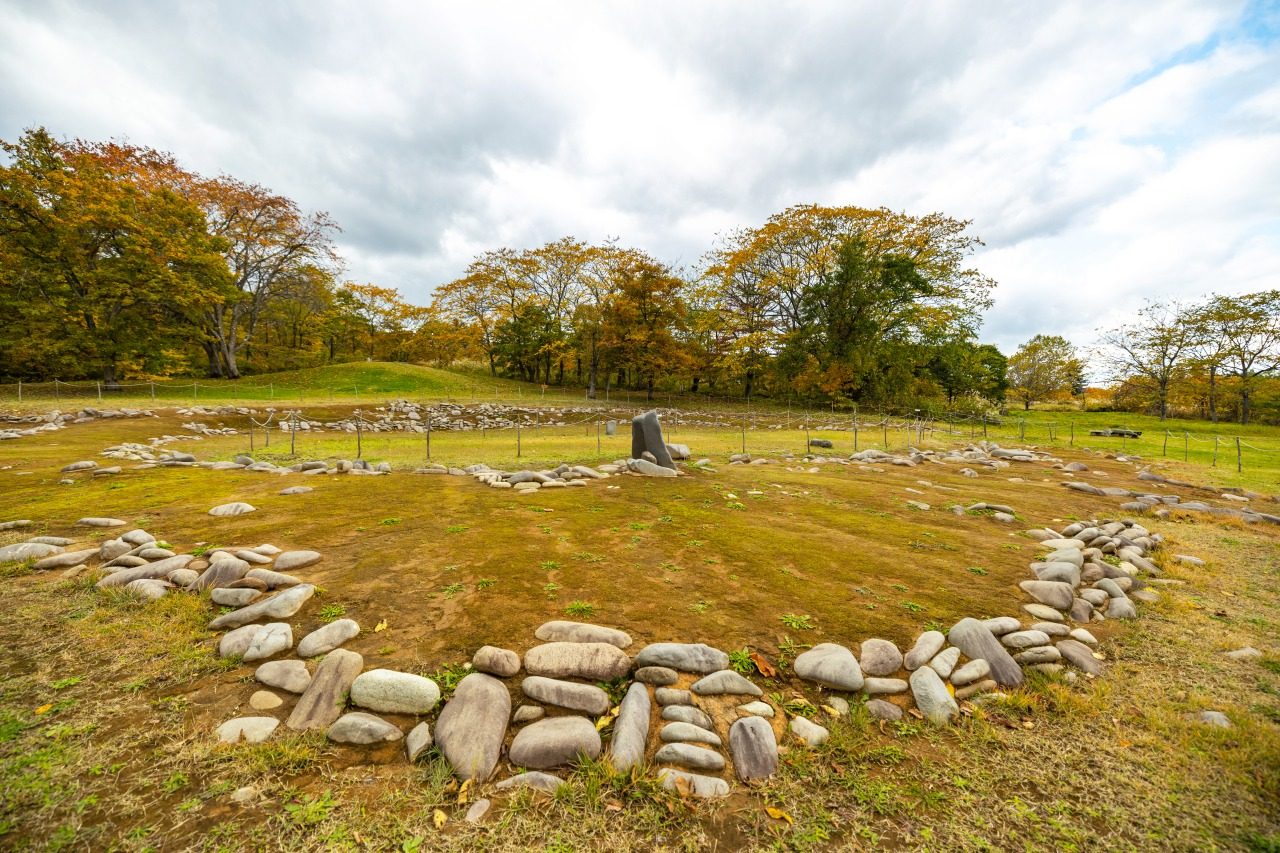
The stone circle of Komakino
FactAt the Komakino site on the outskirts of Aomori City there is a stone circle about 55 metres in diameter, made of river stones. It shows a distinctive arrangement, with stones set upright and flat stones stacked on either side of them. It is thought to have been both a burial ground and a place for rituals.
Main sources: Jomon Prehistoric Sites in Northern Japan official website / Tokyo National Museum, "Shakoki dogu" / Hachinohe City Buried Cultural Properties Center, Korekawa Jomon Museum / Aomori City, "Komakino site"