Home / Minus 41 Degrees
07 — WINTER
Memories of Minus 41°C
On January 25, 1902, the temperature in Asahikawa fell to −41.0°C. More than 120 years later, it is still Japan's official record low. And in the grip of the very same cold wave, the infamous snow-march disaster was unfolding on Mount Hakkoda in Aomori.
Labels: Factdocumented Likelysupported by most sources Legendoral tradition Urban legendlocal lore and rumour
Japan's lowest temperature: −41.0°C
FactOn January 25, 1902, the Asahikawa weather station recorded −41.0°C. As an official record of the Japan Meteorological Agency, it remains the lowest temperature ever measured in Japan.
Why does Asahikawa get so cold? The key is the shape of the basin. On clear, calm nights, heat escapes from the ground into the sky (radiative cooling), and the chilled, heavy air pools at the bottom of the basin. Ringed by mountains, the Kamikawa Basin works like a bowl that holds the cold.
The same cold wave struck Mount Hakkoda
FactJust as Asahikawa was experiencing its record-breaking cold, in Aomori the Imperial Army's 5th Infantry Regiment of the 8th Division was conducting a snow march on Mount Hakkoda. Setting out on January 23, the unit was caught in a raging blizzard, and disaster struck: 199 of the 210 men died.
A powerful cold wave had blanketed Hokkaido and northern Honshu. Asahikawa's −41°C and the Hakkoda tragedy were the same weather event, showing itself in two different places. Reading Nitta Jiro's novel "Death March on Mount Hakkoda" gives a vivid sense of how ferocious the cold was that winter (see Further reading).
Enjoying the cold — the winter festival and giant snow sculptures
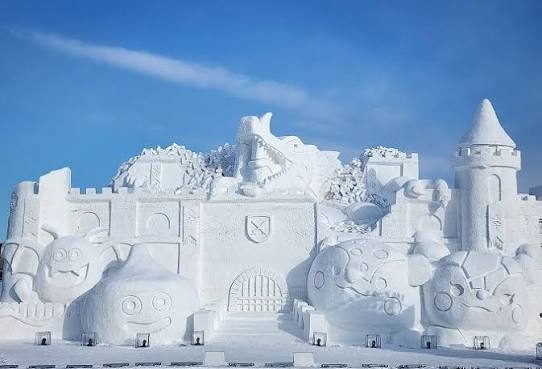
FactAsahikawa's winter festivals began shortly after the war. The "Asahikawa Snow Festival" was held in March 1951, and the first "Asahikawa Winter Festival" took place in February 1960. Its hallmark is the towering giant snow sculptures on the banks of the Ishikari River.
Members of the Japan Ground Self-Defense Force help build the giant sculptures — a scene that also reveals the relationship between the SDF and the citizens of a town that began as a garrison. In the past, one of its sculptures is said to have been recognized by Guinness World Records as among the largest snow sculptures in the world.
"Asahikawa's snow festival came first"
A claim you often hear locally. It is also said that around 1946, an event to build snow sculptures in Tokiwa Park was being planned in Asahikawa.
On record, Sapporo came first in 1950
The first Sapporo Snow Festival was held in 1950; the Asahikawa Snow Festival in 1951. Whether "Asahikawa came first" depends on what you count as the "beginning."
Look for this: winter-morning phenomena
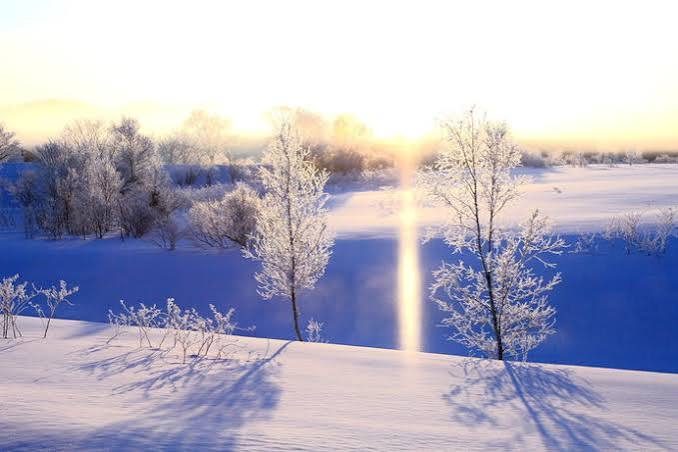
On clear early mornings in the depths of winter, you may see diamond dust — water vapor in the air freezing into glittering crystals — kearashi (river sea smoke), fog rising like steam from the river's surface, and hoarfrost wrapping the trees in white. Mornings below −20°C are the most beautiful moments of Asahikawa's winter.
Butterfly effect: the cold was a "resource"
Ramen that stays hot, sake brewed in the winter cold, festivals of snow sculptures. The cold was an enemy of daily life, but it was also a resource that nurtured Asahikawa's industry and culture.
Main sources: Japan Meteorological Agency, "All-Time National Rankings" / Asahikawa Winter Festival Executive Committee / Aomori City, "Hakkoda Snow March Disaster Museum"