Home / Tondenhei Settlers
02 — PIONEERS
The Tondenhei and Nagayama Takeshiro
Four hundred households a year, three years running from 1891. Soldier-settlers who crossed the sea with their whole families turned a basin of virgin forest into farmland. Leading them was Nagayama Takeshiro, the "father of the tondenhei" — and the district of Nagayama bears his name.
Labels: Factdocumented Likelysupported by most sources Legendoral tradition Urban legendlocal lore and rumour
Soldiers who were also farmers
FactThe tondenhei (soldier-settlers) cleared land and farmed in ordinary times, and fought as soldiers when needed. The system began in 1875 at Kotoni, near Sapporo, to advance Hokkaido's defense and settlement at the same time. The tondenhei arrived in Asahikawa in the system's later phase, after it had spread inland.
| Year | Settlement | Households |
|---|---|---|
| 1891 | Nagayama village | 400 |
| 1892 | Asahikawa village (today's Higashi-Asahikawa) | 400 |
| 1893 | Tohma village (today's Tohma Town) | 400 |
Each household was granted about 5 cho (roughly 5 hectares) of land — several times the size of an average farm on Honshu. But it was primeval forest, thick with huge trees. Fell the trees, dig out the roots, and only then do you have a field. Whether a family survived its first winter could be a matter of life and death.
Nagayama Takeshiro, "father of the tondenhei"
FactNagayama Takeshiro (1837–1904) was a military officer from the Satsuma domain. Long involved in shaping the tondenhei system, he nurtured soldier-settler villages across Hokkaido as head of the Tondenhei Headquarters. He was also one of the men who surveyed Kamikawa as a candidate site for the "Northern Capital."
When the Seventh Division was founded in 1896, he became its first commander. He also served as Governor of Hokkaido, reaching the top of both the island's military and its administration. He is said to have been deeply attached to the settlement of Kamikawa, and the first soldier-settler village to be opened there was named "Nagayama" after him.
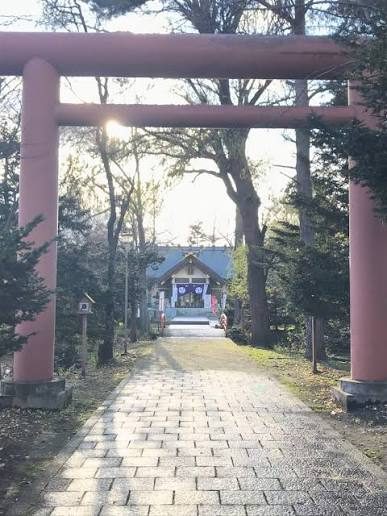
Nagayama Shrine
The Nagayama district has a shrine that enshrines Nagayama Takeshiro, who was welcomed as its deity in 1920. Worshipping a founding pioneer as a god is not unusual in Hokkaido.
Pride in "Mr. Nagayama's town"
In Nagayama's older families, many people are said to still take pride in being descendants of the tondenhei. Locals take it for granted that their district is named after a person.
Life in the soldier-settler villages
Their homes, called heioku, were small wooden houses with a standard floor plan. The winter cold was beyond anything families from Honshu could imagine; they had to get through −30°C nights in drafty houses. Every day meant juggling military drills, clearing land and running a household all at once.
In time, rice began to be planted in the fields. Growing rice in such a cold region was thought to be extremely difficult, but through improved varieties and constant ingenuity, the Kamikawa Basin grew into one of Hokkaido's leading rice-producing areas. Behind the rice that supports Asahikawa's sake brewing today lies this history of settlement.
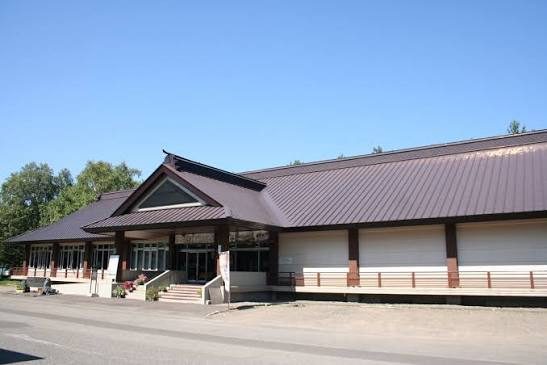
Look for this: the Asahikawa Heison Memorial Museum
In the grounds of Asahikawa Shrine in Higashi-Asahikawa, the Asahikawa Heison (Soldier-Settler Village) Memorial Museum collects the tondenhei's everyday tools and materials on their homes. Seeing the size and weight of the land-clearing tools of the time drives home how grueling it was to turn virgin forest into farmland.
Butterfly effect: 1,200 households became the town's skeleton
Twelve hundred households in three years — several thousand people, counting families. The village plots became the framework of farmland and roads, which lives on in today's streetscapes of Nagayama, Higashi-Asahikawa and Tohma. Without the tondenhei, there would have been no foundation for people to live in the Kamikawa Basin before the division arrived.
Main sources: City of Asahikawa, "History of Asahikawa City" / Asahikawa Heison Memorial Museum exhibits / Nagayama Shrine, "History"