Home / The Asahiyama Zoo Comeback
09 — COMEBACK
Asahiyama Zoo's Comeback
Japan's northernmost zoo saw its visitors fall to 260,000 a year, and there was talk of closing it. But 14 sketches, drawn as its keepers shared their dreams, would eventually work a miracle — overtaking Tokyo's Ueno Zoo, if only for a single month.
Labels: Factdocumented Likelysupported by most sources Legendoral tradition Urban legendlocal lore and rumour
Japan's northernmost zoo hits rock bottom
FactAsahiyama Zoo opened on July 1, 1967, on the slopes of Mount Asahiyama east of Asahikawa. It was busy at first, but as leisure options multiplied, visitor numbers fell.
The final blow came in 1994, when a gorilla and ring-tailed lemurs at the zoo died of echinococcosis (a parasitic infection). The zoo was forced to close temporarily, and in fiscal 1996 visitor numbers hit an all-time low of about 260,000. With city finances also tight, closure was being openly discussed.
Fourteen sketches
A defining moment: drawing a dream
Around 1986, the keepers used to gather after work to talk about "the ideal zoo we'd like to build." Exhibits where animals could show off their natural abilities; angles that would amaze visitors. That dream was captured in 14 sketches. They were drawn by Abe Hiroshi, then a zookeeper (and later a celebrated picture-book author). With no money to spare in those days, the sketches lay in a drawer for years.
The turning point came when a new mayor secured a budget for improvements. The keepers set about turning those sketches into reality. The key concept was "behavioral exhibition": rather than a "morphological exhibition" that simply displays what animals look like, exhibits that show animals' natural behaviors — swimming, leaping, climbing.
| Year | Facility | Highlight |
|---|---|---|
| 1997 | Bird Village | A huge aviary with birds flying all around |
| 1998 | Big Cat House | Look straight up at leopards and tigers from below |
| 2000 | Penguin House | Penguins "flying" overhead in an underwater tunnel |
| 2001 | Orangutan House | Tightrope walking high in the air |
| 2002 | Polar Bear House | Thrilling dives into the water, and a view from a capsule |
| 2004 | Seal House | Seals swimming vertically through a cylindrical tank |
The summer it beat Ueno
FactWhen the Seal House was completed in June 2004, word spread across the country. That August, Asahiyama Zoo's monthly attendance reached about 320,000, surpassing Ueno Zoo, Japan's busiest. A zoo in a city of around 350,000 people had overtaken the zoo in the nation's capital. In fiscal 2007 it topped 3 million visitors a year, becoming one of Hokkaido's signature attractions.
The reforms were driven by former keepers such as zoo director Kosuge Masao and his successor Bando Gen. The handwritten "One-Point Guide" signs are another of their ideas — a way for keepers to talk about the animals in their own words.
Look for this: the handwritten signs
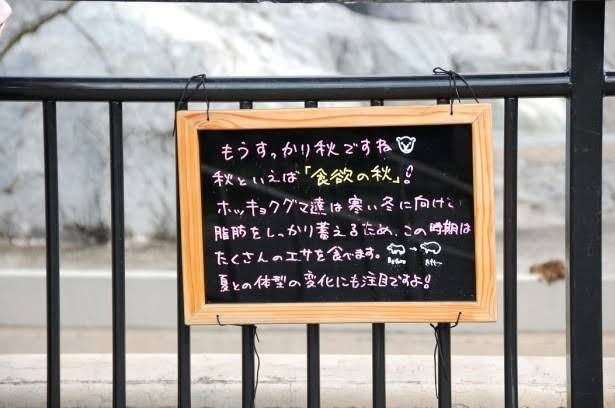
Many of the information boards around the zoo are handwritten and illustrated by the keepers. Beyond the animal's name and habitat, they share insider details such as "this one has this kind of personality" or "watch for this."
"The penguin walk is staged"
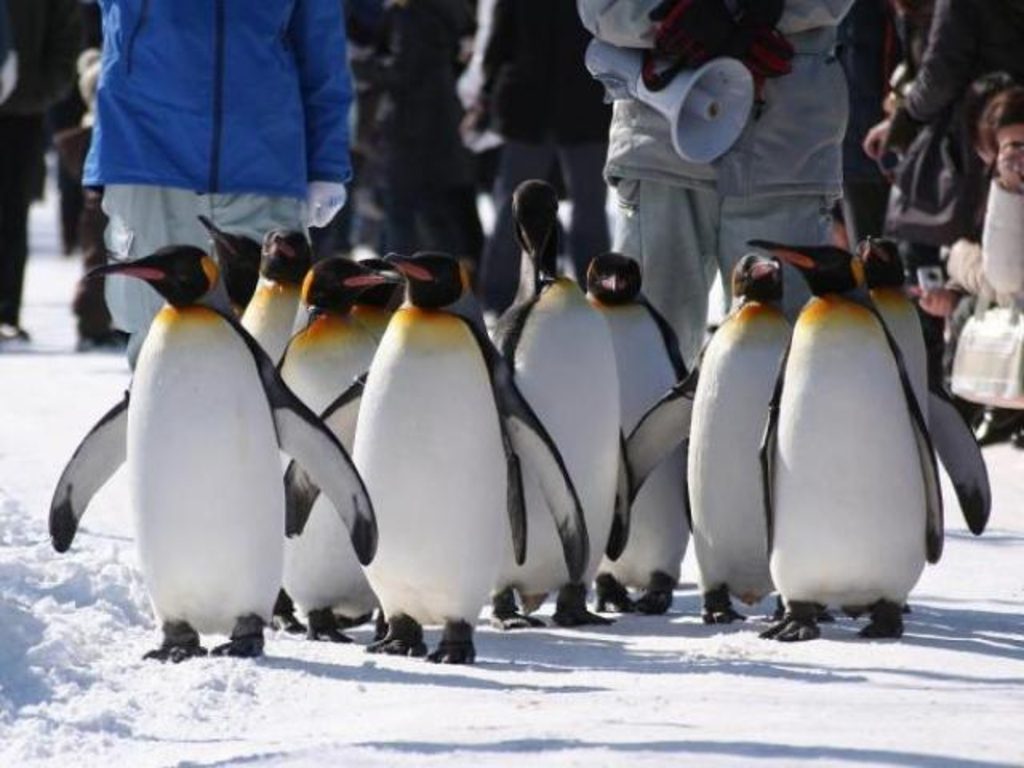
The famous winter "penguin walk" started as a way to give the penguins more exercise. It's not a trick performed for show — the penguins walk however they please.
The sketches are real
The 14 sketches really were drawn, and became the blueprint for the zoo's revival. The story is still told as proof of the power of "putting a dream on paper."
Main sources: Asahikawa City Asahiyama Zoo, "History of the Zoo" / Kosuge Masao, "'Asahiyama Dobutsuen' Kakumei" (The Asahiyama Zoo Revolution; Kadokawa One Theme 21)