Home / Nakasu and the yatai stalls
Nakasu and the Yatai
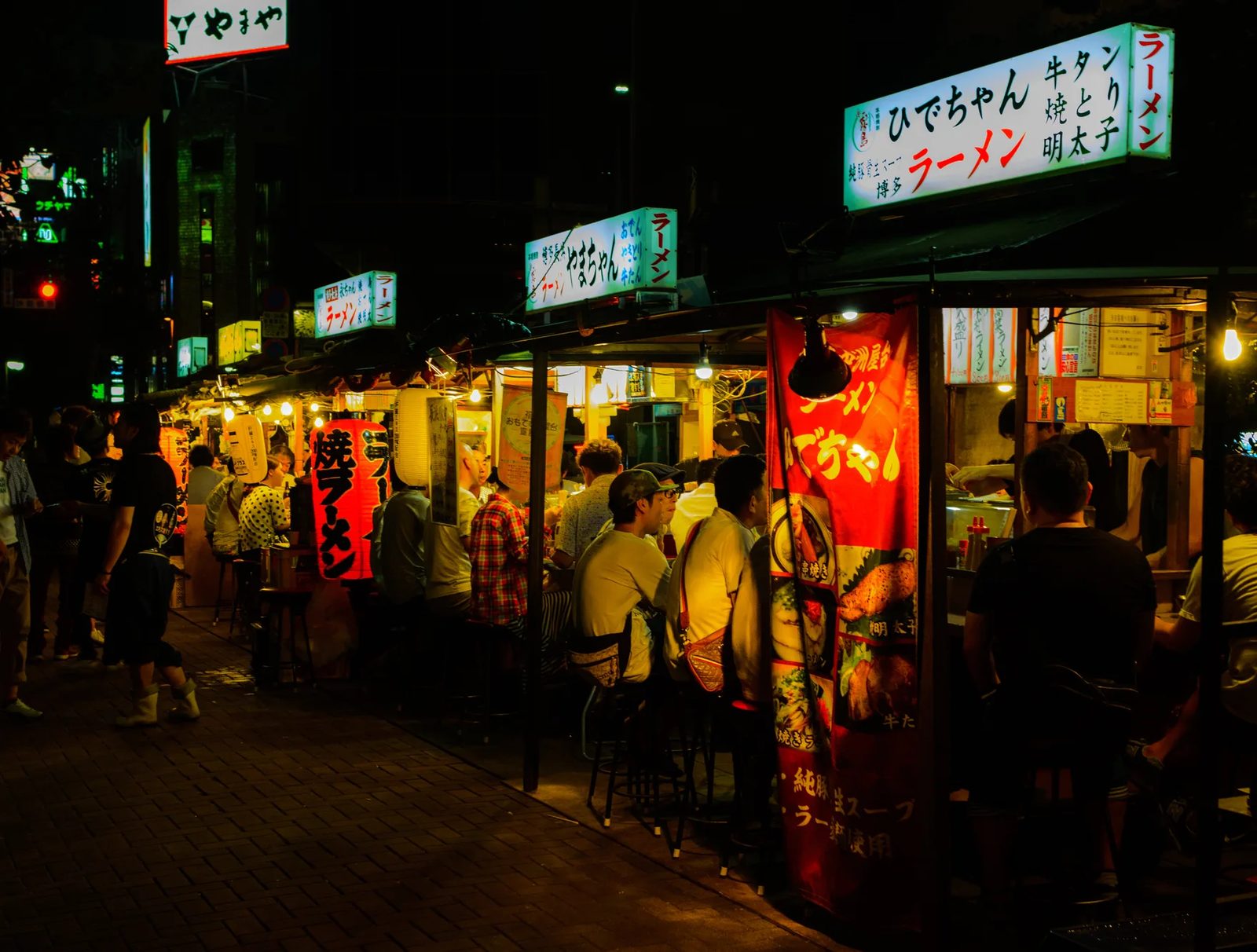
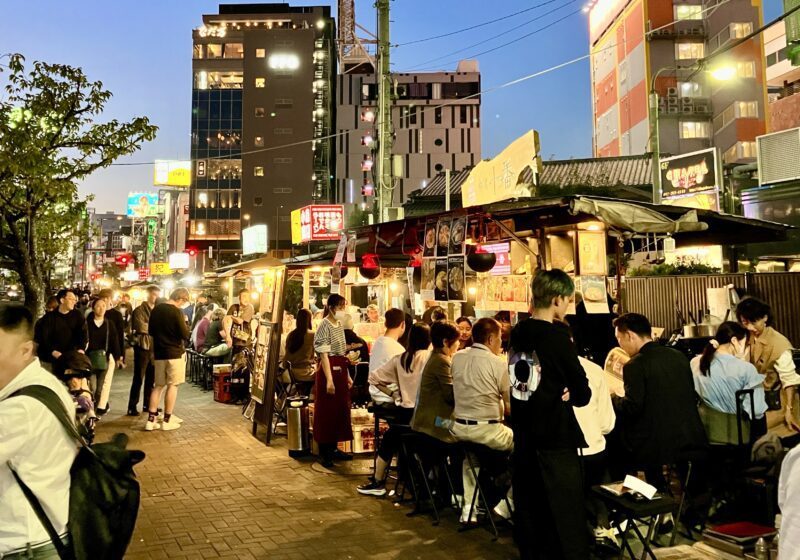
As the sun sets, yatai (street stalls) with red noren curtains start to line the pavement along the Naka River. Customers sit shoulder to shoulder, steam rises from pots of ramen, and strangers chat with whoever is next to them. Street stalls have vanished from most Japanese cities, but in Fukuoka they are protected by local law and remain the face of the city at night.
Labels: Factdocumented Likelysupported by most sources Legendoral tradition Urban legendlocal lore and rumour
Nakasu, a town in the river
FactNakasu is a long, narrow island about 1.5 km from north to south, set between the Naka River and the Hakata River. In the Edo period Kuroda Nagamasa built bridges to link Fukuoka Castle with Hakata, and the island became the place that joined the two towns (see Hakata and Fukuoka).
FactFrom the Meiji era on, theatres, cinemas and ryotei (traditional restaurants) gathered in Nakasu, and after the war it grew into Kyushu's biggest entertainment district, packed with bars and restaurants. It is sometimes called one of "Japan's three great nightlife districts", along with Kabukicho in Tokyo and Susukino in Sapporo.
Yatai born from the black market
LikelyMany of Fukuoka's yatai are thought to have started in the black markets that sprang up in the burned-out city after the war. Hakata became a port for repatriation, and many people returned through it from overseas; those who had lost their jobs made a living with yatai, which needed little capital to start (see the Repatriation).
FactBecause yatai operate on part of a road or park, cities across Japan tightened their rules after the war on grounds of hygiene and traffic, and the stalls disappeared one after another. Fukuoka, too, adopted a policy of limiting each licence to the holder's own lifetime, and the number of yatai kept falling.
FactIn response to concerns that the yatai would soon be gone altogether, Fukuoka City switched to a policy of keeping them as part of "the life of the city". In 2013 it put into effect the "Fukuoka City Yatai Basic Ordinance", the first in Japan to set out rules for running street stalls. In 2016 it began choosing new operators through an open call, and young owners and stalls serving foreign food have joined the scene.
The rules of the yatai
FactThe ordinance sets out detailed rules on a stall's size (no more than 3 m wide by 2.5 m deep, among others), its opening hours, and how it is set up and cleared away. Every day the yatai are put together in the evening, and when they close late at night they are taken apart and carried away. They may only operate at places with a permit to use the road or park. Each site is equipped with electricity, water and sewer connections for yatai, which the owners pay a fee to use. Letting waste water run onto the road or into the park is forbidden.
FactYatai menus vary from stall to stall: ramen, oden, yakitori and grilled offal, as well as tempura, gyoza dumplings and even French-style dishes. Dishes said to have been born at yatai include yaki-ramen (fried ramen) (see Ramen).
Look for this: how to enjoy a yatai
A yatai is a tiny place with only about 8 to 10 seats. When it is busy, the local way is not to linger: enjoy one or two dishes, then hop on to the next stall (hashigo). If you are waiting for a seat, speak to the owner before you queue. For the toilet, use the nearby one the owner points you to. Opening days and hours may change depending on the weather.
Main sources: Fukuoka City, "About Yatai" and the Fukuoka City Yatai Basic Ordinance / Fukuoka City, materials on the yatai open call / Nakasu Town Association materials / History of Fukuoka City