Home / Hakata and Fukuoka: one city, two names
Hakata and Fukuoka: A City with Two Names
You fly into "Fukuoka Airport", but the shinkansen brings you to "Hakata Station". It's the same city, so why does it have two names? The answer lies in 400 years of history between a merchants' town and a samurai town that faced each other across a single river.
Labels: Factdocumented Likelysupported by most sources Legendoral tradition Urban legendlocal lore and rumour
Hakata east of the river, Fukuoka west of it
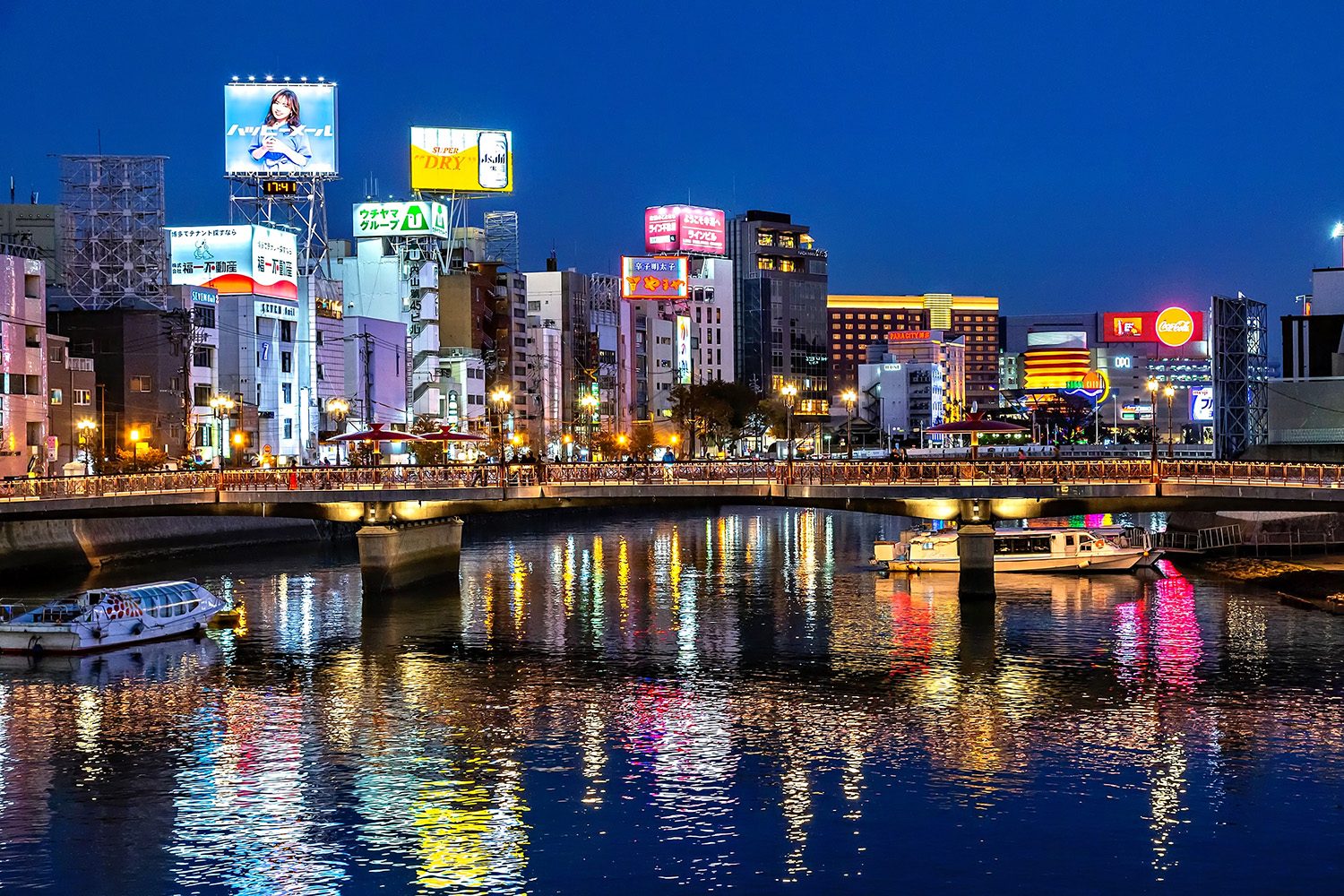
FactThe Naka River flows from south to north through the centre of today's Fukuoka City and empties into Hakata Bay. In the Edo period, the east side of this river was the merchants' town of "Hakata", and the west side was "Fukuoka", the castle town of the Fukuoka domain. Hakata was a port that had prospered on trade with the Asian mainland since ancient times, while Fukuoka was a samurai town created when Kuroda Nagamasa, who came to Chikuzen Province in 1600, built a new castle.
FactThe name "Fukuoka" was taken from Fukuoka in Oku District, Bizen Province (today's Osafune-cho Fukuoka in Setouchi City, Okayama Prefecture), a place with ties to the Kuroda family. The hill where the castle was built had originally been called "Fukuzaki", but Nagamasa renamed it Fukuoka (see Kuroda Kanbei and Nagamasa).
FactNakasu, the island between the Naka River and the Hakata River, was where the two towns met. Bridges across Nakasu linked the Fukuoka side and the Hakata side, laying the foundations of today's Nakasu entertainment district (see Nakasu and the yatai stalls).
A council vote over the city's name
FactIn 1889 (Meiji 22), the new municipal system came into force and Fukuoka and Hakata were joined into a single city. Its name was "Fukuoka City". Because Hakata was the bigger of the two in both population and business, the people of Hakata were left unhappy.
LikelyThe following year, 1890, a proposal to rename it "Hakata City" was put before the city council. The vote is said to have been tied, and the motion was defeated on the chairman's casting decision. The story still comes up whenever people talk about the rivalry between "Hakata and Fukuoka".
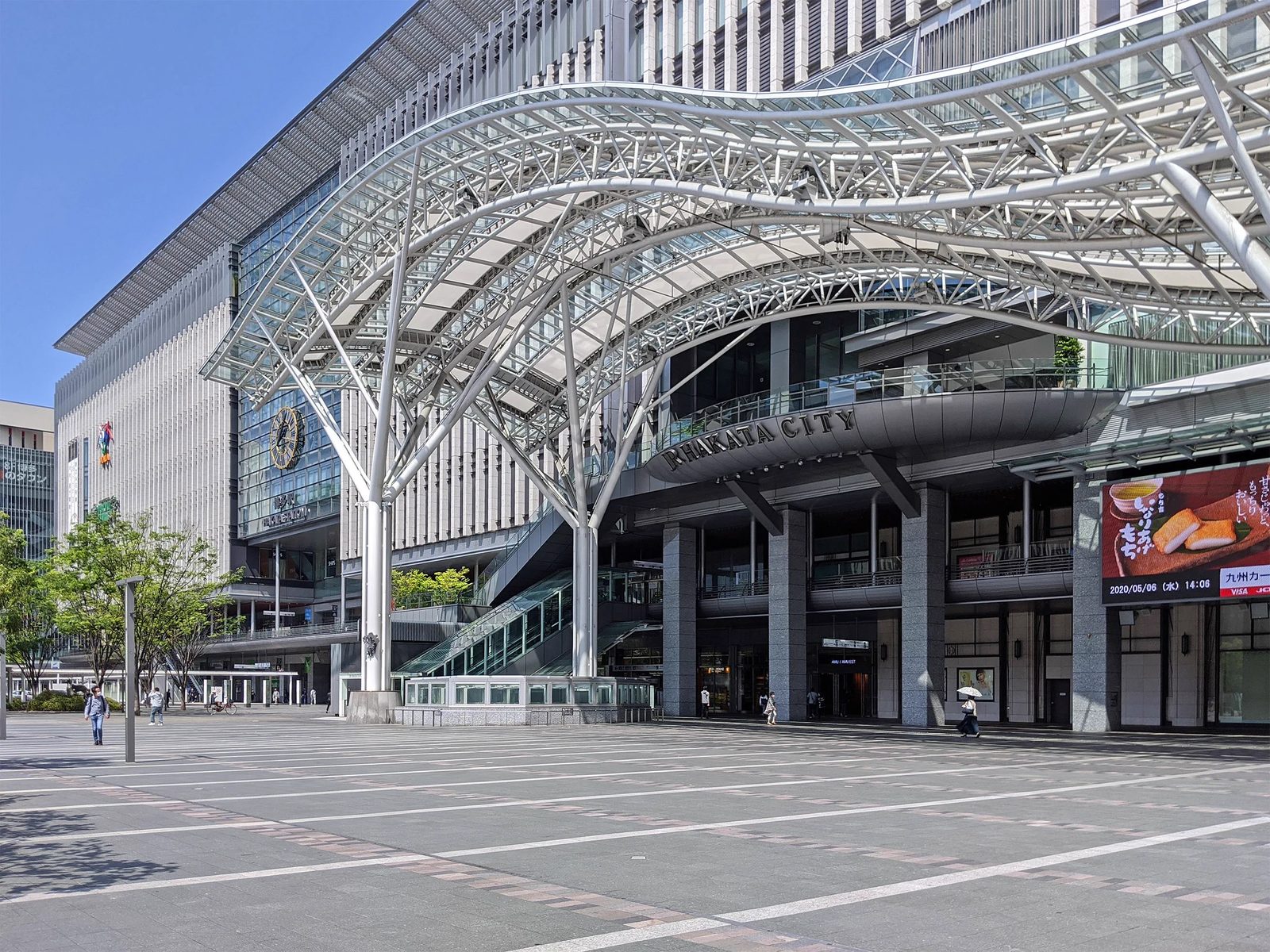
FactMeanwhile, the station opened by the Kyushu Railway in December 1889 was placed on the Hakata side and named "Hakata Station". The city was called Fukuoka; its gateway station was called Hakata. That pairing has never changed, and the name "Hakata" lives on all over town: Hakata Port, Hakata Ward, the Hakata Gion Yamakasa festival.
Look for this: where Hakata Ward meets Chuo Ward
Look at the names of Fukuoka's wards and you'll find that the old Hakata area is "Hakata Ward", while the old Fukuoka castle town is "Chuo Ward". Walk from Tenjin through Nakasu to Hakata, and you'll notice that the style of place names changes once you cross the Naka River. On the Hakata side, many old district names survive, such as "Reisen", "Gokusho" and "Gofuku-machi", that come from the port, the temples and shrines, and the old street layout.
"Hakatakko" and "Fukuoka people"
FactIn the Edo period, Hakata had a strong tradition of self-government, with the townspeople running their own affairs. The town was divided into units called "nagare" (neighbourhood teams), and these units still live on as the organisation behind the Hakata Gion Yamakasa festival (see Kushida Shrine and Yamakasa).
LikelyStrictly speaking, "Hakatakko" (a true child of Hakata) is said to mean someone born and raised in the old Hakata area. These days it is often used for anyone from Fukuoka City, but when Yamakasa season comes round, the old Hakata residents' fierce attachment to the name "Hakata" is still plain to see (see Hakata dialect and Hakata people).
Hakata, port of repatriation
FactAfter the war ended in August 1945, Hakata Port became a main hub for repatriation from overseas. By 1947, about 1.39 million people had landed here from mainland China, the Korean Peninsula and elsewhere. At the same time, people leaving Japan to return to the Korean Peninsula and other places boarded their ships at this port.
FactNear Bayside Place Hakata, on Hakata Port's Central Wharf, stands "Nanotsu Okan", a monument that tells the story of repatriation. The city, burned in the Fukuoka air raid of June 1945, rebuilt itself after the war together with this port.
Main sources: History of Fukuoka City / Fukuoka City Museum, exhibition materials on "Hakata and Fukuoka" / Fukuoka City, "The History of Fukuoka City" / Kuroda Kafu (Kuroda family records) / Fukuoka City, materials on "Repatriation at Hakata Port"