Home / The gold seal and Shikanoshima
The Gold Seal and Shikanoshima
It was the middle of the Edo period, Tenmei 4 (1784). On Shikanoshima, an island in Hakata Bay, farmers repairing a ditch in a rice field found a small lump of gold under a stone. It was a seal that a Chinese emperor had given to a king of the Japanese islands more than 1,700 years earlier. The "gold seal", a National Treasure that appears in every Japanese history textbook, was found in Fukuoka.
Labels: Factdocumented Likelysupported by most sources Legendoral tradition Urban legendlocal lore and rumour
Gold from a rice-field ditch
FactOn the 23rd day of the 2nd month of Tenmei 4 (1784), while a water channel was being repaired in a field at Kananosaki on Shikanoshima, a gold seal was found beneath a large stone. A written statement (an official report) submitted to the domain by the farmer Jinbei survives and describes the discovery (there is also a theory that the people who actually dug it up were workers hired by Jinbei). The seal was handed over to the Fukuoka domain and examined by Kamei Nanmei, a scholar at the domain school, the Kantokan.
FactNanmei pointed out that the Chinese history the Book of the Later Han records that in the 2nd year of Jianwu Zhongyuan (57 CE), an envoy from the land of Na in Wa came to the capital, and Emperor Guangwu gave him a seal and cord. He concluded that this was that very seal. Five characters are carved on its face, read as "Kan no Wa no Na no Kokuo".
"Kan no Wa no Na no Kokuo"
LikelyThe standard reading of the inscription is "King of the land of Na in Wa, (vassal) of Han". Na is thought to have been a state on today's Fukuoka Plain, and its name is believed to be connected to the "Na" in "Na no Tsu", an old name for Hakata. There is also a theory that the characters should be read "Ito", referring to the land of Ito in Itoshima (see Itoshima and the land of Ito).
FactThe handle is shaped like a snake, a type called a "dachu" (snake knob). Chinese emperors are said to have varied the shape of the handle on seals given to neighbouring states according to each state's location and character. The "Seal of the King of Dian", found in Yunnan Province, China, in 1956, has the same snake handle, and it became one of the pieces of evidence supporting the gold seal's authenticity.
The theory that "the gold seal is an Edo-period fake"
Because the circumstances of the discovery are unclear, and because of the position of Kamei Nanmei, who examined it, some researchers argue that it is a forgery. It remains, however, a minority view (see Legends).
It measures one Han "sun"
Each side of the seal face is about 2.35 cm, equal to one sun (inch) in the Later Han period. People in the Edo period are thought not to have known the length of the Han measuring unit, and together with analysis of the gold's composition, most researchers consider the seal genuine.
The National Treasure at Fukuoka City Museum
FactThe gold seal was handed down in the Kuroda family and donated to Fukuoka City in 1978. It was designated a National Treasure (under the old system) in 1931, and a National Treasure under the Law for the Protection of Cultural Properties in 1954. Today it is on permanent display at the Fukuoka City Museum in Momochihama, Sawara Ward. Most people who see the real thing are surprised by how small it is.
Shikanoshima: an island you can walk to
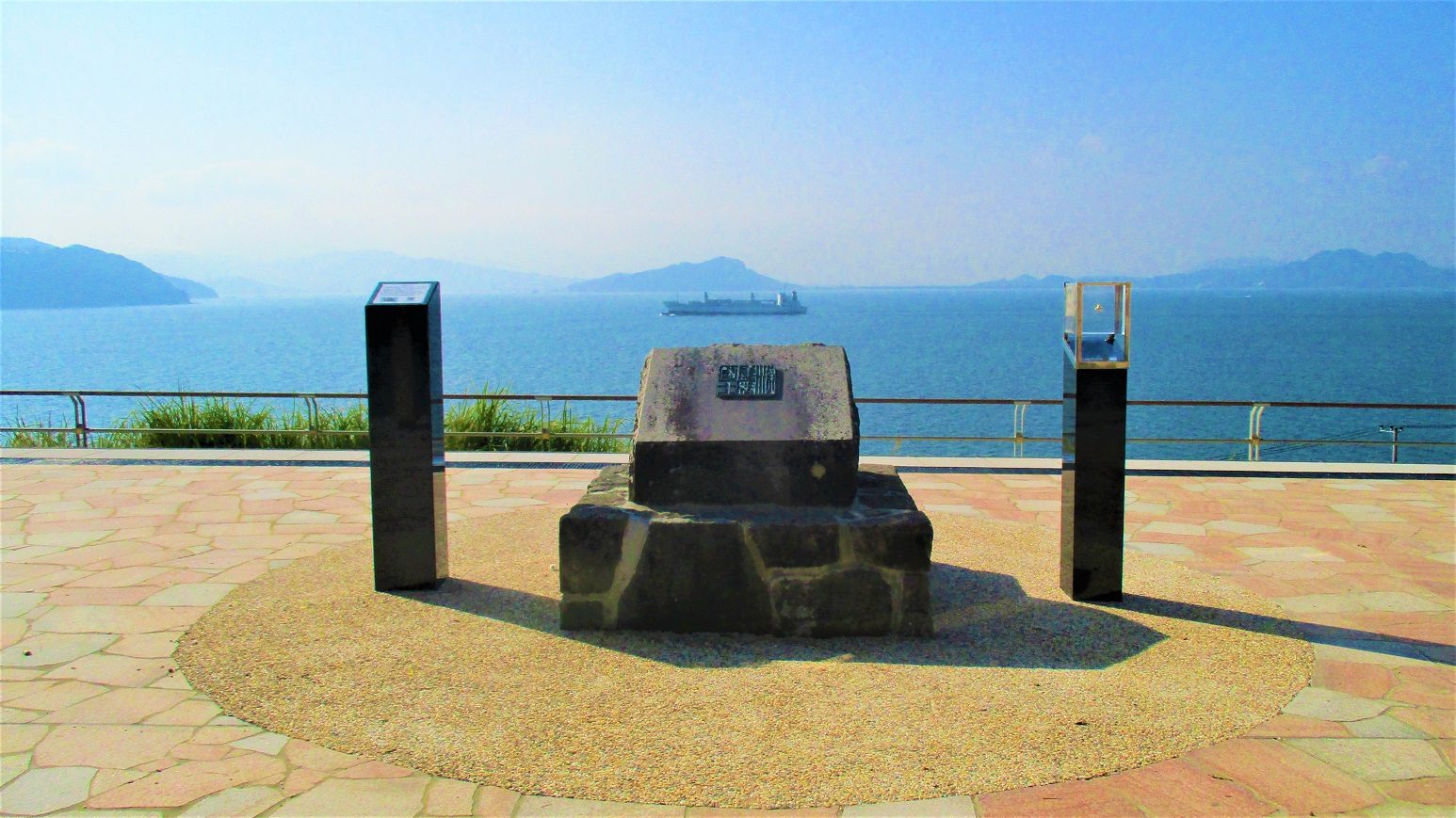
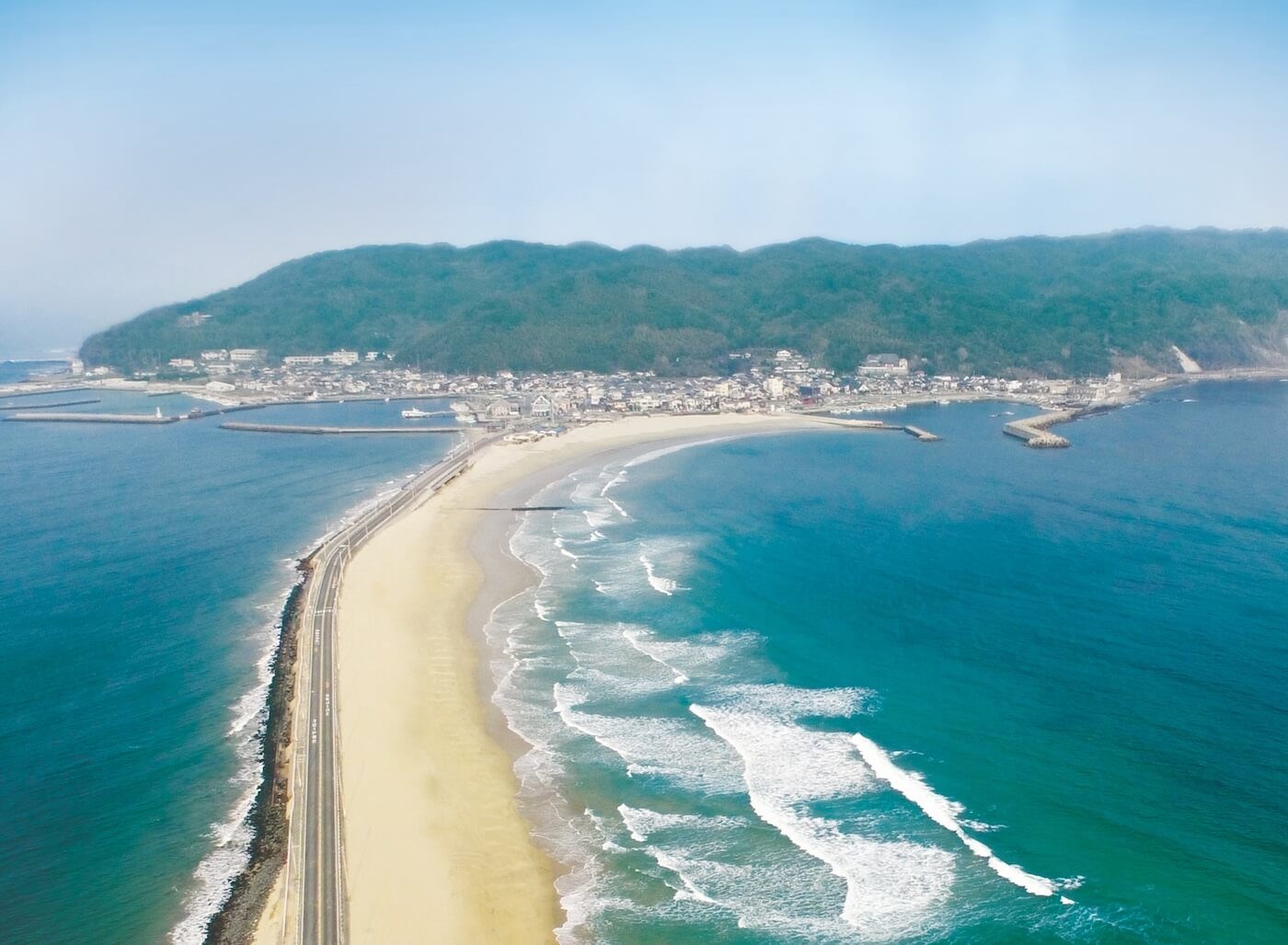
FactShikanoshima sits at the tip of "Uminonakamichi", a sandbar that stretches out as if to close off the north of Hakata Bay. It is a tied island, connected to the sandbar by a bridge. You can also get there by city ferry from Hakata Port. In the southwest of the island, near the spot said to be where the seal was found, is "Kin'in Park" (Gold Seal Park).
FactOn Shikanoshima stands Shikaumi Shrine, dedicated to the three Watatsumi gods of the sea, and the island is thought to have been a base of the Azumi clan, an ancient seafaring people. During the Koan campaign of the Mongol invasions (1281), the waters around this island also became a battlefield (see the Mongol invasions).
Look for this: the Hill of Na and the Itazuke Site
The heart of the land of Na is thought to have been the Suku-Okamoto Site in Kasuga City. At the "Hill of Na Historical Museum" you can see finds from jar burials believed to be royal tombs. At the Itazuke Site (Hakata Ward), south of Hakata Station, traces of rice paddies from the final Jomon period have been found, and the site is known as one of the oldest places of rice farming in Japan. Reconstructed paddies and a village are open to visitors.
Main sources: Fukuoka City Museum, commentary on the "Gold Seal" / Book of the Later Han, Account of the Eastern Barbarians / Database of National Cultural Properties, "Gold Seal" / Fukuoka City, "Shikanoshima" and Kin'in Park information / Itazuke Site Yayoi-kan materials