Home / Hakata dialect and Hakata people
Hakata Dialect and the People of Hakata
"Suito yo" (I like you). This Hakata-dialect confession of love is a regular in nationwide rankings of Japan's "cutest dialects". But what makes Hakata-ben (Hakata dialect) interesting is not just how cute it sounds. It is a finely tuned way of speaking in which a single sentence ending can change whether you are asking, checking, or driving a point home.
Labels: Factdocumented Likelysupported by most sources Legendoral tradition Urban legendlocal lore and rumour
Hakata dialect lives in its endings
FactHakata dialect belongs to the "Hichiku dialects", one group among the dialects of northern Kyushu. Its most distinctive feature lies in the endings of sentences.
FactThe ending "-to" corresponds to "-no" in standard Japanese. It is used both in questions, as in "nanshiyo-to?" (What are you doing?) and "doko iku-to?" (Where are you going?), and in statements, as in "suito-to" (It's that I like it/you). "-ken" means "because" (standard "-kara"), and "-bai" and "-tai" are ways of driving a point home, much like "you know" or "I tell you" (standard "-da yo").
Fact"-shiyo" describes something happening right now, in progress, while "-shito" describes a state that has already come about. "Ame no furiyo" means "it is raining (right now)", while "ame no futto" means "it has rained (and things are wet)". In other words, Hakata dialect splits the single standard form "-shite iru" (is doing / has done) into two.
Hakata dialect you will often hear
Fact "Suito" means "I like (it/you)" (standard "suki da"), "batten" means "but" (standard "dakedo"), and "yoka" means "good" (standard "yoi"). "Chikappa", popular with younger people, is a contraction of "chikara ippai" (with all your might) and is used as an intensifier meaning "really, very". "Bari" also means "very", and it turns up in "barikata" (very firm), one of the levels of noodle firmness for ramen (see Ramen).
Fact"Tottoto?" means "Is (this seat) taken?" and is famous as a phrase that shows off Hakata dialect's string of "to" sounds: "totte iru" (taken) becomes "totto", plus the question ending "-to". "Sekarashika" means "noisy, annoying, a nuisance", and "naosu" means "to put away, tidy up". In standard Japanese, naosu means "to repair", so more than a few people from outside the prefecture, told "kore, naoshitoite" (put this away for me), set about trying to fix it.
Hakata dialect and Fukuoka dialect
LikelyThere is said to have once been a clear difference between the speech of Hakata, the merchants' town (Hakata-ben), and that of Fukuoka, the samurai town (Fukuoka-ben). Hakata speech was polite and soft, as befitted merchants, while Fukuoka speech is said to have been influenced by the language of samurai households. Today the distinction has almost vanished, and the speech of Fukuoka City and its surroundings is usually lumped together as "Hakata-ben" (see Hakata and Fukuoka).
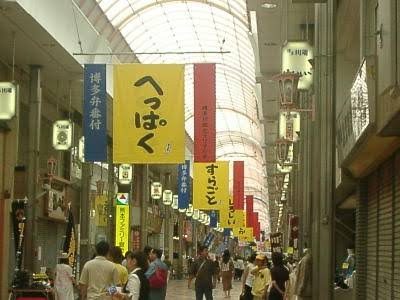
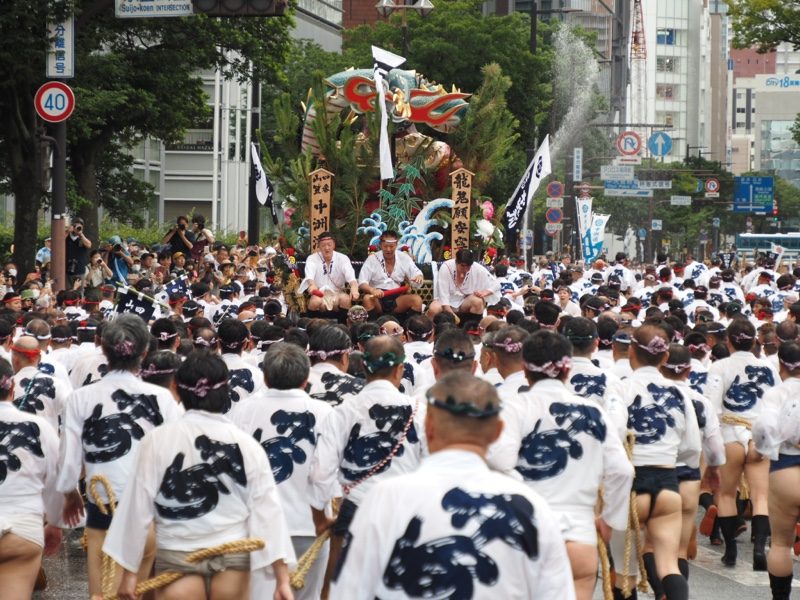
A town of "nobosemon"
FactIn Hakata dialect, a "nobosemon" is someone who gets completely carried away by a passion. The word is used especially for people who are crazy about the Yamakasa, and the men who throw themselves into the festival every July, even taking time off work to do so, are called "yama nobose" (Yamakasa-mad) (see the Yamakasa).
LikelyThey love new things, love festivals and love entertaining guests. The temperament of the people of Hakata is often linked to the history of a port town that has welcomed foreign people and goods since ancient times, and to the tradition of townspeople running their own town.
Look for this: "Hakata Te-ippon"
In Hakata, banquets and meetings close with a ritual handclap called "Hakata Te-ippon". After the call "Yooo!", everyone claps: "shan, shan", then "mo hitotsu, shan, shan" (one more time, clap clap), then "iote sando, shashan, shan" (and three for celebration, clap-clap, clap). Once a gathering has been closed with te-ippon, it is considered good manners not to bring up the matters discussed again, and the clap is also used to close Yamakasa events.
Main sources: Fukuoka City, materials on "the language of Hakata" / Hakata Kotoba (ed. Hakata Chonin Bunka Renmei) and other dialect sources / National Institute for Japanese Language and Linguistics, materials on dialect surveys