Home / Itoshima and the land of Ito
Itoshima and the Land of Ito
Just west of Fukuoka City, surrounded by sea and mountains, Itoshima is now a popular spot for cafes and seaside drives. But 1,800 years ago, this was a land that a Chinese history described as having "kings for generations". The largest bronze mirror ever found in Japan also came out of a royal tomb here.
Labels: Factdocumented Likelysupported by most sources Legendoral tradition Urban legendlocal lore and rumour
The "land of Ito" in the Gishi Wajinden
FactThe Account of the Wa in the Book of Wei, part of the 3rd-century Chinese history Records of the Three Kingdoms, is better known as the "Gishi Wajinden". It describes the route from the Korean Peninsula across the sea to Wa (Japan), listing in order the land of Tsushima, the land of Ichidai (Iki), the land of Matsura (around Karatsu), the land of Ito, the land of Na, and so on.
FactOf Ito, the chronicle says it had more than a thousand households and that "for generations it has had kings". It adds that Ito was subject to the Queen's country, and that it was the place where envoys from the commandery (Daifang Commandery) always stayed when they came and went. It also says that an official called the "Ichidaisotsu", who kept watch over the various lands, was stationed in Ito.
LikelyThe leading theory places Ito in the area from Maebaru to Mikumo and Iwara in today's Itoshima City. It is thought to have been a diplomatic gateway that received envoys from the mainland, and a land with a government office that kept an eye on the states of northern Kyushu.
The Hirabaru Site and Japan's largest mirror
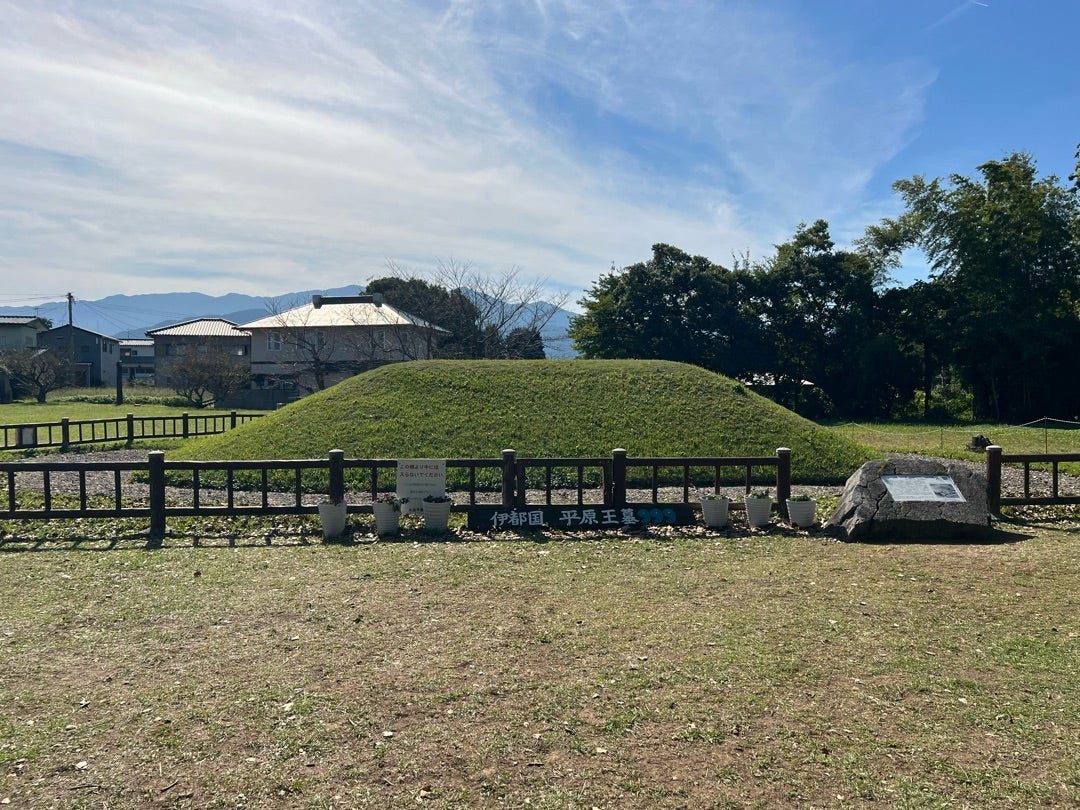
FactIn 1965, at Hirabaru in Itoshima, large numbers of bronze mirror fragments were found by chance while land was being cleared for a mandarin orchard. The excavation was led by the local archaeologist Harada Dairoku. Forty mirrors' worth of deliberately broken bronze mirrors were found in the tomb, including a huge Naiko Kamon-kyo (inward-arc pattern mirror) 46.5 cm across. It is the largest bronze mirror ever excavated in Japan.
LikelyBecause the grave goods include few weapons but do include ornaments such as earrings, one theory holds that the person buried here was a female ruler, or a woman who presided over rituals. Harada Dairoku also suggested a link between this great mirror and the Yata no Kagami, the sacred mirror enshrined at Ise Jingu, but this is only one theory.
FactThe finds from the Hirabaru square moated tomb were designated a National Treasure in 2006 and are displayed at the Ito-koku History Museum in Itoshima City. The site itself has been laid out as "Hirabaru Historical Park".
The name "Itoshima"
Fact"Itoshima" comes from "Itoshima District", formed in 1896 by merging the old districts of "Ito District" and "Shima District". The name Ito is thought to be connected to the "Ito" of the land of Ito. In 2010, Maebaru City, Nijo Town and Shima Town merged to create Itoshima City.
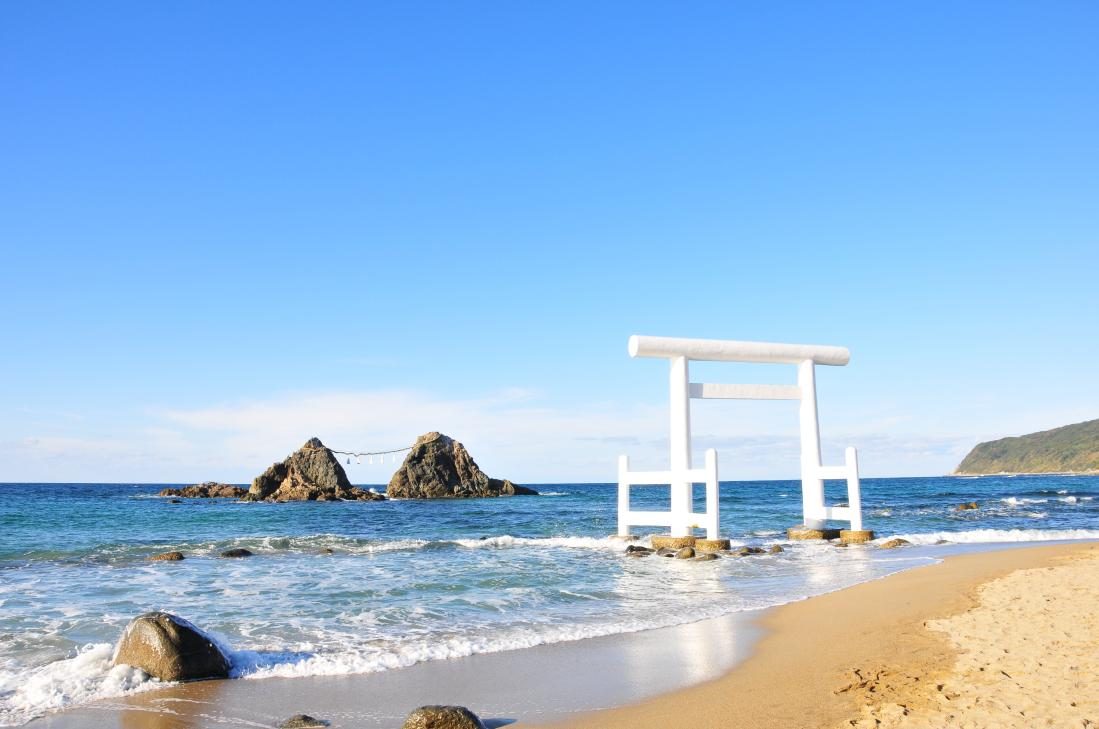
FactOn the northwest coast of the Itoshima Peninsula, at Sakurai Futamigaura (Shima Sakurai, Itoshima City), two rocks called the "Meoto-iwa" (wedded rocks) stand side by side in the sea, joined by a great sacred straw rope. A white torii gate stands on the beach in front of them, and around the summer solstice the sun sets between the two rocks. As a ritual of Sakurai Shrine, the great rope is replaced every year.
Look for this: the great mirror at the Ito-koku History Museum
In the permanent exhibition room on the 3rd floor of the Ito-koku History Museum, the bronze mirrors from the Hirabaru Site, designated a National Treasure, are on display. Standing in front of the 46.5 cm mirror, you can really feel how much power a king here held 1,800 years ago. From the observation area on the 4th floor, you can look out over the Itoshima Plain, thought to have been the territory of Ito.
Itoshima today
FactItoshima is about 30 to 40 minutes from central Fukuoka by train or car. Cafes and craft workshops line the coast, and in winter the oyster huts at the fishing harbours are packed. A land that was once a diplomatic gateway in ancient times is now where Fukuoka people head for the weekend (see Things to do in Fukuoka).
Main sources: Ito-koku History Museum materials / Itoshima City, "History of Itoshima City" / Records of the Three Kingdoms, Book of Wei, Account of the Wa (the Gishi Wajinden) / Database of National Cultural Properties, "Finds from the Hirabaru Square Moated Tomb, Fukuoka Prefecture" / Sakurai Shrine official information