Home / Jotenji and Shofukuji
Jotenji and Shofukuji
In a temple district about ten minutes' walk from Hakata Station stands a stone monument inscribed "Birthplace of Udon and Soba". Japan's udon and soba noodles, it claims, started here. The Zen monks who studied in China brought back more than just their teachings.
Labels: Factdocumented Likelysupported by most sources Legendoral tradition Urban legendlocal lore and rumour
Shofukuji, Japan's first Zen temple
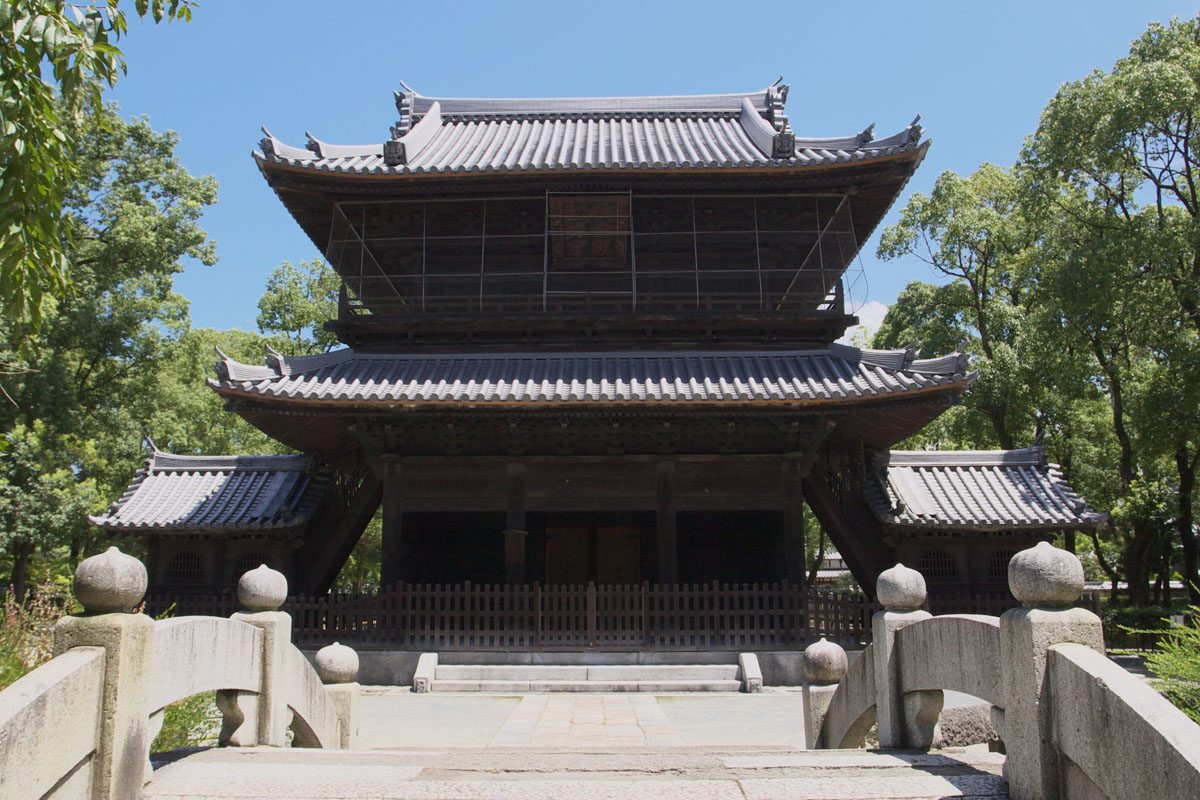
FactEisai, who brought the Rinzai school of Zen to Japan, founded Shofukuji in Hakata in 1195, after returning from his second period of study in Song China. The plaque hung on the temple's main gate, reading "Fuso Saisho Zenkutsu" (the first Zen training hall in Japan), is said to be in the hand of the retired Emperor Go-Toba.
FactEisai brought back the custom of drinking tea from Song China, and later wrote the "Kissa Yojoki" (Drinking Tea for Health) explaining its benefits. This is considered one of the starting points for the spread of matcha drinking in Japan.
LegendIt is said that tea cultivation in Japan began when Eisai planted tea seeds he had brought back from Song China on Mt Sefuri, on the border between Fukuoka and Saga prefectures.
Jotenji and Shoichi Kokushi
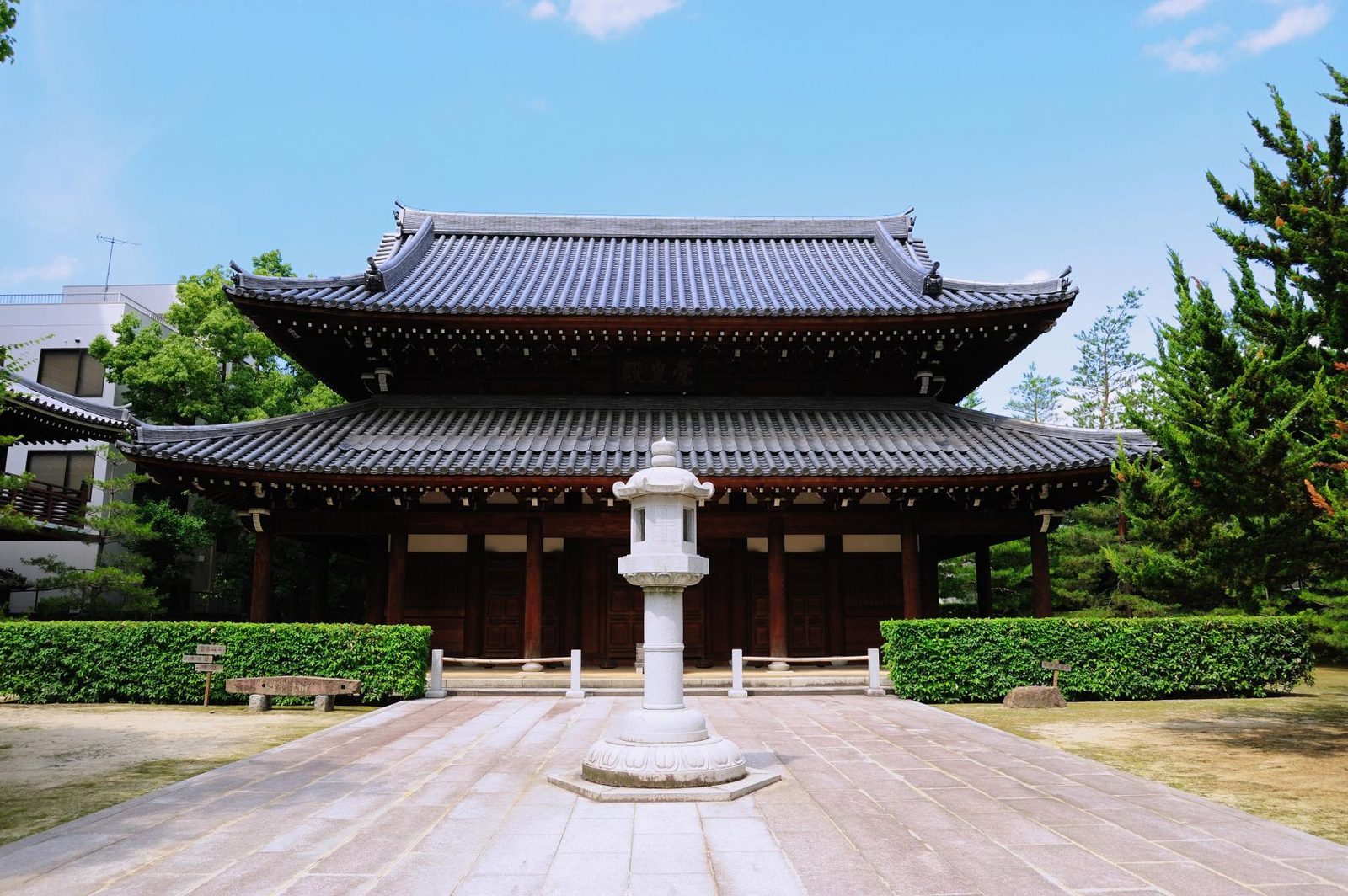
FactThe Zen monk Enni, from Suruga Province (Shizuoka Prefecture), studied in Song China for six years and returned to Hakata in 1241. With the support of the Song merchant Xie Guoming and others, Jotenji was founded in 1242. Enni later became the founding abbot of Tofukuji in Kyoto, and after his death was given the title "Shoichi Kokushi" (National Teacher Shoichi).
FactIn the grounds of Jotenji stand a monument reading "Birthplace of Udon and Soba" and another inscribed "Place of Manju". They refer to the idea that Enni brought milling techniques back from Song China, which helped spread udon, soba and manju (steamed buns), all made from kneaded flour, in Japan. A diagram of a water-powered flour mill, the "Suima no Zu", said to have been brought back by Enni, is preserved at Tofukuji.
LikelyThat said, there are many theories about the origins of noodles, and it is impossible to say for certain that udon and soba began thanks to Enni alone. Even so, many researchers agree that Zen monks who studied in Song China played a part in bringing flour-based food culture to Japan (see Hakata ramen).
Sprinkling water to drive out plague: the start of Yamakasa
LegendIn 1241, when an epidemic was raging in Hakata, Enni is said to have ridden on a segaki-dana (an altar for offerings to the hungry dead) carried by the townspeople, sprinkling prayer water (kanrosui, sweet dew water) to purify the town as he went. This is said to be the origin of the Hakata Gion Yamakasa festival. The way Yamakasa bearers (kakite) still run while being doused with "kioi-mizu" (spirited water) is thought to be linked to this legend (see Kushida Shrine and Yamakasa).
FactBy custom, the Yamakasa floats that are carried always stop at Jotenji, and the route of the Oiyama (the timed race) early in the morning of 15 July also passes in front of it. For the people of Hakata, Jotenji and Yamakasa are inseparable.
LegendIt is said that Hakata-ori weaving began when Mitsuda Yasoemon of Hakata, who travelled to Song China with Enni, brought back weaving techniques. Jotenji also has a monument marking the "Birthplace of Hakata-ori" (see Hakata-ori weaving).
Look for this: Jotenji's rock garden, Sentotei
In front of Jotenji's abbot's quarters is "Sentotei", a rock garden in which white sand and moss are said to represent Hakata Bay and the Genkai Sea. The wave patterns raked into the fine gravel call to mind the journeys of the monks who crossed the sea to study Zen. Photography is restricted in some parts of the grounds, so follow the signs when you visit.
Main sources: Shofukuji official information / Jotenji guide materials / Fukuoka City, commentary on "Temples and Shrines of Gokusho-machi" / Database of National Cultural Properties, "Shofukuji Precincts" / Hakata Gion Yamakasa Promotion Association materials