Home / Hakata-ori weaving and Hakata dolls
Hakata Ori and Hakata Dolls
Tie it and it squeaks; once tied, it never comes loose. Since the Edo period, obi sashes of Hakata ori (Hakata weave) have been loved by samurai and townspeople alike. Hidden in their patterns are the tools of Buddhist ritual. In the same city, the craft of kneading clay, firing it and painting it into dolls has also been handed down by local artisans.
Labels: Factdocumented Likelysupported by most sources Legendoral tradition Urban legendlocal lore and rumour
Hakata ori: a weave from Song China
LegendHakata ori is said to have begun in 1235, when Mitsuda Yazaemon, a Hakata merchant, travelled to Song China with Enni (Shoichi Kokushi), who would later found Jotenji, and brought back weaving techniques he had learned there. Yazaemon is said to have passed the techniques down as a family secret (see Jotenji).
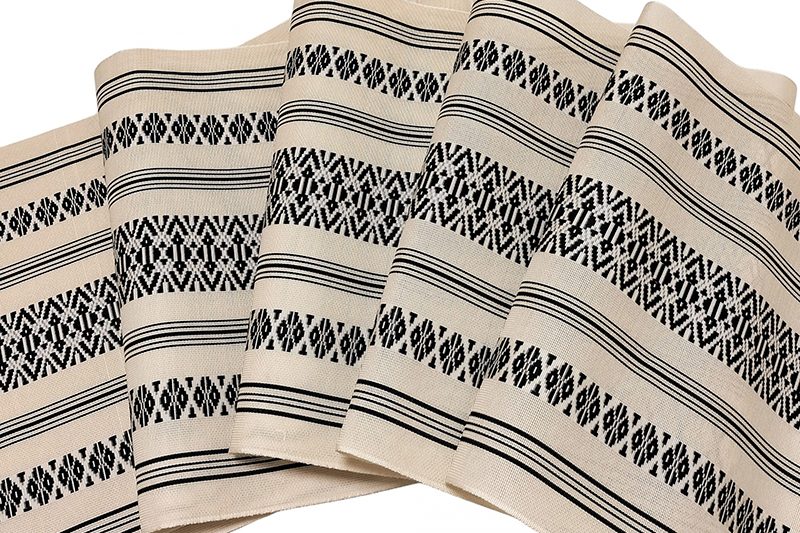
FactHakata ori is woven with a great many fine warp threads, with thick weft threads beaten in hard. The cloth is thick and stiff; tied as an obi it gives a silky squeak, and once tied it rarely loosens, which made it prized as a sash for samurai, who wore their swords thrust through it.
"Kenjo Hakata" and its Buddhist patterns
FactIn the Edo period, the Kuroda family, lords of the Fukuoka domain, presented Hakata ori to the shogunate every year. The pattern used for these gifts is called the "kenjo pattern" (kenjo means "offered to a superior"), and it is still a byword for Hakata ori today.
FactThe kenjo pattern is a stylised design of two Buddhist ritual tools, the tokko (a single-pronged vajra) and the hanazara (a flower dish), combined with stripes. The reason patterns from Buddhist tools ended up on obi is said to lie in Hakata's history as a place where Song Chinese culture arrived along with Zen temples. Depending on the colours, there are names such as "goshiki kenjo" (five-colour kenjo), and the five colours are said to derive from the Chinese theory of the Five Phases and from Confucian virtues (benevolence, propriety, trust, wisdom and so on).
Hakata dolls: painted unglazed clay
LegendThere are several theories about the origin of Hakata dolls, and one story traces them to the roof-tile makers gathered when Kuroda Nagamasa built Fukuoka Castle in 1600.
LikelyTheir direct origin is thought to be the unglazed clay figures made by Nakanoko Kichibei and others in the late Edo period, and by around 1821 more craftsmen had taken up the trade.
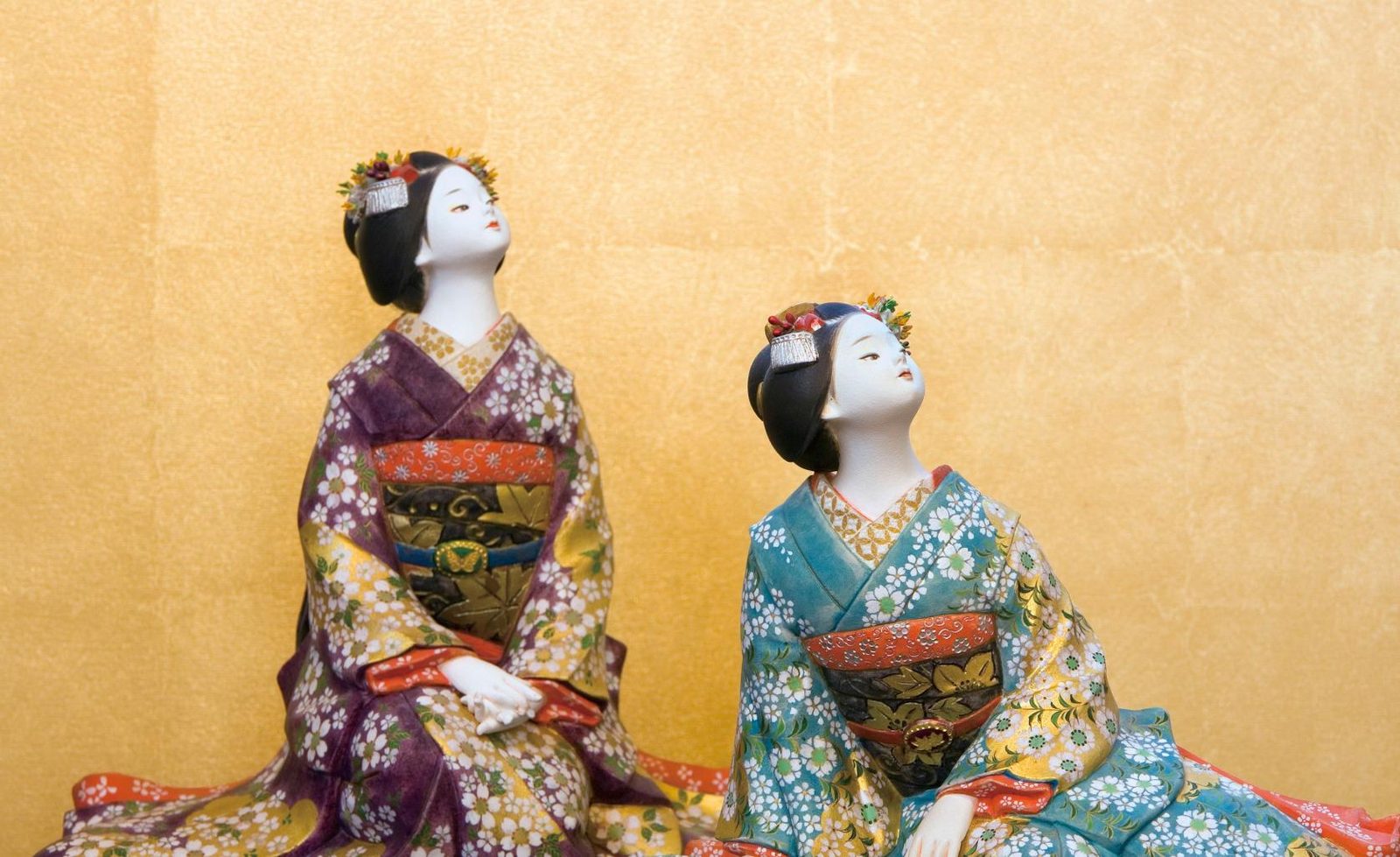
FactTo make a Hakata doll, the artisan sculpts an original in clay, takes a mould from it, shapes the piece, fires it unglazed, and then finishes it by painting with gofun (shell white) and mineral pigments. Although it is fired pottery, no glaze is used; the dolls are known for the soft tones of their paint and for faces whose surface recalls the texture of human skin.
LikelyFrom the Meiji era on, master craftsmen such as Kojima Yoichi established a realistic style, and Hakata dolls are said to have won growing acclaim abroad after being shown at world's fairs and elsewhere. Subjects range widely: beautiful women, kabuki and Noh scenes, children, Yamakasa figures and more.
Look for this: Hakata Traditional Craft Center
The Hakata Traditional Craft Center on Jotenji-dori (1-chome, Hakata Ekimae, Hakata Ward) displays and sells Hakata's traditional crafts, starting with Hakata ori and Hakata dolls. Some workshops also let you try doll painting or weaving (see Jotenji).
Main sources: Hakata Textile Industrial Association official information / Hakata Doll Commerce and Industry Cooperative official information / Ministry of Economy, Trade and Industry, list of designated Traditional Crafts / Fukuoka City Museum materials