Home / Hakozaki Shrine, Hojoya and Dontaku
Hakozaki Shrine, Hojoya and Hakata Dontaku
The people of Hakata count their year by festivals: Dontaku in May, Yamakasa in July, Hojoya in September. Of Hakata's three great festivals, spring's Dontaku and autumn's Hojoya each hide a surprising history. One festival takes its name from Dutch, and a shrine gate bears the words "May the enemy nation surrender".
Labels: Factdocumented Likelysupported by most sources Legendoral tradition Urban legendlocal lore and rumour
The gate of "May the enemy surrender"
FactHakozaki Shrine is a Hachiman shrine whose main deity is Emperor Ojin, and it is sometimes counted, together with Usa in Oita and Iwashimizu in Kyoto, as one of the three great Hachiman shrines of Japan. According to shrine tradition, it was moved here in 923 from the Daibu-gu shrine in Chikuzen.
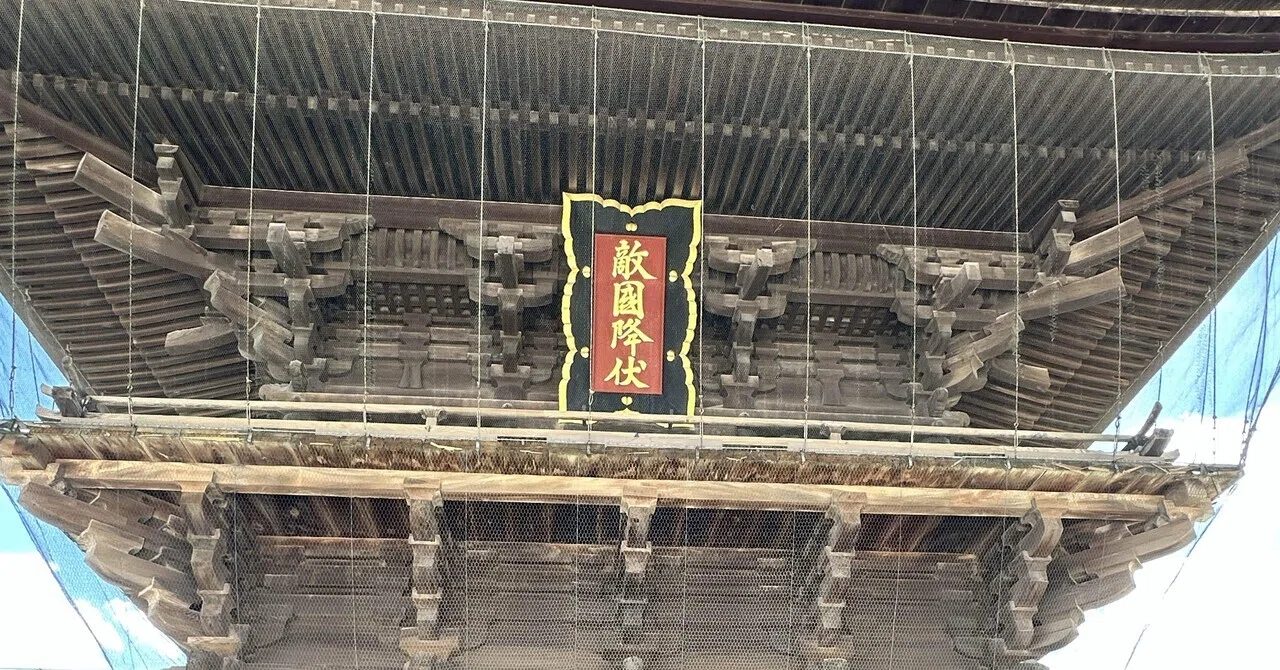
FactOn its vermilion two-storey gate (romon) hangs a large plaque reading "Tekikoku Kofuku" (May the enemy nation surrender). Shrine records say these words began with a piece of calligraphy written by Emperor Daigo himself in 921, and after the Mongol invasions the retired Emperor Kameyama is known to have dedicated his own calligraphy as well. The present gate was built in 1594 by Kobayakawa Takakage and is a national Important Cultural Property (see the Mongol Invasions).
Likely"Tekikoku Kofuku" is sometimes explained not as a call to crush the enemy by force, but as a prayer that the enemy will submit of its own accord, won over by the virtue of the god Hachiman.
Hojoya
FactHeld every year from 12 to 18 September, Hakozaki Shrine's Hojoya is a sacred rite that honours the lives of living things, releasing fish and birds as an act of merit. In Hakata it is called "Hojoya", and it is said to have continued for more than a thousand years. Hundreds of street stalls line the approach to the shrine, and over the seven days a total of a million visitors are said to come.
FactHojoya's specialities are a glass toy called "champon" and the "new ginger" (shinshoga) sold in the shrine grounds. The champon makes a "poppen" sound when you blow into its thin glass bottom, and it has been handed down as a good-luck charm.
Dontaku is Dutch
FactHakata Dontaku grew out of "Hakata Matsubayashi", said to have begun more than 800 years ago. In this custom, a procession of the three gods of good fortune, Fukujin, Ebisu and Daikoku, along with child attendants, called on the lord of the castle and the town's leading figures at New Year to offer blessings. In the Edo period it continued as a New Year greeting to the lord of the Fukuoka domain.
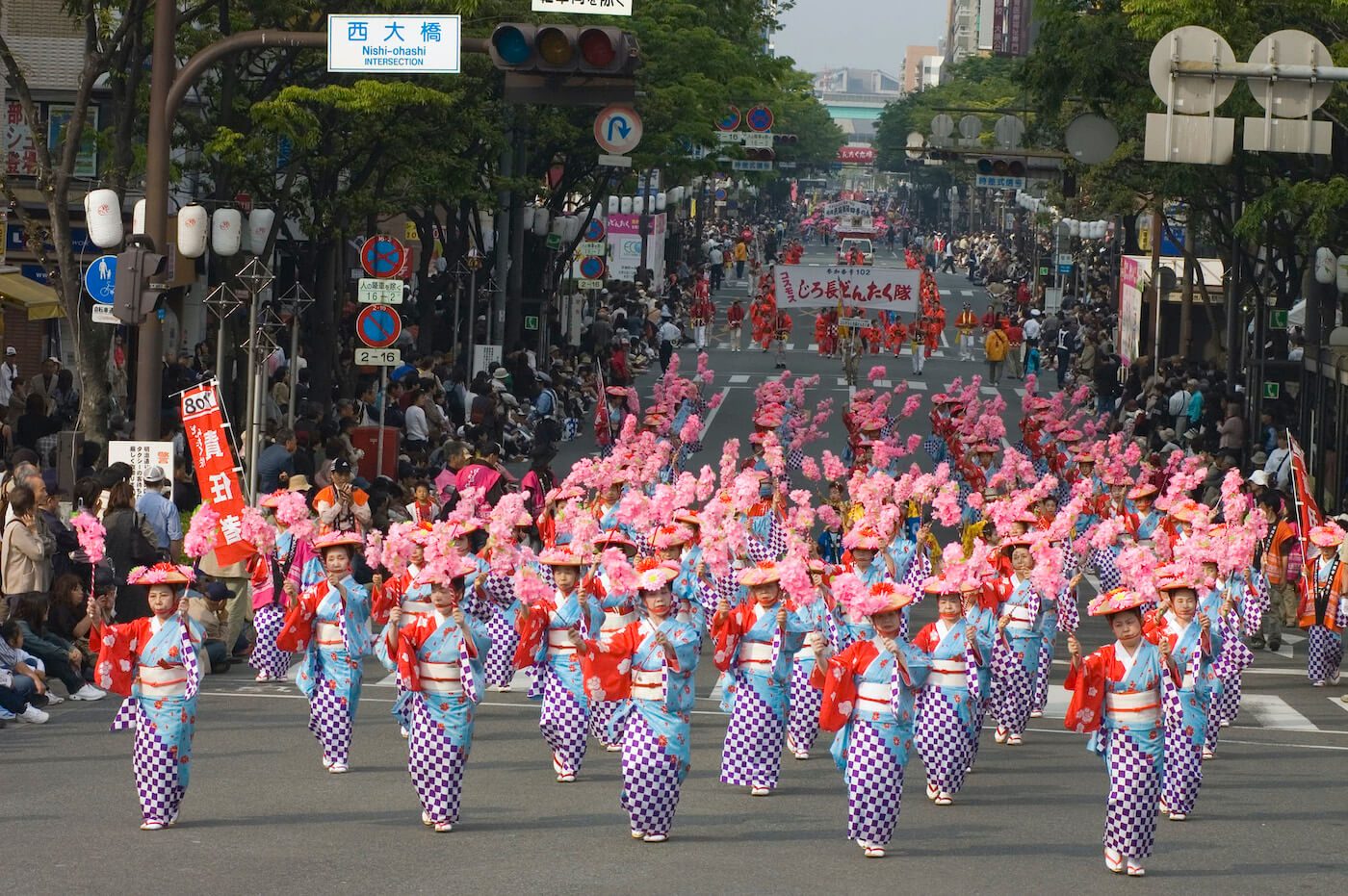
FactAfter being banned for a time in the Meiji era, the festival began to be called "Dontaku" around the time of its revival in 1879 (Meiji 12). Dontaku is a corruption of the Dutch word "Zondag" (Sunday, holiday), and it means a fun festival on a day off.
FactSince 1962, in the postwar years, it has been held every year on 3 and 4 May as the "Hakata Dontaku Port Festival". "Dontaku troupes" dance through the streets, clacking shamoji (rice paddles) together, and it draws some of the biggest crowds of any Golden Week festival in Japan. Hakata Matsubayashi is still carried on today as the event that leads the Dontaku.
Look for this: Hakozaki Shrine's approach and Hakozaki beach
The approach to Hakozaki Shrine runs straight down to Hakozaki beach on Hakata Bay. On the beach is the spot where the pure sand is collected for "Oshioi-tori", when Yamakasa float carriers purify themselves on 9 July, and the people of Hakata still keep the custom of placing oshioi (sand from the beach) at their front doors to purify their homes (see the Yamakasa).
Main sources: Hakozaki Shrine official website / Hakata Dontaku Port Festival Promotion Association materials / Fukuoka City, "Hakata Matsubayashi" guide / Database of National Cultural Properties, "Hakozaki Shrine Romon Gate"