Home / Kushida Shrine and Hakata Gion Yamakasa
Kushida Shrine and the Hakata Gion Yamakasa
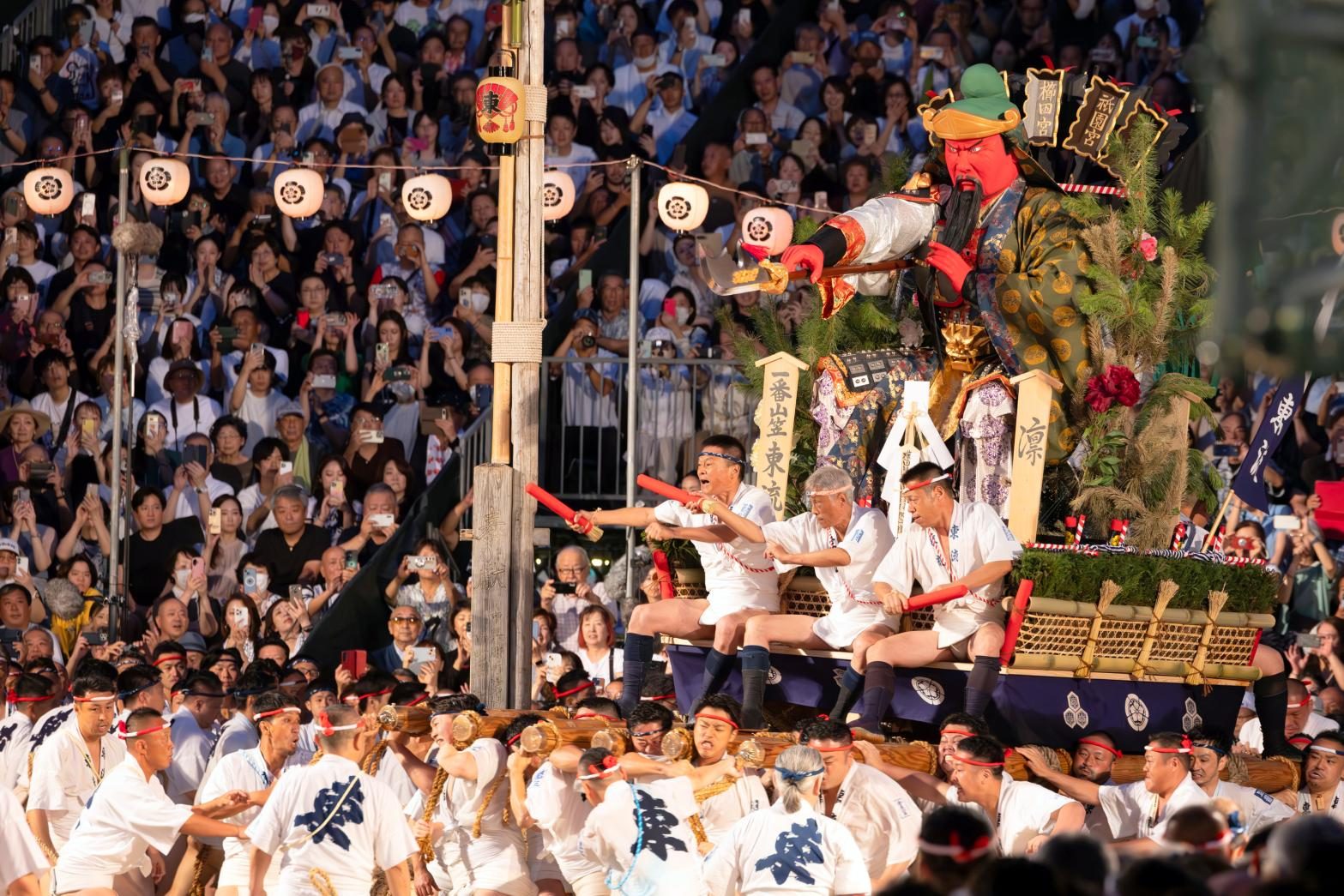
15 July, 4:59 a.m. Before dawn, drums sound across Hakata and men in shimekomi loincloths heave up a float weighing about a ton and break into a run. Spectators along the route throw "seimizu" (power water) over them, and the chant "Osshoi!" rings out. It is no exaggeration to say that summer in Hakata exists for these 15 days.
Labels: Factdocumented Likelysupported by most sources Legendoral tradition Urban legendlocal lore and rumour
Kushida Shrine, guardian of all Hakata
FactKushida Shrine is the chief guardian shrine of Hakata, affectionately called "O-Kushida-san". It enshrines three deities: Ohatanushi no Mikoto (Kushida-gu), Amaterasu Sumeokami (Daijingu) and Susanoo no Mikoto (Gion-gu). It is said to have been founded in 757.
FactThe Hakata Gion Yamakasa festival is dedicated to the Gion-gu of Kushida Shrine and is held every year from 1 to 15 July. It was designated a national Important Intangible Folk Cultural Property in 1979, and in 2016 it was inscribed on UNESCO's Intangible Cultural Heritage list as one of the "Yama, Hoko, Yatai float festivals", a group of 33 festivals from across Japan.
It began as a way to drive out plague
LegendThe Yamakasa is said to have begun in 1241, when an epidemic swept Hakata and Shoichi Kokushi, founder of Jotenji, was carried through the town on a segaki platform (an altar for offerings to the dead), sprinkling blessed water to purify the streets (see Jotenji).
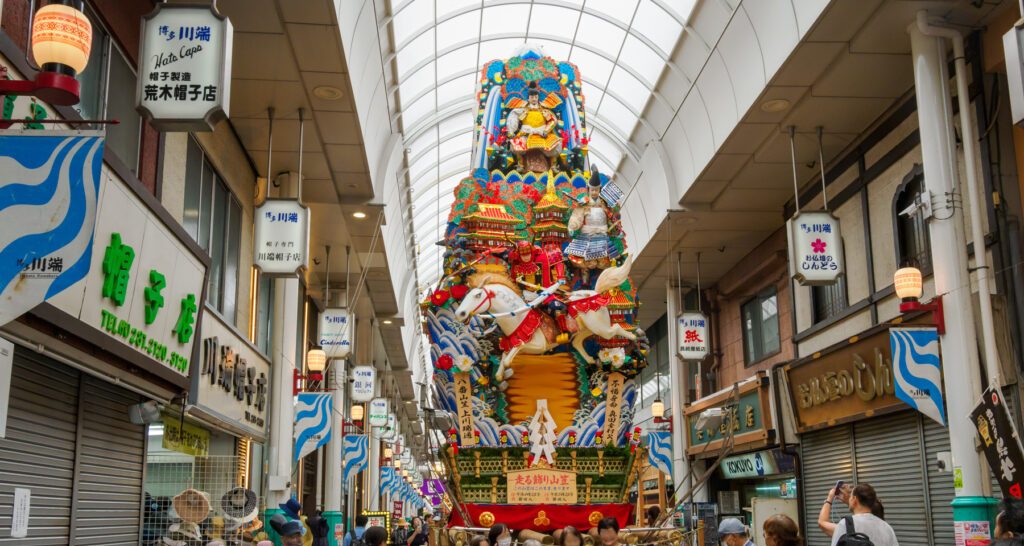
FactThe floats are carried by the nagare (neighbourhood teams), the traditional units of Hakata's town. The nagare grew out of the blocks of streets laid out in Toyotomi Hideyoshi's replanning of the town, the Taiko Machiwari (1587). Today seven nagare put out carried floats: Daikoku, Higashi, Nakasu, Nishi, Chiyo, Ebisu and Doi (see Hakata, the International City). They are joined by the running display float of Kamikawabata-dori, which takes part as the "Eighth Yamakasa".
FactIn the Edo period the floats were huge, over 10 m tall, but when electric wires were strung over the town's streets in the Meiji era, tall floats could no longer get through. That, it is said, is why they split into the low "kakiyama", carried at a run, and the tall "kazariyama", made for display. From 1 July the display floats stand at spots around the city, decorated with figures based on kabuki, historical tales, popular anime and more.
The 15 days, step by step
FactThe display floats go on show on 1 July. On the 9th comes "Oshioi-tori", when participants purify themselves with sand from Hakozaki beach; on the 10th, "Nagare-kaki", when each nagare carries its float around its own district; on the 11th, Asayama and Tanagare-kaki (carrying through other teams' districts); on the 12th, "Oiyama-narashi" (the rehearsal); and on the 13th, "Shudan Yamamise" (the group parade). It all builds to a climax with the "Oiyama" (the timed race) in the early morning of the 15th.
FactIn the Oiyama, the floats set off one after another at five-minute intervals, starting with the First Yamakasa. Each dashes into the grounds of Kushida Shrine and circles the Seidoki flag in the "Kushida-iri", then runs a course of about 5 km against the clock. Once a float has finished, it is taken apart that same day. Something built over 15 days is torn down the moment it is done, and that clean break is a point of pride for the people of Hakata.
"No cucumbers during Yamakasa"
Because a cut cucumber looks like the crest of the Gion-gu at Kushida Shrine, it is said that float carriers and their families do not eat cucumbers during the festival (see Legends).
Carriers wear shimekomi and mizu-happi
Float carriers wear a shimekomi (loincloth) with a mizu-happi (short coat) in their nagare's own pattern, and a tenugui (cotton cloth) tied on. The colour and pattern of the tenugui are set by each person's role, so those in the know can tell someone's position at a glance.
Look for this: the permanent display float at Kushida Shrine
In the grounds of Kushida Shrine, a display float is on show all year round, not only during the festival. Look up close at a float some 10 m tall and you will be amazed at the fine detail and sheer power of its figures. The grounds also hold the Hakata History Museum, which tells the story of the town, and a great ginkgo tree said to be more than a thousand years old.
Main sources: Kushida Shrine official information / Hakata Gion Yamakasa Promotion Association official website / Fukuoka City, "Hakata Gion Yamakasa" guide / Agency for Cultural Affairs, "Yama, Hoko, Yatai float festivals" (UNESCO Intangible Cultural Heritage)