Home / Legends and urban legends of Fukuoka
Legends and Urban Legends of Hakata and Fukuoka
For 2,000 years Hakata was Japan's gateway to the Asian mainland, and its fear of, and curiosity about, what came from across the sea survive in a wealth of stories. From old legends to modern rumours spread online, we trace them here, using labels to separate where history ends and storytelling begins.
Labels: Factdocumented Likelysupported by most sources Legendoral tradition Urban legendlocal lore and rumour
"The mukuri kokuri are coming"
LegendIn northern Kyushu, it is said, a child who would not stop crying was once scared quiet with the words "The mukuri kokuri are coming!" "Mukuri" means Mongol and "kokuri" means Goguryeo (Goryeo, i.e. Korea). The terror of the Yuan (Mongol) and Goryeo armies that attacked during the Mongol invasions is thought to have survived for more than 700 years as a phrase for scolding children (see the Mongol Invasions).
The name "Tenjin" comes from Michizane's water mirror
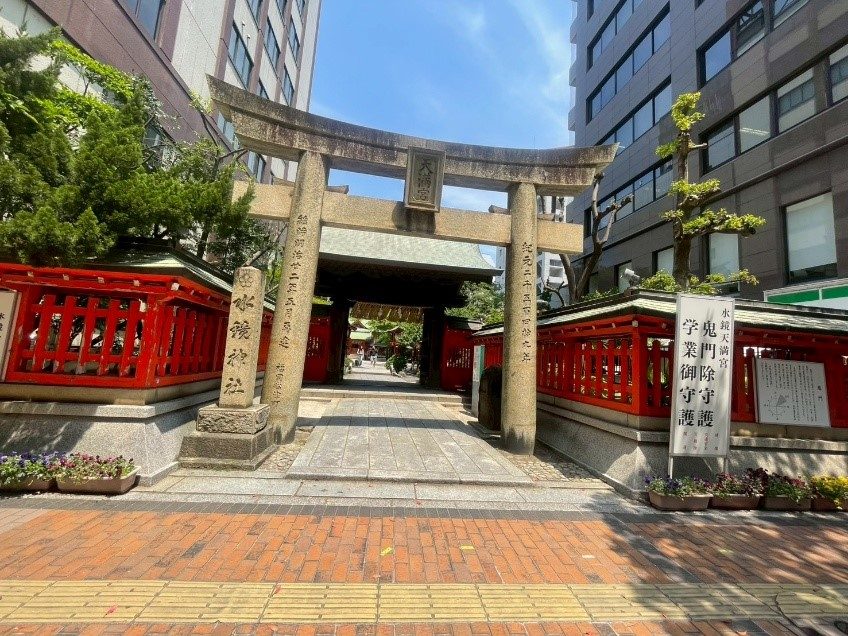
LegendThe story goes that in 901, Sugawara no Michizane, arriving in Hakata on his way into exile at Dazaifu, saw his haggard face reflected on the surface of a river and lamented. A shrine called "Mizukagami Tenjin" (Water Mirror Tenjin) was dedicated on that spot, and Kuroda Nagamasa later moved it to its present site to guard the unlucky northeast direction (kimon) of Fukuoka Castle.
FactThis Mizukagami Tenmangu is the origin of the name of "Tenjin", Fukuoka's busiest shopping district. The plaque on the torii gate of this small shrine, surrounded by department stores and office blocks, is said to have been written by former prime minister Hirota Koki (a Fukuoka native) when he was a boy (see Dazaifu Tenmangu).
Is the gold seal a fake?
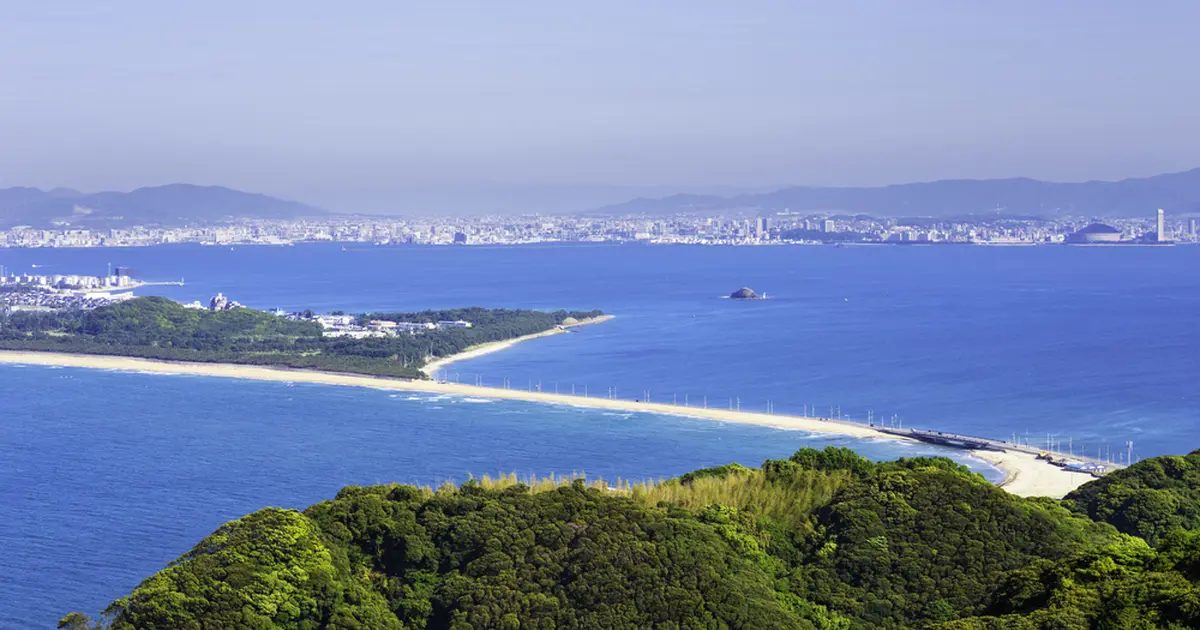
LegendThe theory that "the gold seal of Shikanoshima is a fake made in the Edo period" has been put forward several times, even among scholars. The reasons given include the vagueness of the documents describing its discovery, the uncertainty over exactly where it was found, and the fact that Kamei Nanmei, the scholar who authenticated it, had an interest in boosting the reputation of his domain school.
LikelyOn the other hand, the seal's size matches exactly one sun (about 2.3 cm) of the Later Han dynasty, and based on this, analysis of its gold content and carving technique, and comparison with seals of the same era found in China, most researchers consider it genuine (see the Gold Seal).
No cucumbers during Yamakasa
LegendPeople involved in Hakata's Yamakasa are said not to eat cucumbers from 1 to 15 July. The reason is that a cucumber sliced into rounds looks like the crest (the mokko crest) of the Gion-gu at Kushida Shrine, and eating the sacred crest would be disrespectful. Even today, some people take care not to serve cucumbers during the Yamakasa, both at home and in restaurants (see the Yamakasa).
The urban legend of Inunaki Pass
Urban legendInunaki Pass, east of Fukuoka City on the border between Hisayama Town and Miyawaka City, is the subject of rumours such as "Beyond the old tunnel there is a village erased from the maps" and "At the village entrance stands a sign saying 'Beyond this point, the Constitution of Japan does not apply'". From the 1990s these stories spread through TV, magazines and the internet, and they even became the subject of a film.
FactIn reality, the old Inunaki Tunnel fell out of use after a new tunnel opened in 1975, and its entrance has been sealed with concrete blocks and the like. The settlement of Inunaki, the supposed "erased village", was relocated when a dam (Inunaki Dam) was built, and no village like the one in the rumours has ever been confirmed. The old road is dangerous to enter and causes trouble for local residents, so please do not visit out of idle curiosity.
Look for this: the Flying Plum and Kuroda Josui's "left hand"
Legends are at their most fun when they are tied to real places and things: the Flying Plum in front of the main hall of Dazaifu Tenmangu (see Dazaifu Tenmangu), the famous spear Nihongo won by Mori Tahei in a drinking bout and the anecdote of Kuroda Josui's "left hand" (see the Kuroda Family), and the keep base of Fukuoka Castle, where no one knows for sure whether a keep ever stood (see Fukuoka Castle). Stand in front of the real thing on site and decide for yourself how much of the story is true.
Main sources: Mizukagami Tenmangu shrine history / Fukuoka City Museum, "Gold Seal" guide / Hakata Gion Yamakasa Promotion Association materials / Road and local information from Fukuoka Prefecture, Hisayama Town and Miyawaka City / Various folklore sources