Home / Munakata Taisha and Okinoshima
Munakata Taisha and Okinoshima
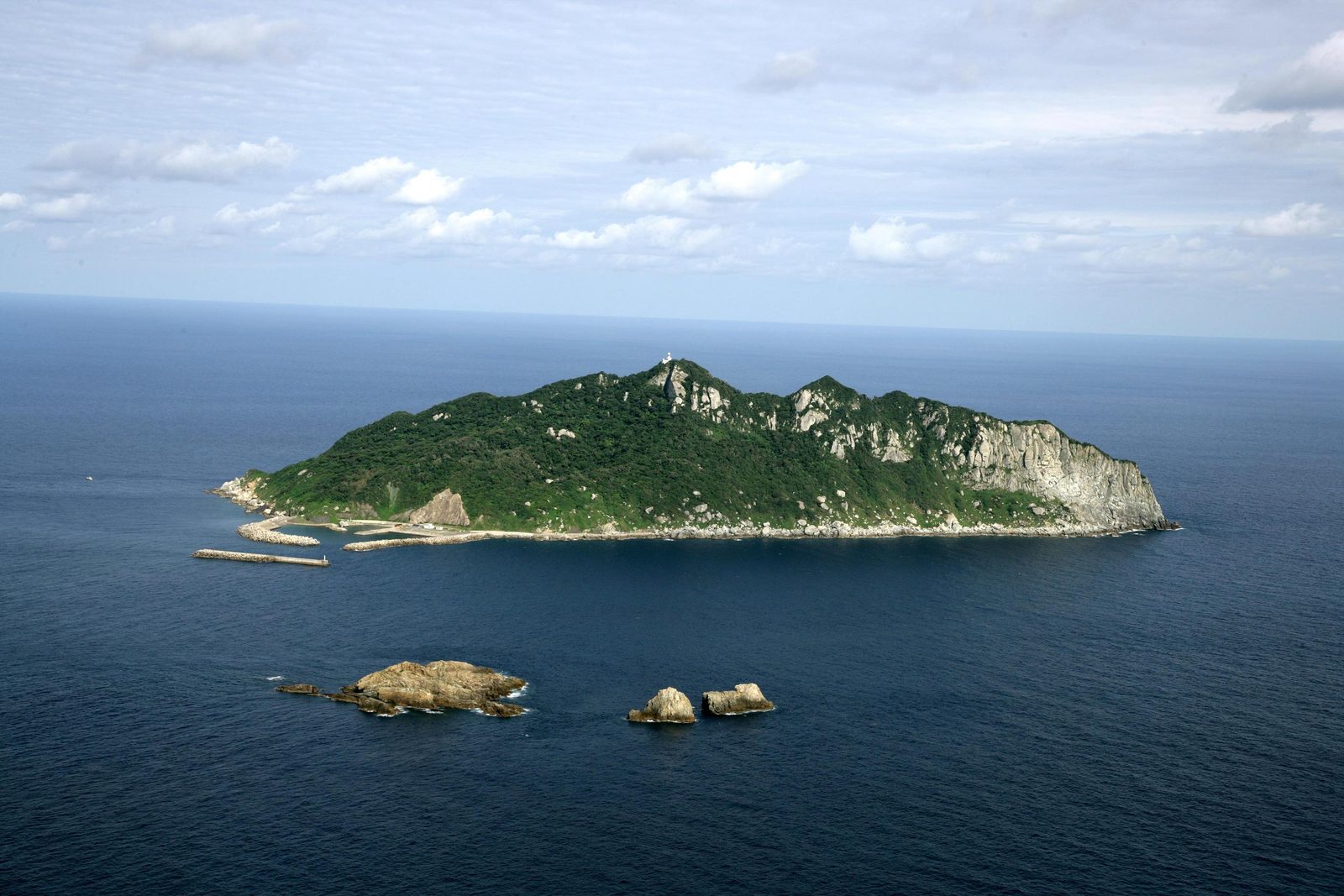
In the middle of the Genkai Sea, about 60 km off the Kyushu mainland, lies Okinoshima, where ordinary people still cannot land. The island itself is regarded as a god, and there was a rule that nothing seen or heard there could be spoken of. Protected by such rules, ritual offerings from the 4th to the 9th centuries lay sleeping exactly as they had been placed.
World HeritageSacred Island of Okinoshima and Associated Sites in the Munakata Region (2017)
Labels: Factdocumented Likelysupported by most sources Legendoral tradition Urban legendlocal lore and rumour
An island that is itself a god
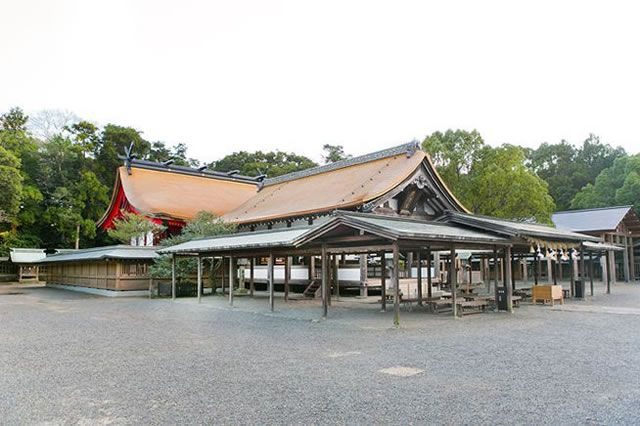
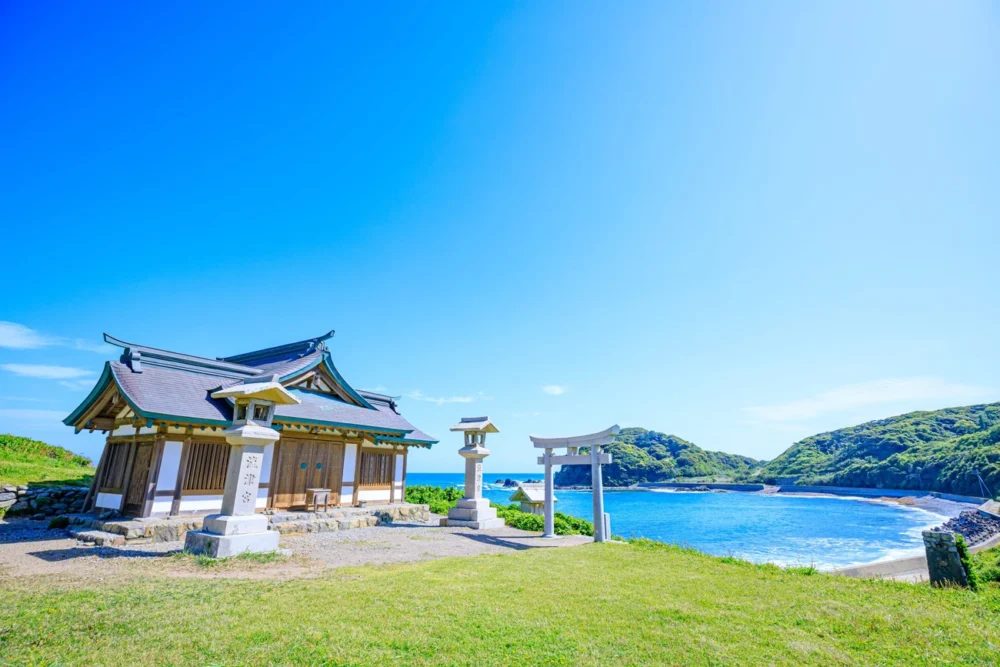
FactMunakata Taisha is a shrine made up of three sanctuaries strung out across the Genkai Sea: Hetsumiya in Tashima, Munakata City, on the Kyushu mainland; Nakatsumiya on Oshima, about 11 km offshore; and Okitsumiya on Okinoshima, about 60 km offshore. Each enshrines one of the three Munakata goddesses (Ichikishimahime, Tagitsuhime and Tagorihime).
LegendThe Nihon Shoki records a myth in which the sun goddess Amaterasu ordered the three goddesses to descend to "the middle of the sea road to the north" (the sea route to the Korean Peninsula) and help the heavenly grandson.
FactThe Munakata clan, the powerful family that ruled the Munakata area, was responsible for rituals praying for safe voyages to the Korean Peninsula and mainland China.
"The Shoso-in of the sea"
FactScientific surveys between 1954 and 1971 found about 80,000 offerings on top of and in the shadow of Okinoshima's giant rocks: bronze mirrors, iron weapons, gold rings, glass vessels, horse trappings and more. They include fragments of a Persian cut-glass bowl and a gold ring from Silla on the Korean Peninsula, and all of them have been designated National Treasures as a single group.
FactResearch has shown that the ritual sites moved over time from "on top of the rocks" to "in the shadow of the rocks", then "half in the shadow, half in the open", and finally "in the open". Few sites in the world show so continuously how ancient rituals changed. And because the high quality of the offerings invited comparison with the treasures of the Shoso-in in Nara, Okinoshima came to be called "the Shoso-in of the sea". The finds can be seen at the Shinpokan (treasure museum) at Hetsumiya.
The rules for landing
FactStrict taboos have been handed down on Okinoshima since ancient times: "Oiwazu-sama" (the one not to be spoken of), meaning nothing seen or heard on the island may be told to others; not a single tree, blade of grass or stone may be taken away; and visitors must strip completely and purify themselves in the sea before landing. It is also an island closed to women, who are not allowed to land.
FactPriests of Munakata Taisha take turns staying on the island, one at a time, and carry out rituals every day. In the past, ordinary men chosen by lottery could land only for the grand festival held on the island on 27 May each year, but from the year after the World Heritage inscription (2018), landing by the general public has no longer been permitted.
World Heritage: the "Sacred Island"
FactIn 2017, "Sacred Island of Okinoshima and Associated Sites in the Munakata Region" was inscribed as a World Heritage Site. Its eight components are Okinoshima (Okitsumiya) and the islets of Koyajima, Mikadobashira and Tenguiwa; the Okitsumiya Yohaisho and Nakatsumiya on Oshima; Hetsumiya on the mainland; and the Shimbaru-Nuyama Mounded Tomb Group, believed to be the tombs of the Munakata clan.
FactOn 1 October each year, the first day of the autumn grand festival, the "Miare Festival" takes place. Led by the sacred boats carrying the goddesses of Okitsumiya and Nakatsumiya, more than 100 fishing boats flying tairyo-bata (big-catch flags) sail across the Genkai Sea to the goddess of Hetsumiya.
Look for this: Takamiya Saijo
A short climb up the hill behind Hetsumiya's main hall brings you to "Takamiya Saijo", a ritual site with no shrine building. It is said to be where the Munakata deities descended, and it is simply a stone altar in a space surrounded by trees. It is known as a place where you can sense the old form of worship from before shrine buildings existed. On a clear day, you can also worship Okinoshima on the horizon from the distant worship site on Oshima.
Main sources: Munakata Taisha official website / Preservation and Utilization Council of "Sacred Island of Okinoshima and Associated Sites in the Munakata Region", materials / Agency for Cultural Affairs, "World Heritage" / UNESCO World Heritage Centre / Munakata Taisha Shinpokan, exhibition commentary