Home / The Mongol invasions and the stone wall
The Mongol Invasions and the Stone Wall
In the 13th century, the Mongol Empire, which ruled most of Eurasia, attacked Japan twice. The landings came in Hakata Bay. Along its shore, the stone wall that samurai built to prepare for the second attack still stands, more than 740 years later.
Labels: Factdocumented Likelysupported by most sources Legendoral tradition Urban legendlocal lore and rumour
The Bun'ei campaign (1274)
FactKublai Khan, emperor of the Mongol Empire, sent envoys to Japan again and again around the time he renamed his state Yuan, demanding submission. Hojo Tokimune, regent of the Kamakura shogunate, refused.
FactIn the 10th month of Bun'ei 11 (1274), an allied force of Yuan and Goryeo troops, about 30,000 strong, raided Tsushima and Iki and then descended on Hakata Bay. Fierce battles were fought at Imazu, Momochibaru and Akasaka, west of Hakata, and the samurai, used to fighting in one-on-one duels, struggled against the invaders' massed tactics and gunpowder weapons called "tetsuhau". The town of Hakata and Hakozaki Shrine are said to have been burned too.
LikelyYet by the morning after the landing, the allied force had vanished from Hakata Bay. It used to be explained that "a storm (the kamikaze, or divine wind) sank the ships", but given the season and the records, there are still several theories: that it had always been a short reconnaissance in force planned to withdraw, that it ran into a storm on the way back, and so on.
Ishi-tsuiji: 20 km of stone along the shore
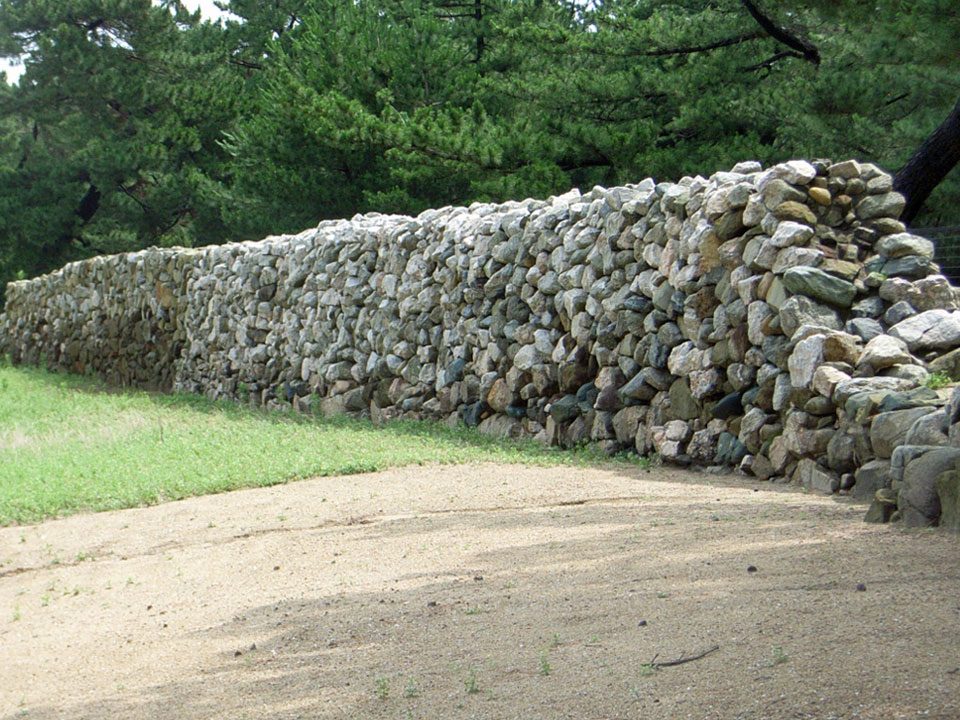
FactTo prepare for the next invasion, in 1276 the shogunate ordered the gokenin (vassal warriors) of Kyushu to build a stone defensive wall, the "ishi-tsuiji", along the shore of Hakata Bay. It ran about 20 km, from Imazu in the west to Kashii in the east. It was about 2–3 m in both height and width, with its size and construction varying from place to place. Each province was assigned its own section, and the work was shared out according to the size of each landholding.
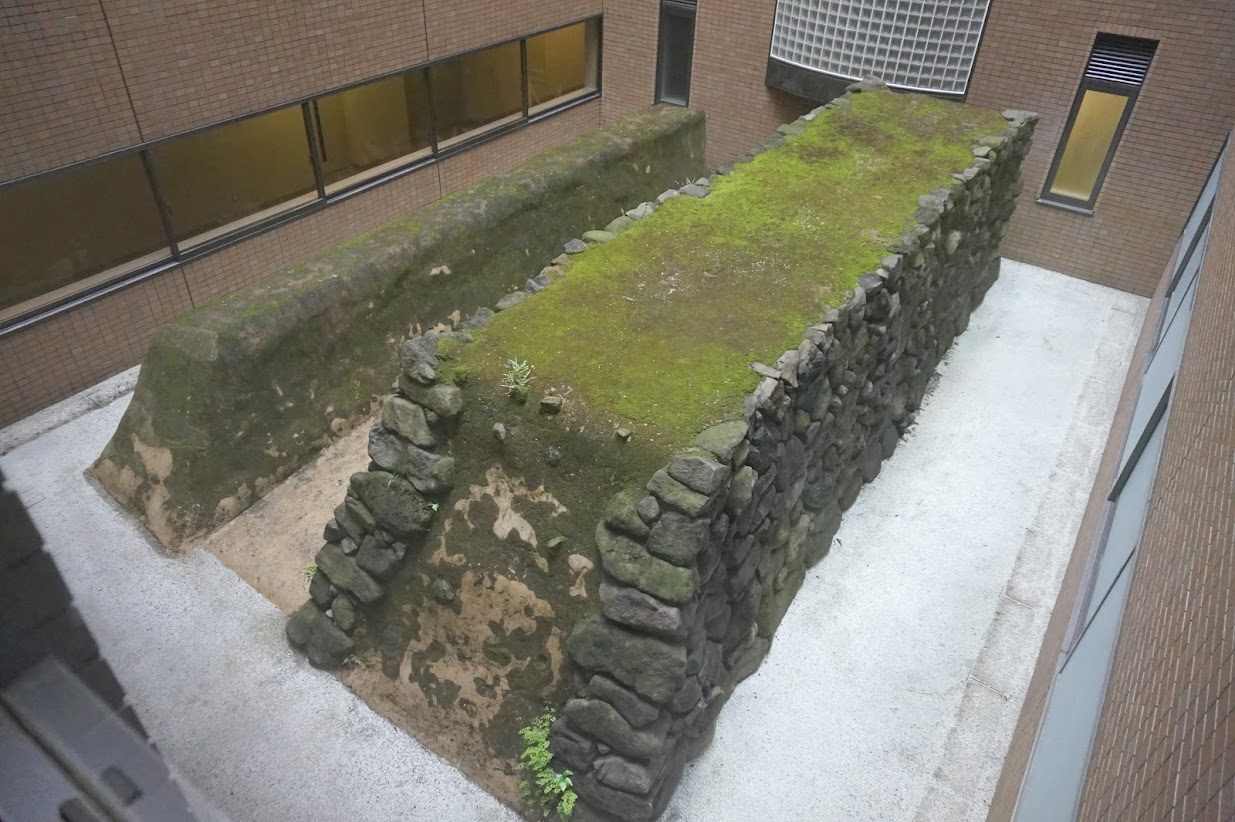
FactIn modern times this wall came to be called the "Genko Borui" (Mongol invasion defence wall), and it is designated a National Historic Site. Research has shown that the seaward face was stacked with stones almost vertically to make it sheer, while the landward side was sloped so defenders could climb up and down easily.
The Koan campaign (1281)
FactIn Koan 4 (1281), Yuan attacked again in two forces: the Eastern Route Army, which set out from the Korean Peninsula, and the Jiangnan Army, which set out from southern China. The Eastern Route Army entered Hakata Bay but, blocked by the stone wall, could not land, and set up camp on Shikanoshima. The samurai launched night raids in small boats, and fierce fighting went on around Shikanoshima and Uminonakamichi.
FactEventually the Yuan fleet, now joined by the Jiangnan Army, gathered around Takashima in Hizen Province (Matsuura City, Nagasaki Prefecture), but on the 1st day of the intercalary 7th month (late August in today's calendar) it was hit by a powerful typhoon and many ships sank. Parts of Yuan warships and "tetsuhau" have been found on the seabed off Takashima.
LikelyThis storm later came to be called the "kamikaze" (divine wind), and was used as proof of the idea that Japan was a land protected by the gods. Books such as the Hachiman Gudokun, which stressed the power of prayers at temples and shrines, spread that story.
Takezaki Suenaga's picture scrolls
FactTakezaki Suenaga, a gokenin from Higo Province (Kumamoto Prefecture), had his own deeds in battle painted in a set of picture scrolls, the "Moko Shurai Ekotoba" (Illustrated Account of the Mongol Invasions). The scene in which he charges ahead of the others in the Bun'ei campaign and is wounded shows a "tetsuhau" bursting in mid-air. Suenaga travelled all the way to Kamakura to seek a reward and, by pleading his case in person, won the post of jito (land steward). Discontent at receiving too little reward after risking one's life in battle is thought to have been one of the reasons the Kamakura shogunate later began to falter.
Look for this: the walls at Ikinomatsubara and Nishijin
At Ikinomatsubara in Nishi Ward, the wall has been restored and preserved in a pine grove, and you can see the vertical stonework on its seaward side. At Seinan Gakuin University in Nishijin, Sawara Ward, a section of the wall has been restored beside the gymnasium, and excavated remains moved inside a school building are also on display. To the east of Hakata Bay, in Higashi Park, stand large bronze statues of the retired Emperor Kameyama and the monk Nichiren, which, together with the neighbouring Genko Historical Museum (visits by advance reservation only), keep the memory of the Mongol invasions alive (see Hakozaki Shrine).
Main sources: Fukuoka City, commentary on the "Genko Borui" / Database of National Cultural Properties, "Genko Borui" / Moko Shurai Ekotoba (Museum of the Imperial Collections, Sannomaru Shozokan) / Hachiman Gudokun / Kyushu National Museum and Fukuoka City Museum, exhibition materials