Home / Motsunabe, mizutaki and mentaiko
Motsunabe, Mizutaki and Mentaiko
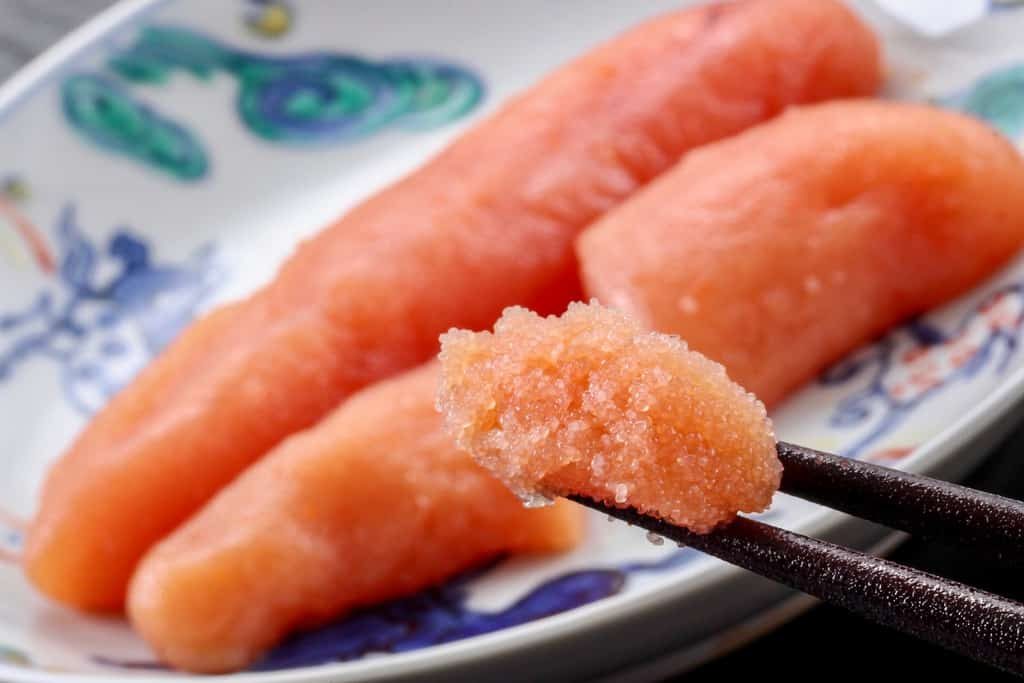
Spicy mentaiko (pollock roe) is Hakata's classic souvenir. Its creator was a man born and raised in Busan, Korea. He never patented his method and freely taught others how to make it, and so mentaiko spread all over Hakata. Many of Hakata's signature dishes have stories that link them to lands across the sea.
Labels: Factdocumented Likelysupported by most sources Legendoral tradition Urban legendlocal lore and rumour
Mentaiko and Kawahara Toshio
FactThe man regarded as the creator of karashi mentaiko (spicy pollock roe) is Kawahara Toshio (1913–1980). Born and raised in Busan under Japanese rule, Kawahara could never forget the taste of the chilli-pickled Alaska pollock roe he had eaten there (the Korean "myeongnan-jeot").
FactAfter the war Kawahara returned to Hakata, opened a grocery called "Fukuya" in the Nakasu market, and in 1949 began selling a karashi mentaiko adapted to Japanese tastes. The word "mentai" comes from "myeongtae", the Korean word for Alaska pollock.
FactKawahara took out no patent and no trademark on his method, and taught it to anyone who wanted to learn. As a result many shops started making mentaiko, and when the Sanyo Shinkansen was extended to Hakata in 1975, it became known nationwide as the souvenir of Hakata.
Mizutaki: a hotpot with a white broth
LikelyHakata's mizutaki (chicken hotpot) is a dish in which chicken and vegetables are simmered in a cloudy white broth made by cooking bone-in chicken from cold water for a long time, then eaten with ponzu (citrus soy sauce). It is said to have begun at the end of the Meiji era, when Hayashida Heizaburo, a native of Nagasaki who had studied Western and Chinese cooking in Hong Kong, devised a hotpot combining Western consomme with Chinese boiled chicken and opened the restaurant "Suigetsu" in Hakata in 1905.
FactAt a mizutaki restaurant, the classic way to start is to pour just the broth into a teacup, add a pinch of salt, and sip it. At the end, rice goes into the pot to make zosui (rice porridge).
Motsunabe: a postwar hotpot
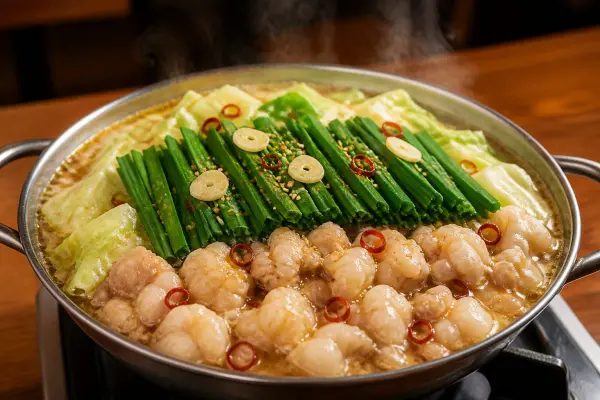
LikelyMotsunabe (offal hotpot) is a dish of motsu (offal) such as beef small intestine, simmered with garlic chives and cabbage in a soy-sauce or miso broth. It is said to have started after the war, when coal miners and people who had come from the Korean Peninsula made hotpots from cheap offal, and it spread in Fukuoka as an everyday dish of ordinary people.
FactAround 1992 a "motsunabe boom" swept Tokyo, and "motsunabe" won the bronze prize in that year's Buzzword of the Year awards. Long after the boom faded, motsunabe remains a winter staple in Fukuoka.
Goma saba, gameni and Hakata udon
Fact"Goma saba", fresh raw mackerel from the Genkai Sea dressed in sesame soy sauce, is a staple of Fukuoka's izakaya (Japanese pubs). "Gameni", chicken and root vegetables stir-fried and then simmered, is the dish known elsewhere in Japan as chikuzen-ni, and it is a must at New Year and other celebrations.
FactHakata udon is known for its soft noodles in a clear broth made with ago-dashi (flying fish stock) or kombu stock, classically topped with maruten (a round fried fish cake) or gobo-ten (burdock tempura). At Jotenji stands a monument declaring Hakata the birthplace of udon and soba (see Jotenji).
Look for this: Yanagibashi Rengo Market
Between Tenjin and Hakata, close to the Naka River, Yanagibashi Rengo Market is known as "Hakata's kitchen". Said to have started in the Taisho era, it has fishmongers and shops selling mentaiko and kamaboko (fish cakes) lining its narrow lanes. In the morning you can shop and eat here alongside the locals.
Main sources: Fukuya Co., Ltd., published information on "The History of Mentaiko" / Published information from long-established mizutaki restaurants / Food culture materials from Fukuoka City and Fukuoka Prefecture / Ministry of Agriculture, Forestry and Fisheries, "Our Local Cuisines" (Fukuoka Prefecture)